Cupp's Drive-Inn
Text
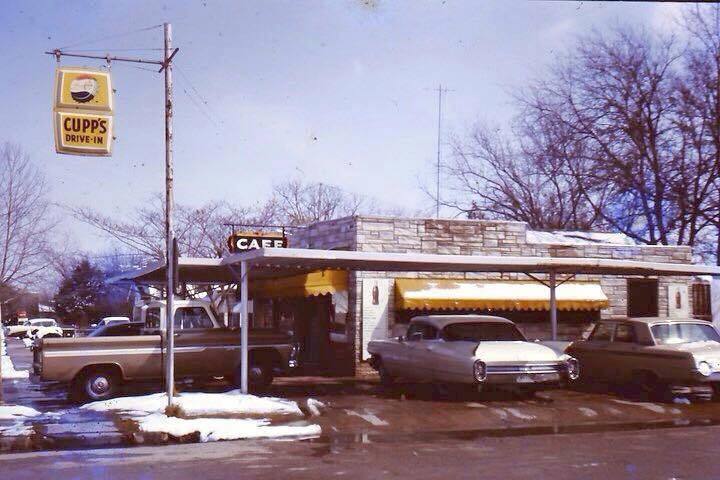
Nestled behind several fast food chains at Fifteenth Street and Speight Avenue, Cupp’s Drive-Inn has been offering diner favorites to local residents and Baylor students and staff for seventy years and counting. The small diner offers a window into the past, as the layout of the restaurant—with just four booths and eight old-fashioned barstools facing the flat-top grill—has remained virtually unchanged since its founding. The awning on the side of the building once sheltered carhops who took customers’ orders as they passed through for a quick meal.
The location has a long history of being in the restaurant business. In the mid-1920s W. R. Bosley operated a restaurant there, followed briefly by the Tourist Sandwich Shop, which moved to 1426 Speight in 1930. For a time, the location was strictly a residence until 1940-41, when Robert P. and Clara Heaton opened Heaton’s Eatins, which served customers at that location until 1946. Price’s Hamburger Stand opened shortly after for a year before the location was purchased by longtime Waco resident Charlie Leroy Cupp and his wife, Bessie. It was briefly called Cupp’s Place before becoming Cupp’s Drive-Inn.
Before entering the burger business in 1947, Charlie Cupp had previously worked for Geyser Ice Company as a delivery truck operator, and in 1946, he briefly managed Coffee Cup, a restaurant at 1514 Speight Avenue. As business picked up at Cupp’s Drive-Inn, waitress Flo Owen came onto the staff, soon followed by Betty Johnson and Pat Walker.
In addition to indoor dining, Cupp’s Drive-Inn also offered car service to patrons. Elvis Presley, then a young soldier training at Fort Hood, often frequented Cupp’s Drive-Inn in the back seat of family friend Eddie Fadal’s Cadillac, ordering double cheeseburgers with bacon. Elvis regularly retreated on weekends and days off to Waco during the sixth months of his army training in 1959. Fadal, a former DJ who met Elvis on one of his earliest tours to Texas, built an addition onto his house to accommodate his friend whenever he visited Waco. Willie Nelson, from nearby Abbot, has also been known to eat at Cupp’s since it first opened its doors.
In the 1970s, the Cupp family passed on the business to longtime waitress Flo Owen, who would later go on to open another restaurant in Hewitt. In the late eighties, Owen approached Betty Johnson—who had worked for both the Cupp family and Owen—about taking over the restaurant. At first hesitant, Johnson agreed and together with her husband managed Cupp’s Drive-Inn from 1988 until retiring in 2010. The Johnsons children, Freddie Johnson Jr. and Sherry Caughenbaugh, then took over management and presently own the restaurant, serving breakfast and lunch.
In the late nineties, the carhop feature was phased out with changing times. Trays would no longer sit straight on windows with the style of modern cars, and the service was not used frequently regardless. Because of this, focus shifted to strictly inside. Today, along with indoor seating, a picnic area outdoors serves as additional space for patrons.
Cupp’s prides itself on its fresh ingredients, all sourced in Texas. They prepare their own meat for their well-known thin patties, using the same recipe from their 1947 founding. French fries and onion rings are still hand cut and fried to order. Their simple, no- frills menu options, classic diner atmosphere, and longstanding legacy in Waco have been keeping customers coming back—many since the fifties and sixties. Today, many of those customers now bring their children and grandchildren when they dine at Cupp’s Drive-Inn.
Files
The Rise of the American Diner
Cupp’s Drive-Inn opened during the height of the popularity of drive-ins and diners. As more Americans purchased vehicles for themselves and their families, restaurants that provided travelers with quick service became popular. The word drive-in was added to the American lingo, and themed food stands such as A&W, White Tower, and White Castle expanded locations. During the Depression, large diners were too expensive to build, so the business of repairing and modifying existing diners grew. These restaurants survived because of their affordable menus and convenient locations. The deco-style of the thirties influenced drive-ins’ architecture, with unusual shapes (circular or octagonal), playful themes, futuristic lines and neon colors becoming popular elements to incorporate. Diners became more streamlined in the forties, with stainless steel, stylized lettering, Formica surfaces, and the addition of booths. Diners and drive-ins reached their height in the forties and fifties. By the 1960s, fast food restaurants with their quick, cheap, and predictable menus were more appealing to commuters. Diners were increasingly seen as tired and obsolete. Of the thousands of drive-ins nationwide, only the Sonic chain, some A&Ws, and some individually owned drive-ins capitalizing on their retro atmosphere remained. In the nineties, however, an appreciation for classic dinners was rekindled thanks to increased interest in historic preservation. Today, there is widespread effort to restore and preserve historic diners across the country | Source: Photo Courtesy of Cindy Campos.~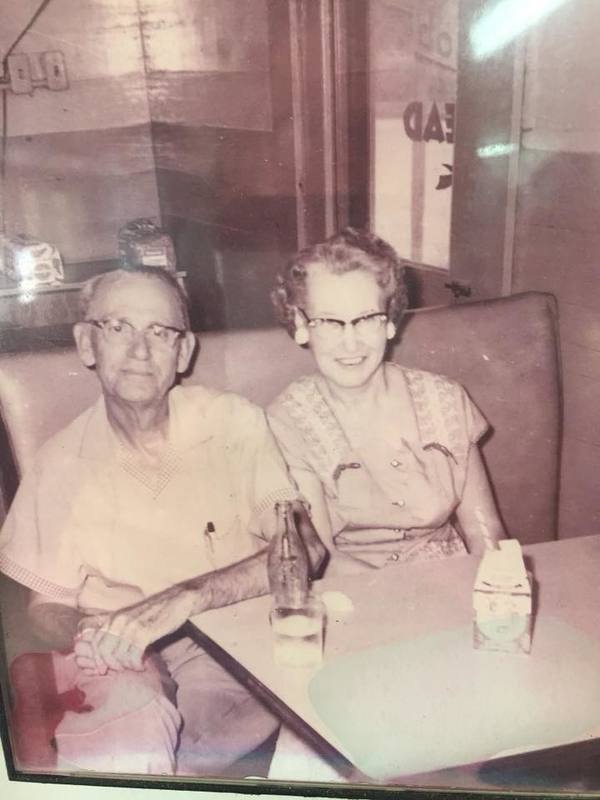
All in the Family
Running restaurants in Waco was a family affair for the Cupps. While Charlie and Bessie Cupp owned and operated Cupp’s Drive-Inn, Mr. Cupp’s nephew, Thomas Cupp, ran two restaurants of his own. Cupp’s Café, located at 2525 North Eighteenth Street, was a diner and drive-in during the forties and early fifties. In 1955, Thomas Cupp opened Big Joy Drive-In, located at 3118 North Nineteenth Street. The menu featured three sizes of hamburgers; chicken, fish and steak finger baskets; corn dogs; hot dogs; sandwiches; and malts and shakes. As a self-service restaurant, customers ordered at the front and were assigned numbers that were called when their meal was ready. Customers could also call in orders to-go over the phone. | Source: Photo Courtesy of Cindy Campos.~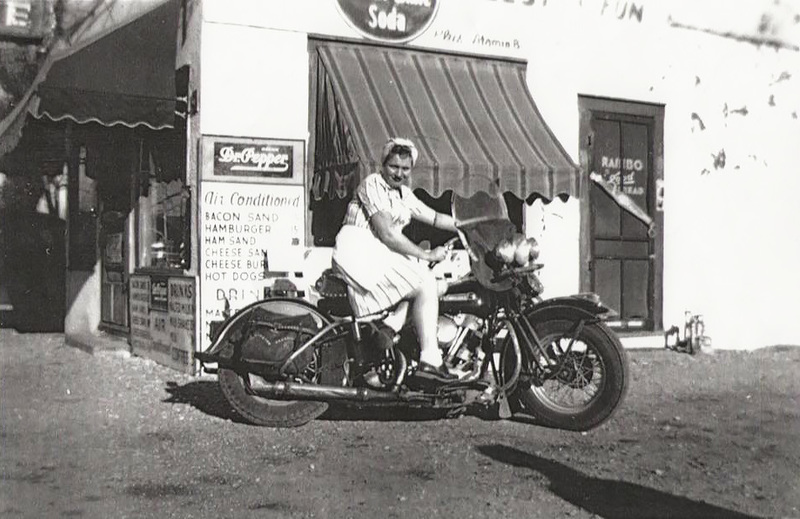
Waitressing in America
Betty Casper Blain, pictured here in front of Cupp’s Drive-Inn on a motorcycle her uncle brought home after World War II, worked as a waitress at Cupp’s Drive-Inn in the forties. Women became valued workers at diners and drive-ins beginning in the 1930s. Many restaurants adopted uniforms as a way to legitimize and brand their business. This led to the rise of colorful, campy uniforms, with female carhops donning roller skates to take customers’ orders. During World War II, women became essential counter employees while many men were fighting abroad. This surge of female employees at diners spurred the stereotype of the abrasive-yet-caring waitress popularized in movies and television shows. | Source: Photo Courtesy of Micky Blain.~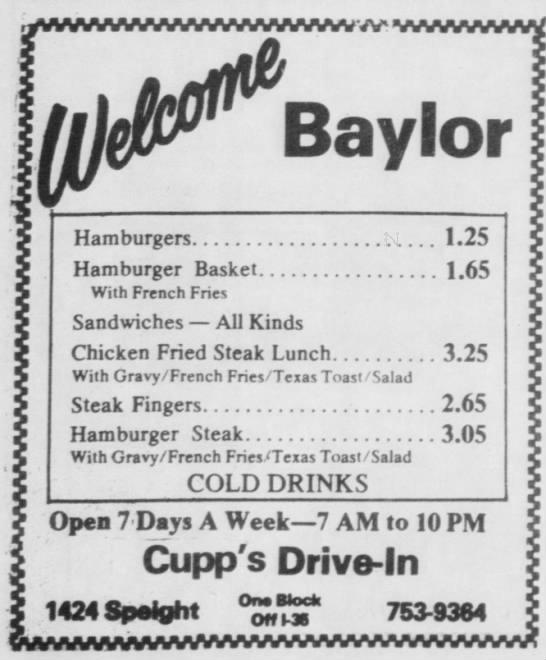
A Baylor Favorite
Cupp’s Drive-Inn has long been a popular stop for Baylor University students, faculty, and staff thanks to its location near campus. The restaurant purchased newspaper advertisements specifically targeting its Baylor clientele, such as this example from a 1982 edition of The Waco Citizen. With its made-to-order menu that has remained unchanged since its opening, Cupp’s Drive-Inn continues to be a favorite stop for both Baylor and Waco customers. | Date: ~ Source: The Waco Citizen, June 4, 1982, Retrieved from newspapers.com.~
Car Crash at Cupp's
Edwad Hobbs describes dining inside of Cupp's Drive-Inn one evening when a '37 Plymouth suddenly drove into the building. | Source: Hobbs, Edward, interviewed by Sean Sutcliffe, april 16, 2006, in Waco, Texas. Baylor University Institute for Oral History. View full interview.