The NoZe Brothers
Text
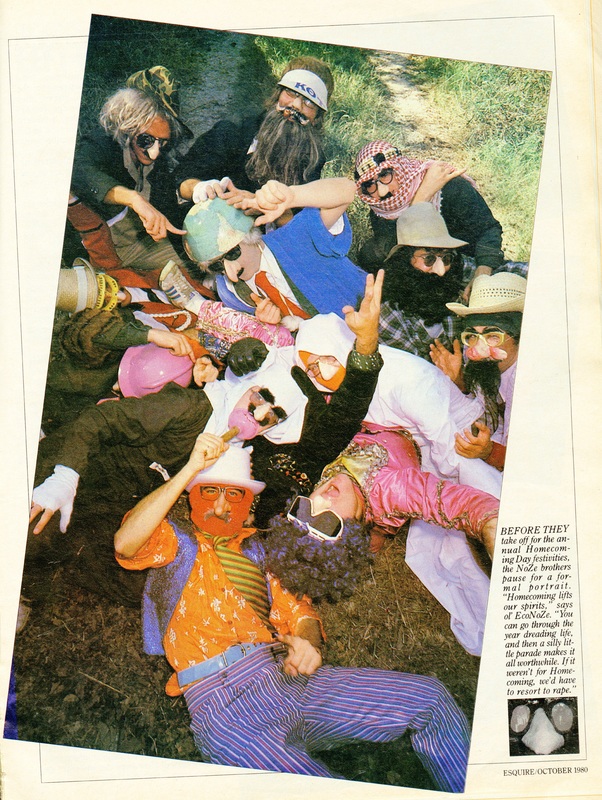
The “irreverent gadflies.” When Baylor University students think about the NoZe Brothers today, they picture fellow students performing shenanigans around campus while wearing big plastic noses, wild wigs, and eclectic outfits. They think of The Rope, a satirical newspaper filled with nonsensical rhyming distributed around campus. But while shenanigans and satire have always been at the heart of the bizarre ways of the organization, working incognito has not.
The NoZe brothers began in 1924 as a counter organization to the very serious Baylor Chamber of Commerce, who they viewed as a “snooty bunch.” Officially the first social club on campus, the organization quickly grew in number and acclaim. The name NoZe Brothers, originally spelled Nose, originated from the first president’s especially large nose. This president, Leonard “LongNoZe” Shoaf, is still a figurehead, saint, and guiding light of the unruly organization. Another founder, John Moilliet, started the tradition of naming all members something to do with “noZe” and kicking off the trend of NoZeprose, the zany, rhyming lingo of the group. The goal from the beginning was quite simple: to find any and every weakness in or upon the campus environment and display it in a satirical manner. The subject matter over the years has ranged from Baylor administration to fundamentalist Christianity.
Absurdity indeed reigns when the Brotherhood is involved. In the 1960s, the Brotherhood painted an entire bridge over the Brazos in their signature pink and blue colors. In the 1970s, a group of female students decided to sell cookies to benefit the prisoners in North Vietnam. The Brothers followed their lead and sold “commode-roasted wieners” for the disabled grandmothers of World War I. Around the same time some Brothers also decided to direct traffic and issue driving citations, but the citations were of course nonsense. On that day students were charged with “driving a blue car down a black street on a green day,” parking on holy grounds, having the wrong color car, having three left tires, having an ugly car, or parking in a “constipated” area. Students were fined anything from 5,327 ½ cents to 100 tuna to a partridge in a pear tree. The money from the tickets was for an equally bizarre cause: placing AstroTurf in Baylor’s Russell Gymnasium. The stranger the task, the more fun the Brothers had.
NoZemen are also known for their event appearances, especially with homecoming floats. For the first few years, the Brothers used the Elm Mott fire truck as their float, but they soon branched out. One year, the float consisted of a sophisticated outhouse that members guarded with water pistols. Another year they wheeled a large, paper-mache, headless John the Baptist through campus. More recently, they fastened a rug to the bumper of an old truck and proceeded to “sweep under the rug” for the entire length of the parade route as a comment on recent scandals in Baylor athletics. Other stunts are a bit more innocuous, like satirizing the Wall of Jericho by parading around the annual Christmas tree in Burleson Quad, blowing horns, and declaring that the tree will soon fall. They have also been known to interrupt various events in Waco Hall, such as Pigskin and chapel, in order to distribute copies of The Rope. More regularly, they are known to paint the noses of statues on campus a bright pink color.
The NoZe brothers generally operate as a democratic organization, with certain executive positions that have changed over the years. Currently, the organization is headed by the “Lorde Mayor,” with the “Shekel Keeper” in charge of funds and advertisements, and a “Cunning Linguist” in charge of publications and correspondence. The rest of the senior members sit upon the “Bored of Graft,” overlooking various activities. All other members are known as “NoZemen,” and new members as “Neophytes.” Graduated members are “exiles,” anyone lucky enough to date a member is a “fortunate,” and nonmembers are “infidels.”
Yet the line between satire and sacrilege can be quite thin, especially for Baylor administration. The first major incident came in 1965 when the Brotherhood was expelled from campus for publishing curse words in The Rope. This incident came on the coattails of the Brothers painting the Seventh Street Bridge pink and blue and scrawling “Satch” (meaning good or affirmative) and “Gob” (meaning negative) across the beams. Dean of Students W. C. Perry saw to it that this was their last prank and used The Rope publication to take them down. Through the mediation of Brother LongNoZe, who happened to live and work in Waco at the time, the Brotherhood was able to return to campus in 1967, but with a new way of doing things.
The NoZe brothers did not want to change their ways to accommodate Baylor, so they decided to go underground instead. Costumes and fake noses became essential as they sought to hide their identities from administration and students alike. In fact, the Book of Holy Law, written to govern the Brotherhood, then articulated two absolute rules: guard identity and maintain the strictest secrecy regarding brotherhood activities. But this did not stop the storm of controversy surrounding the NoZemen. In 1975 they were once again almost kicked off campus for showing up at Pigskin after being expressly banned and presenting a NoZeman dressed in a foil bikini as their homecoming queen candidate. Though they managed to remain on campus this time, they soon met their demise in 1978 when they printed a fake version of the student newspaper The Lariat declaring that homecoming had been canceled. After returning to campus a year later, the organization was kicked off at least one other time in 1999 for a racially insensitive article in The Rope.
The NoZe brothers’ history is dotted with hilarity, intrigue, and trouble, but they remain a beloved part of Baylor student life. In all their endeavors, they hope to make Baylor a better place, but to have fun while they do it.
Files
The Nozemen
The NoZe Brothers may not have started in wacky clothing, but that is definitely their trademark today. Members can dress in any array of clothing items, but they must always keep the nose covered, by whatever means. This particular group photo was featured in Esquire magazine, which did an article on the controversial Baptist school organization. | Source: BU Records: NoZe Brotherhood, Accession #BU/384, Box 1, Folder 9, The Texas Collection, Baylor University.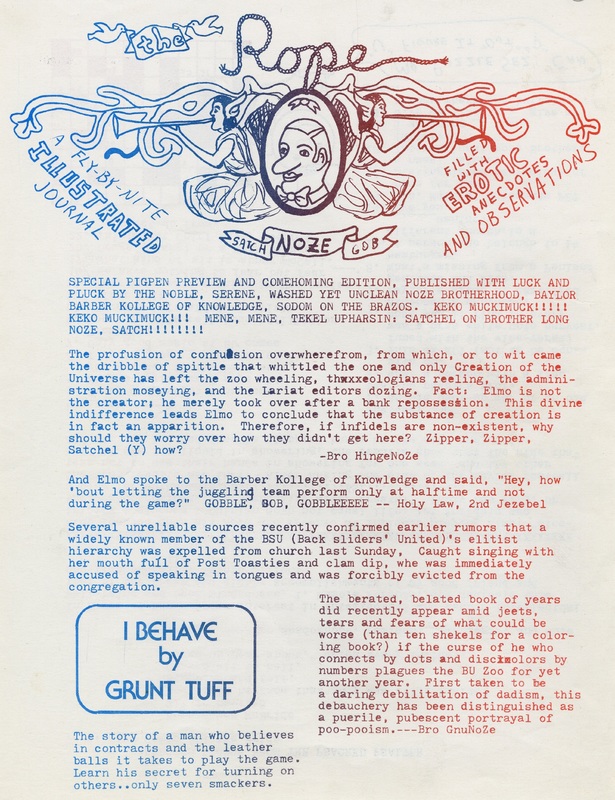
The Rope circa 1950s
The publications of The Rope have changed dramatically over time, but it began in the 1950s as a simple one-page publication. The header was always hand drawn and usually featured some image of LongNoZe Shoaf. This particular issue is printed in NoZe Brothers colors. | Source: BU Records: NoZe Brotherhood, Accession #BU/384, Box 3, Folder 1, The Texas Collection, Baylor University.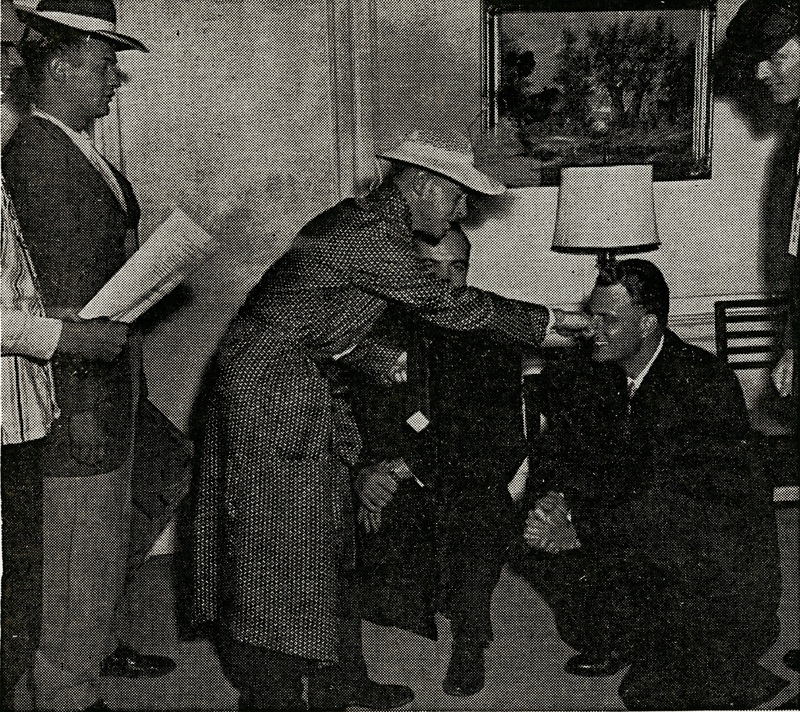
"Onery" member Billy Graham
Billy Graham being inducted as an “Onery” member. The NoZe Brothers often bestowed the honor of membership on big-name visitors. In this case, star evangelist Rev. Billy Graham was on campus, and the Brotherhood inducted him as Brother Cracker NoZe Graham, most edible of the NoZemen. Other “onery” members included Bob Hope and astronaut John Glenn, who the Brothers presented with a piece of cheese symbolizing a piece of the moon upon his induction. | Source: BU Records: NoZe Brotherhood, Accession #BU/384, Box 1, Folder 6, The Texas Collection, Baylor University.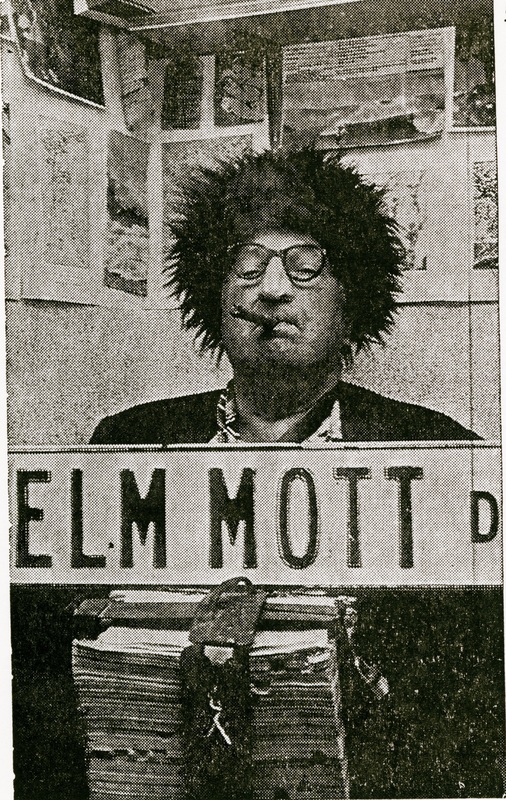
Leonard "LongNoZe" Shoaf
President LongNoZe Shoaf embraced the traditions that came after him. Here he is pictured in the typical glasses, nose, and wig getup of the Brothers today. He holds an Elm Mott sign, which is an important location for the Brotherhood. Elm Mott is a small town outside of Waco where the Brotherhood established their headquarters, or “holiest shrine,” decades ago when in hot water with Baylor administration. From this town name they also derived their mystical deity, “Elmo,” who is embodied by the Lorde Mayor as leader of the NoZe Brothers. | Source: BU Records: NoZe Brotherhood, Accession #BU/384, Box 1, Folder 7, The Texas Collection, Baylor University.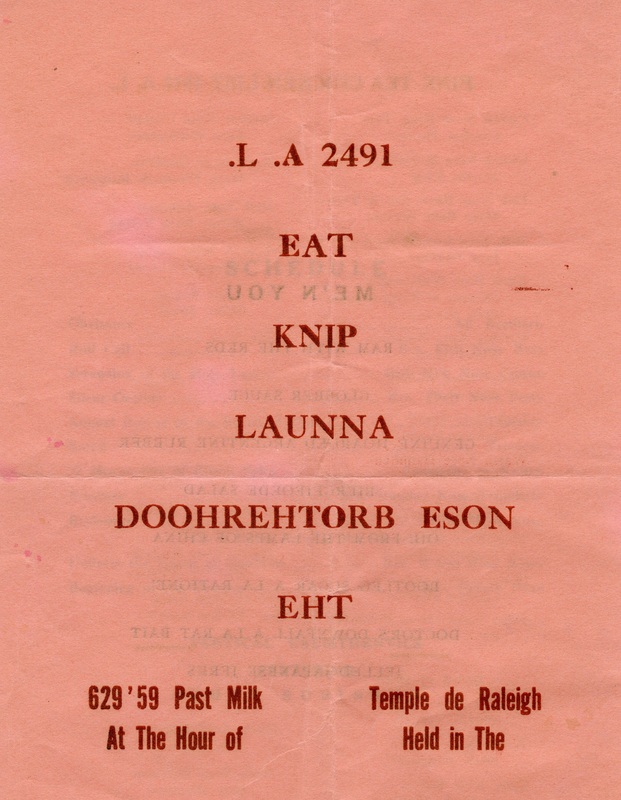
Pink Tea Flyer
The annual formal dinner of the NoZe Brothers is the Pink Tea, held annually since May 17, 1929. Everything is done backwards; even the meal begins with dessert and ends with salad. The programs are printed in backwards lettering, everyone is told to attend in “informal undress,” and the final speech of the evening is given in a broom closet away from the dining area. And when you would expect applause, only “silent applause” is appropriate, leaving the room eerily quiet. | Source: BU Records: NoZe Brotherhood, Accession #BU/384, Box 2, Folder 12, The Texas Collection, Baylor University.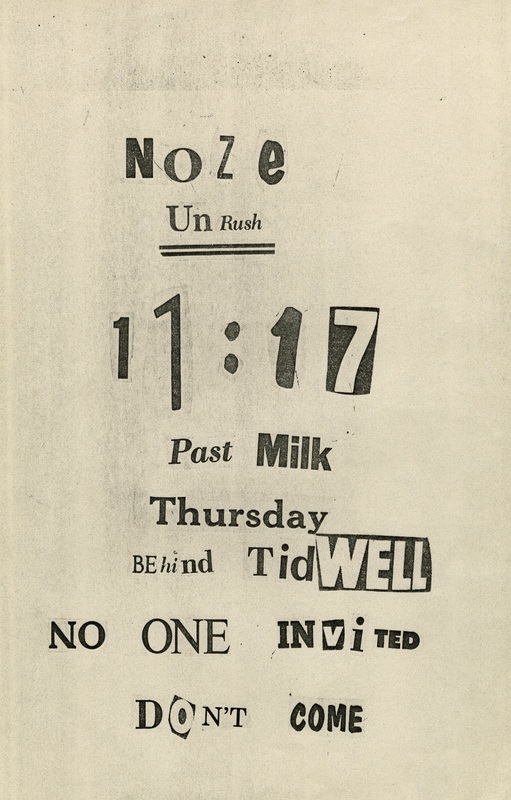
UnRush Poster
In the typical NoZe Brothers style of using opposite meanings, recruitment or rush, are known as “Unrush.” They also claim that no one is invited and no one should come, meaning all are invited and they want potential Neophytes to attend. In the mind of a NoZeman, PM means “Past Milk.” Potential Neophytes are required to write an essay of 10,000 words or less that the NoZe Brothers evaluate in deciding their fate. | Source: BU Records: NoZe Brotherhood, Accession #BU/384, Box 2, Folder 3, The Texas Collection, Baylor University.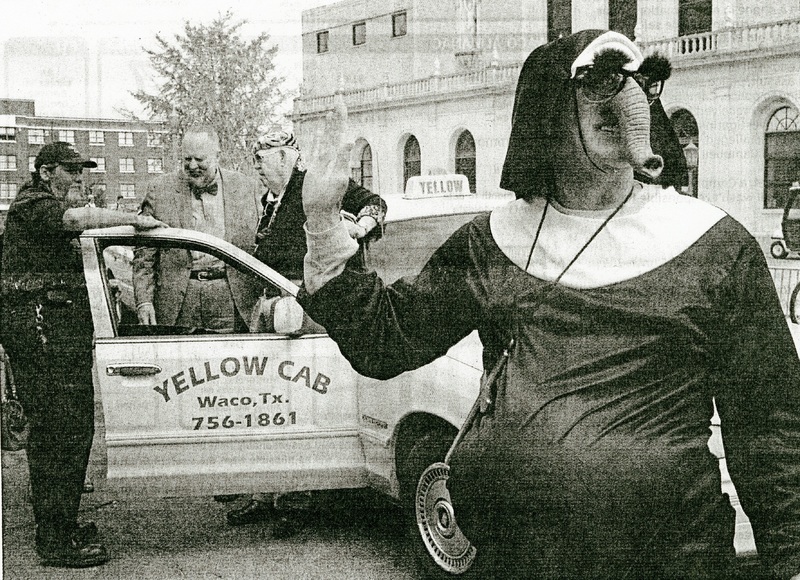
NoZe Brother in costume
NoZe Brothers find great joy in just the right amount of irreverence. Here a Brother is dressed as a pregnant nun outside of Baylor’s Student Union Building. | Source: BU Records: NoZe Brotherhood, Accession #BU/384, Box 1, Folder 11, The Texas Collection, Baylor University.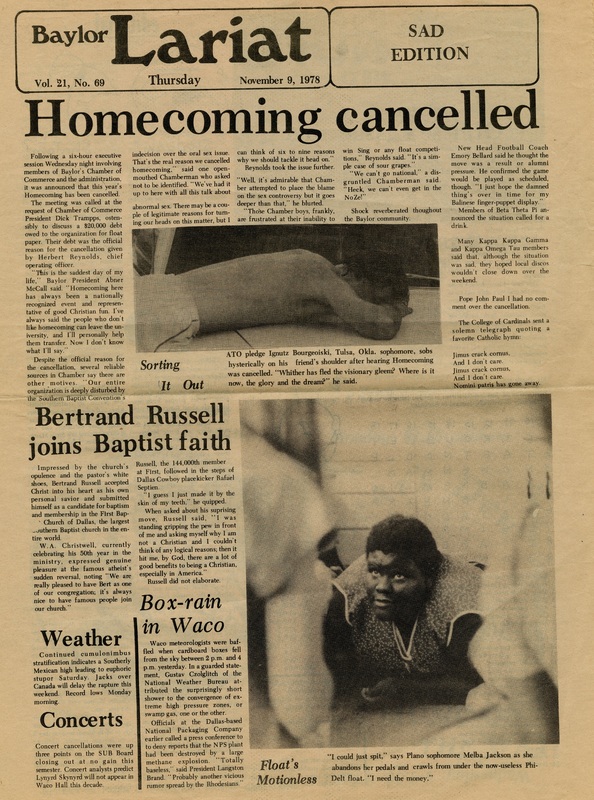
Forged copy of The Lariat
This is the famous Lariat publication that got the Brotherhood thrown off campus in the 1970s. Along with stealing the Lariat header, the edition featured advertisements for strip clubs and bars. There was even an extensive article praising lewd acts, and another making fun of President McCall. | Source: BU Records: NoZe Brotherhood, Accession #BU/384, Box 3, Folder 16, The Texas Collection, Baylor University.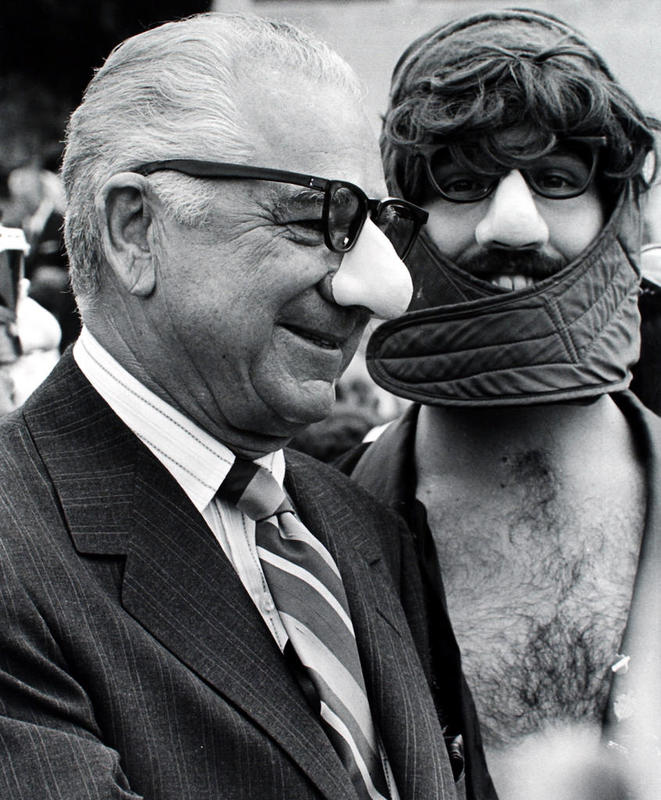
Leon Jaworski inducted
Leon Jaworski attended Baylor and went on to have a very successful law career. Not only was he involved in prosecuting Nazis following World War II, he also led the prosecution against Richard Nixon during the Watergate scandal. When Jaworski came back to speak on Baylor's campus, the NoZe Brothers took the opportunity to induct the legendary lawyer. | Source: Hansen, Chris. “Baylor History Review.” Jaworski Becomes a Noze, 7 July 2005, baylorreview.blogspot.com/2005/07/jaworski-becomes-noze.html.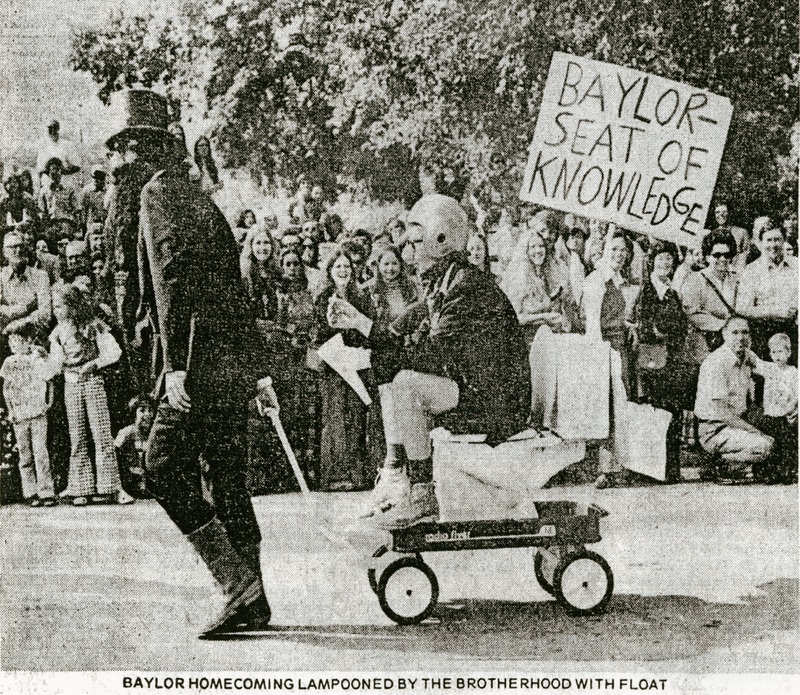
Noze Brotherhood homecoming float
Along with many other outrageous homecoming floats, the Brothers once wheeled a toilet down Fifth Street with the sign “Baylor Seat of Knowledge.” Many of their homecoming pranks are often their biggest events, as alumni and students always anticipate what crazy thing the NoZe Brothers will cook up this year. | Source: BU Records: NoZe Brotherhood, Accession #BU/384, Box 1, Folder 8, The Texas Collection, Baylor University.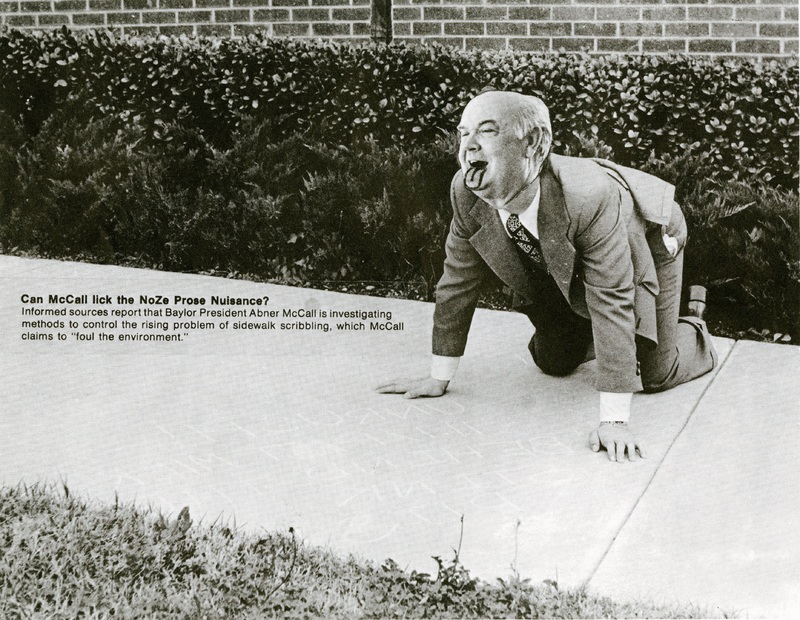
Baylor President Abner McCall
Baylor President Abner McCall and the NoZe Brothers had a tenuous relationship. Here he is pictured in a rather demeaning way in a Brotherhood publication. One particularly exciting episode in the history of the NoZe Brothers occurred when Playboy magazine recruited female Baylor students for a Southwest Conference edition. The NoZe Brothers, in typical fashion, added fuel to the fire by publishing a special edition of The Rope called “Hooboy,” with a centerfold of shirtless Brother LibidoNoZe drinking chocolate milk from a quart container in the shower. President McCall found no amusement in the stunt and the Brotherhood was almost expelled from campus. | Source: BU Records: NoZe Brotherhood, Accession #BU/384, Box 2, Folder 3, The Texas Collection, Baylor University.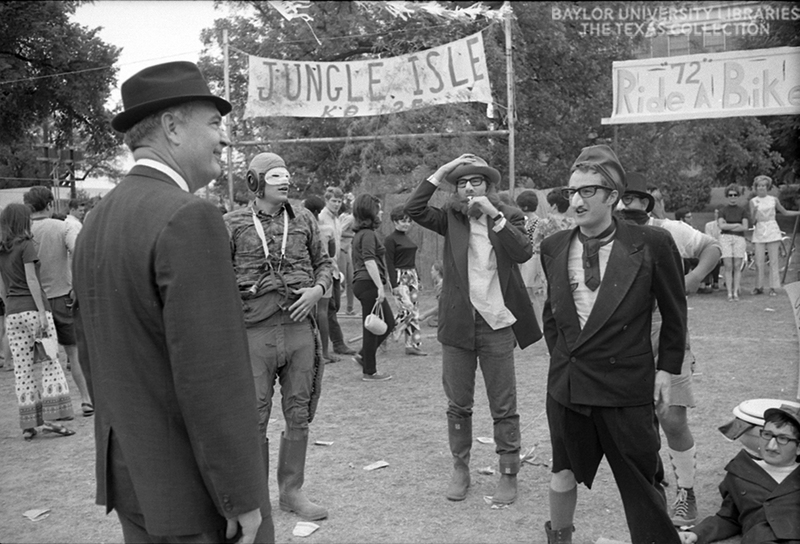
Always in Trouble
A few noZemen decided to confront President Abner McCall during Dia del Oso in 1969. The relationship with McCall was particularly strained, making such encounters fraught with peril. | Source: Diadeloso Baylor University, Noze Brothers, April 25, 1969 (2)," The Texas Collection, Baylor University photo stream, Flickr, https://www.flickr.com/photos/texascollectionbaylor/40598617643/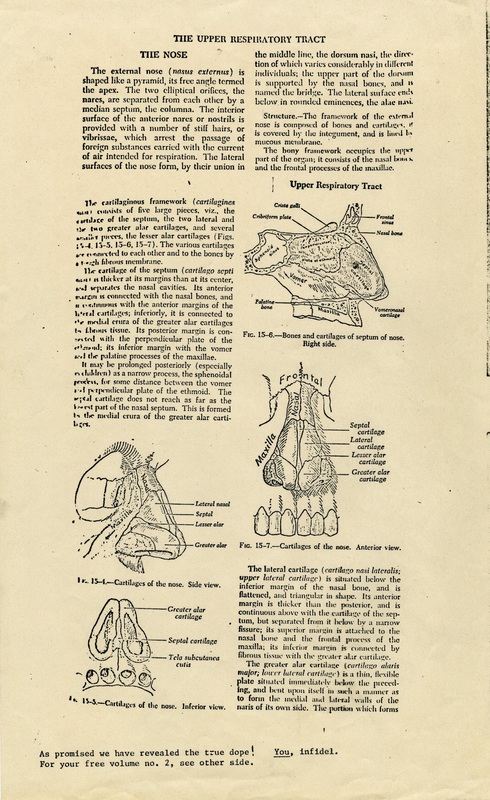
"Inside scoop" prank
The NoZe Brothers often tease “infidels,” knowing everyone is curious about the inside scoop on the Brotherhood. In 1976 they put an ad in The Lariat for anyone to purchase a “complete history of the Noze” to discover “what really goes on inside the Noze.” When the product came out, it was an encyclopedia-like article about the anatomy and physiology of the human nose. | Source: BU Records: NoZe Brotherhood, Accession #BU/384, Box 1, Folder 8, The Texas Collection, Baylor University.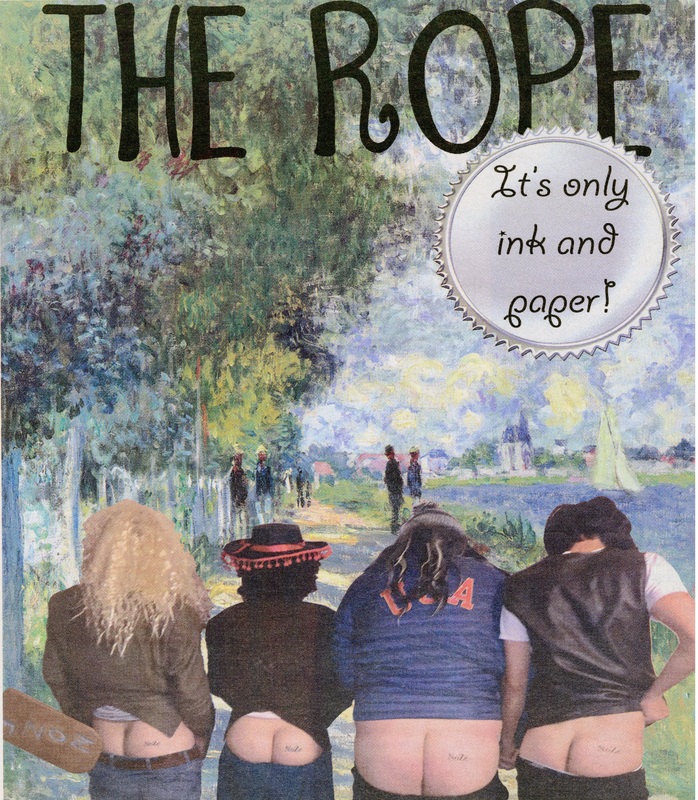
The Rope, Spring 2017
This cover from The Rope in spring 2017 shows that the humor lives on. The famous saying “It’s Only Ink and Paper” comes from the NoZe Brothers’ defense of their cause. They believe no one should be upset about their publications because, after all, ink and paper are harmless. | Source: BU Records: NoZe Brotherhood, Accession #BU/384, Box 5, Folder 21, The Texas Collection, Baylor University.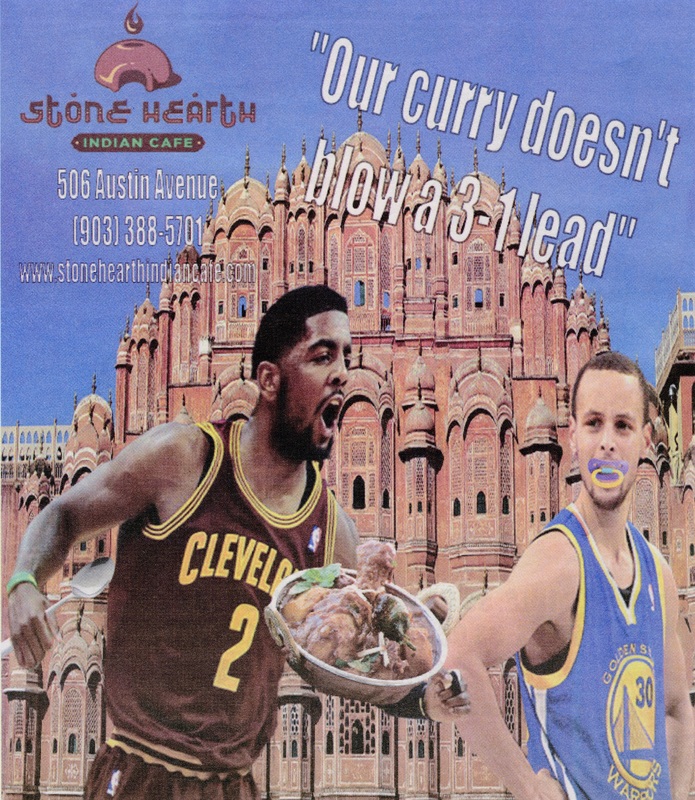
Typical Rope advertisement
The NoZe Brothers fund their organization in part by selling advertisements in The Rope. Yet the ads have a typical NoZe Brothers spin. Here is an ad for a local Indian food restaurant in the 2017 spring issue, but it teases Steph Curry about losing the NBA championships. | Source: BU Records: NoZe Brotherhood, Accession #BU/384, Box 5, Folder 21, The Texas Collection, Baylor University.
The Birth of the NoZe
NoZe Brotherhood founder Earl Bodine describes how the Brotherhood began | Source: Bodine, Earl, interviewed by M. David Hill, June 29, 1993, in Grand Prairie, Texas, Baylor University Institute for Oral History. View Full InterviewA Bonehead Club
NoZe Brotherhood founder Earl Bodine on the nature of the club | Source: Bodine, Earl, interviewed by M. David Hill, June 29, 1993, in Grand Prairie, Texas, Baylor University Institute for Oral History. View Full InterviewCompeting for Recruits
NoZe Brotherhood founder Earl Bodine on why they founded the Brotherhood and competition with the Chamber of Commerce for members | Source: Bodine, Earl, interviewed by M. David Hill, June 29, 1993, in Grand Prairie, Texas, Baylor University Institute for Oral History. View Full InterviewA Safe Haven
NoZe Brotherhood founder Earl Bodine on why Elm Mott is significant to the Brotherhood | Source: Bodine, Earl, interviewed by M. David Hill, June 29, 1993, in Grand Prairie, Texas, Baylor University Institute for Oral History. View Full InterviewA Scar Upon the NoZe
NoZe Brotherhood founder Earl Bodine describes initiation in the 1920s | Source: Bodine, Earl, interviewed by M. David Hill, June 29, 1993, in Grand Prairie, Texas, Baylor University Institute for Oral History. View Full InterviewWhere the Trouble Started
NoZe Brotherhood founder Earl Bodine on how opposition to the Brotherhood initially arose | Source: Bodine, Earl, interviewed by M. David Hill, June 29, 1993, in Grand Prairie, Texas, Baylor University Institute for Oral History. View Full InterviewLord Knows How We Got NoZeprose
NoZe Brotherhood founder Earl Bodine explains how NoZe brothers' names and NoZeprose began | Source: Bodine, Earl, interviewed by M. David Hill, June 29, 1993, in Grand Prairie, Texas, Baylor University Institute for Oral History. View Full InterviewPress Without Permission
Local newspaper printer Bill Foster tells of how the NoZe Brothers used to sneak into his shop to print The Rope | Source: Colvin, Otis Herbert, interviewed by Ray F. Luper, July2-7 1997, in Waco, Texas, Baylor University Institute for Oral History. View Full InterviewClash With the Secret Service
Former Baylor Chaplain Dr. W. J. Wimpee recounts a time when the NoZe Brothers interrupted chapel. | Source: Wimpee, W. J., interviewed by Glenn Jonas, May 23, 1994, in Waco, Texas, Baylor University Institute for Oral History. View Full Interview (Interview 4)"Onery" Induction
Famous Watergate scandal prosecutor Dr. Leon Jaworski tells of his honorary induction into the NoZe Brotherhood. | Source: Jaworski, Leon, interviewed by Thomas Lee Charlton and W. Frank Newton, October 6, 1981, in Waco, Texas, Baylor University Institute for Oral History. View Full Interview (Interview 15)Stealing the Heart of an Opera Star
Former music professor Dr. Otis Colvin describes the NoZe Brothers' night out with the 1930s famous opera singer Grace Moore | Source: Colvin, Otis Herbert, interviewed by Ray F. Luper, July2-7 1997, in Waco, Texas, Baylor University Institute for Oral History. View Full Interview