Ernesto Fraga
Text
A Chicano activist and founder of Tiempo newspaper, Ernesto Fraga worked tirelessly to advocate for the interests of Hispanic communities in Waco and Austin. Fraga’s family had a long history in Waco: his grandparents, like so many others, had moved there in 1910 fleeing the Mexican Revolution, joining a growing Hispanic community in Waco. Fraga made it his life’s mission to protect this community by fighting discrimination, advocating for their representation in politics and media, and celebrating their rich heritage.
Born in 1950 in Chicago, Fraga spent the early years of his life moving all over the country because his stepfather was in the Army. He moved to Waco when he was twelve years old, where his extended family still lived, and grew up on Spring St just north of the Brazos. Many of his family members, along with others in the Waco Hispanic community, worked in the cotton fields. In school, Fraga encountered racism and sometimes got into fights; from a young age he refused to let racism go unchallenged. At age seventeen he left home due to familial strife and moved in with two roommates, one of whom was Manuel Sustaita, a Vietnam veteran and activist in Waco, and at this point his political involvement began. That same year, he helped create a junior chapter of the League of United Latin American Citizens (LULAC), a Texas-born civil rights organization, bringing together around eighty high school and McLennan Community College students in Waco. Within a year, he moved up the ranks to be elected as a state director. He then helped to organize a chapter of the Mexican American Youth Organization (MAYO) in Waco, a group originally founded in San Antonio based on more aggressive political demonstrations, including protests and school walkouts. MAYO in turn coordinated the Alliance of Mexican American Organizations in Waco, a coalition of churches, businesses, and clubs that advocated for equitable hiring practices. All of this took place before Fraga graduated from high school in 1968.
In 1970 Fraga moved to Austin to work for the Office of Economic Opportunity, a War on Poverty initiative, and he quickly became involved in the Austin Chicano Movement. He helped found a chapter of the Brown Berets in Austin, a paramilitary organization that pushed for civil rights for Hispanic communities and a major player in the nation-wide Chicano Movement. The Brown Berets participated in strikes, protested police brutality, and advocated for housing, education, and immigration reforms. While in Austin, Fraga also worked with the Echo newspaper and some other barrio newspapers, introducing him to the ability of media to empower a community. He believed that the mainstream press both in Waco and Austin did not represent the issues and concerns of Hispanic residents, making barrio newspapers crucial tools for informing and organizing Hispanic communities. Fraga moved back to Waco in 1974 after being fired by the city of Austin for his involvement in protesting a city official. He organized another chapter of the Brown Berets in Waco but moved back to Austin in 1977 to continue his activism.
Two of the most famous incidents the Brown Berets organized in East Austin took place at this time. The first was a confrontation with the Ku Klux Klan in 1977. The KKK claimed they were going to patrol the border in South Texas to intimidate illegal immigrants. After the Brown Berets announced their intent to confront the KKK at a press conference and organized caravans to travel to South Texas, a KKK leader called off the patrol to avoid the encounter. Fraga recalled this success with pride. The second was a protest in 1978 against the annual Aqua Fest, a boat racing contest that took place in a Hispanic neighborhood. The residents of this neighborhood had repeatedly petitioned to have the contest moved to another location, to no avail. The races caused noise, traffic, and significant pollution, as viewers left their trash in the neighborhood and parked on lawns, devaluing the properties in the area. The peaceful protest turned violent when police began to roughly handle and then beat protesters. Ernesto Fraga was one of the nineteen protesters arrested, although all of the charges against them were dropped when the court found that they had been within their rights to protest. Fraga’s activism in Austin was varied, but it forever shaped his political consciousness.
Fraga’s most well-known work in Waco began with the founding of the Tiempo newspaper in 1982. He believed it was important to have a media outlet that represented Latino concerns. Tiempo was distributed free of charge; Fraga and his wife Linda made their living from ads placed in the newspaper. Tiempo covered all kinds of topics, both political and personal, and it was bilingual. Articles about immigration issues could be found next to announcements of community socials. Fraga continued his political activism, organizing marches and protests, especially against immigration-related policies which he and others felt were degrading to Latinos. The day after one such march in July 2018, Fraga suffered a heart attack which forced the closing of Tiempo. Another newspaper has not yet stepped into the same role, leaving a “void” in the Waco Hispanic community. He inspired not only Latinos, but other minority groups to organize and fight discrimination. Fraga never remained silent on an issue that impacted Latino communities, but raised awareness and advocated for change.
Files
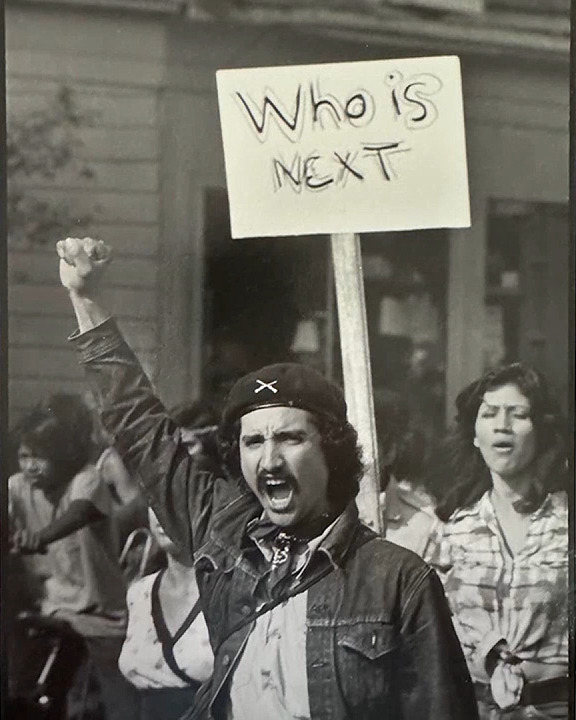
Bold Leader
Ernesto Fraga was a passionate leader in the Chicano movement. He continued organizing protests, fighting discrimination, and advocating for political representation of Latinos throughout his life. | Source: Lopez, Ke’Sha. “National Hispanic Heritage Month - Ernesto Fraga.” KWTX, October 16, 2023. https://www.kwtx.com/2023/10/16/national-hispanic-heritage-month-ernesto-fraga/.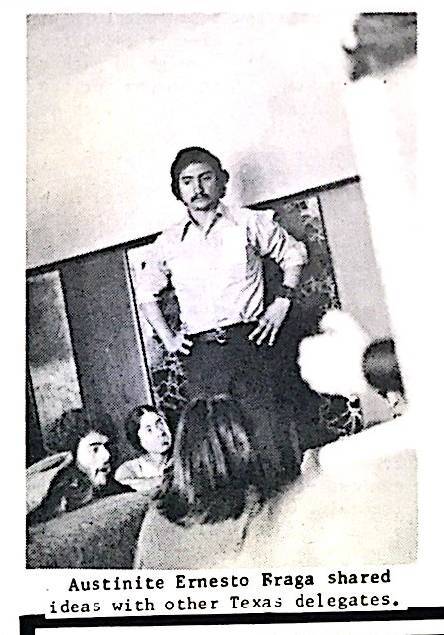
Young Activist
Fraga became involved in activism as a high school student, and he helped found a chapter of the Brown Berets in Austin at only twenty years old. He never let his youth excuse him from taking action. | Source: “Faces of the Austin Brown Berets.” Center for the Study of the Southwest: Texas State University, March 19, 2025. https://www.txst.edu/cssw/news-events/cssw-projects-archive/brown-beret/brown-beret-faces.html.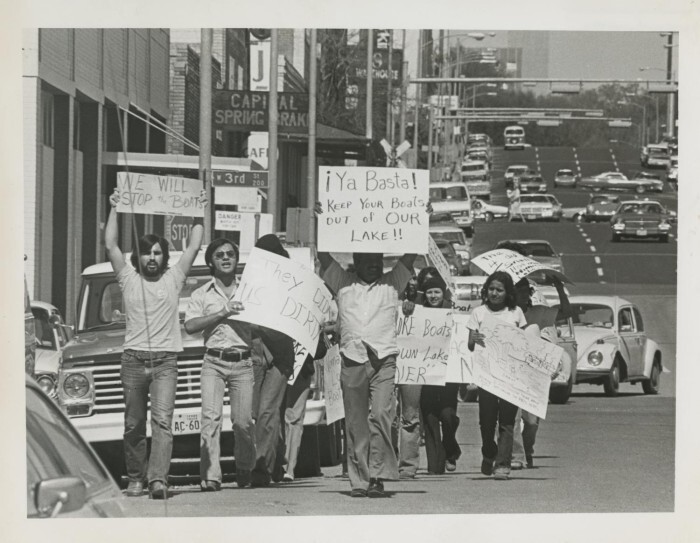
Boat Protest
The infamous boat race protests in Austin utilized some ingenious methods. Not only did protestors gather with signs and chants, but they intentionally stalled vehicles on a road through which boat race spectators would have to pass, stalling the race itself and garnering extensive media attention. | Source: Austin Citizen. [Protesting Aqua Fest Boat Races], photograph, 1978. University of North Texas Libraries, The Portal to Texas History. Austin History Center, Austin Public Library. https://texashistory.unt.edu/ark:/67531/metapth124308/m1/1/.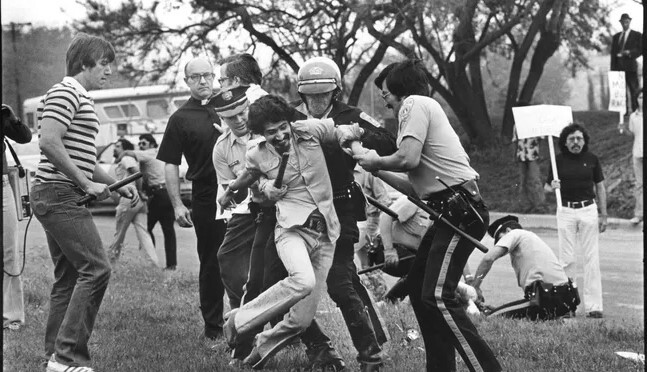
Paul Hernandez
This photo captures the moment when the boat protests turned violent. Police with nightsticks beat activist Paul Hernandez, one of the organizers of the protest. The incident sparked outrage and further fueled the Brown Berets’ fight against police brutality. | Source: “East Austin Activist Paul Hernandez Dies at Age 74.” Austin American-Statesman, October 1, 2020.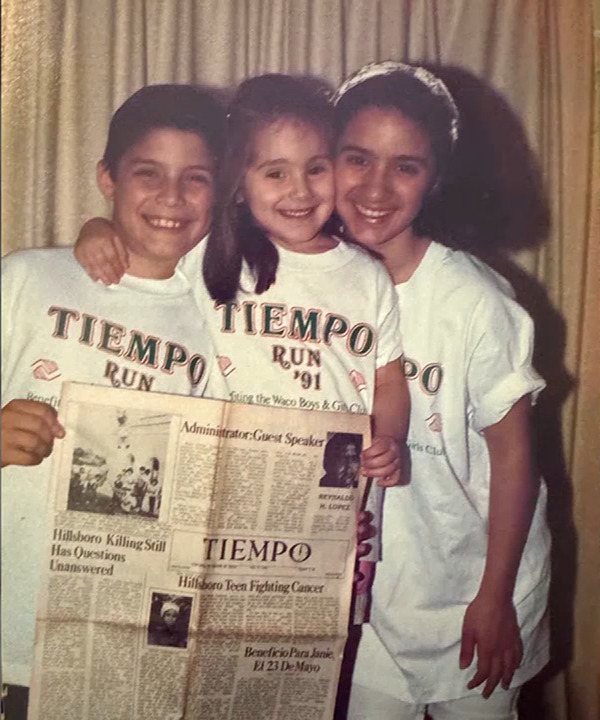
Fraga Children
Fraga’s children participated in their parents’ work by throwing Tiempo newspapers from the top of a truck as the family drove through neighborhoods. Fraga’s youngest daughter, Francesca, became politically active while in high school like her father did, becoming the youngest member of the Waco City Charter Commission in 2004 at age sixteen. | Source: Lopez, Ke’Sha. “National Hispanic Heritage Month - Ernesto Fraga.” KWTX, October 16, 2023. https://www.kwtx.com/2023/10/16/national-hispanic-heritage-month-ernesto-fraga/; Smith, J.B. “Teenage daughter joining father on Waco city panel; Not too young to serve.” Waco Tribune-Herald, May 29, 2004: 1A.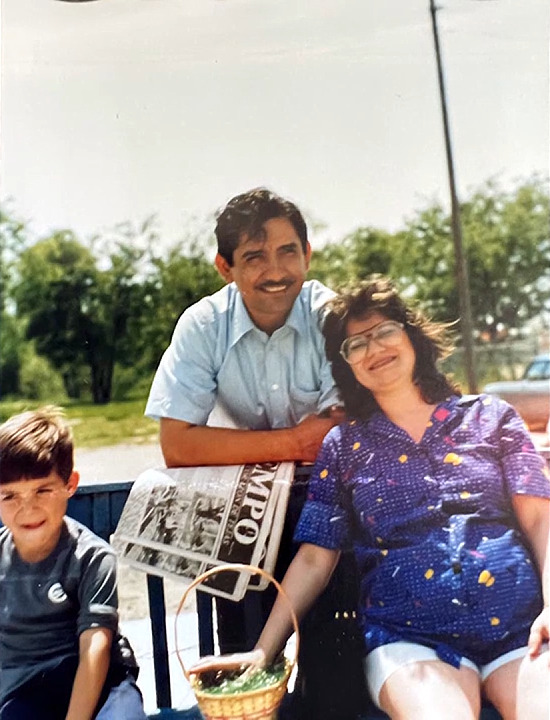
Linda Fraga
Ernesto’s wife Linda was crucial to his work, particularly with the publishing of Tiempo. She helped with the running of the newspaper for decades until it closed after Fraga’s heart attack in 2018. | Source: Lopez, Ke’Sha. “National Hispanic Heritage Month - Ernesto Fraga.” KWTX, October 16, 2023. https://www.kwtx.com/2023/10/16/national-hispanic-heritage-month-ernesto-fraga/.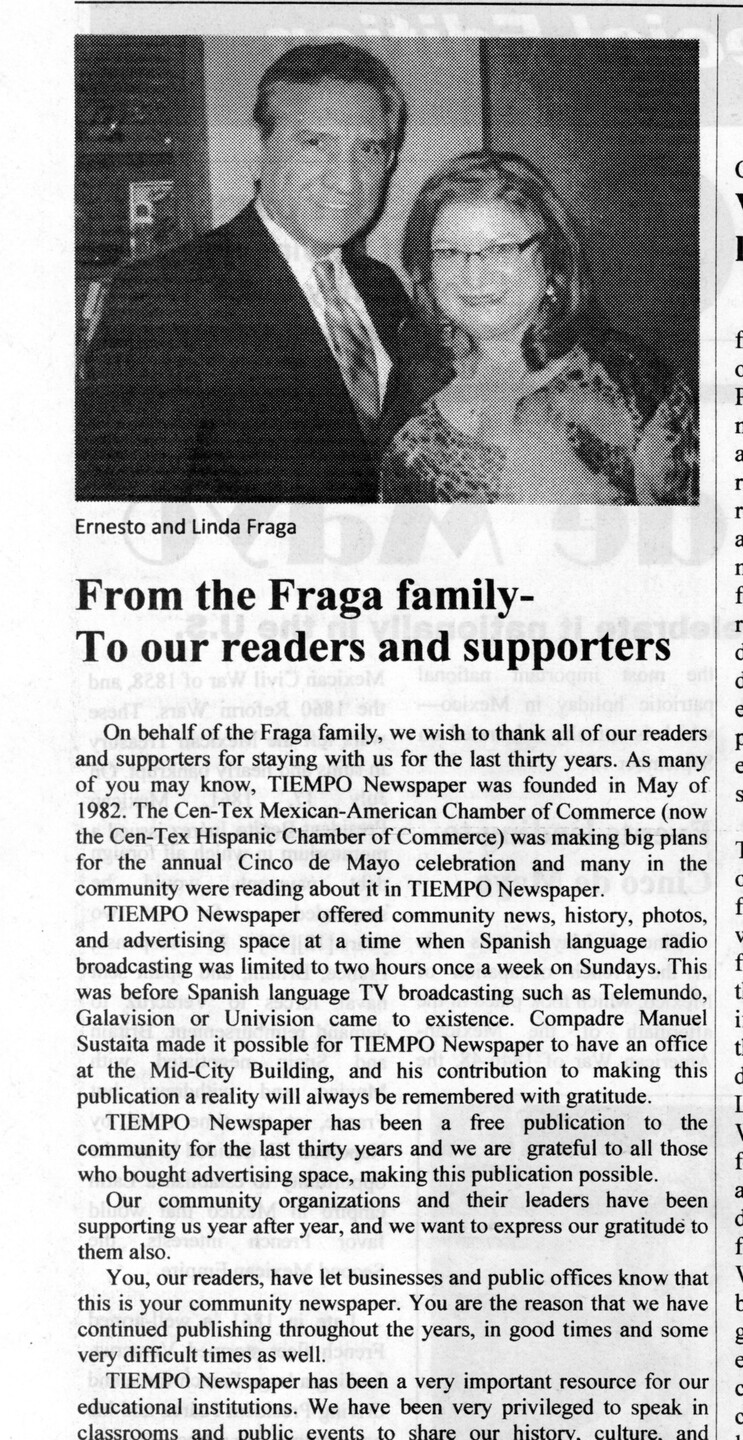
Legacy of Tiempo
This article commemorated the thirtieth anniversary of Tiempo. Fraga articulates what he valued most about the newspaper: it was bilingual, publicized events and businesses important to the Waco Hispanic community, and was distributed free of charge. | Source: Fraga, Ernesto. “From the Fraga Family – To our readers and supporters.” Tiempo (Waco, TX). May 2, 2012: 2. Courtesy of the Texas Collection, Baylor University.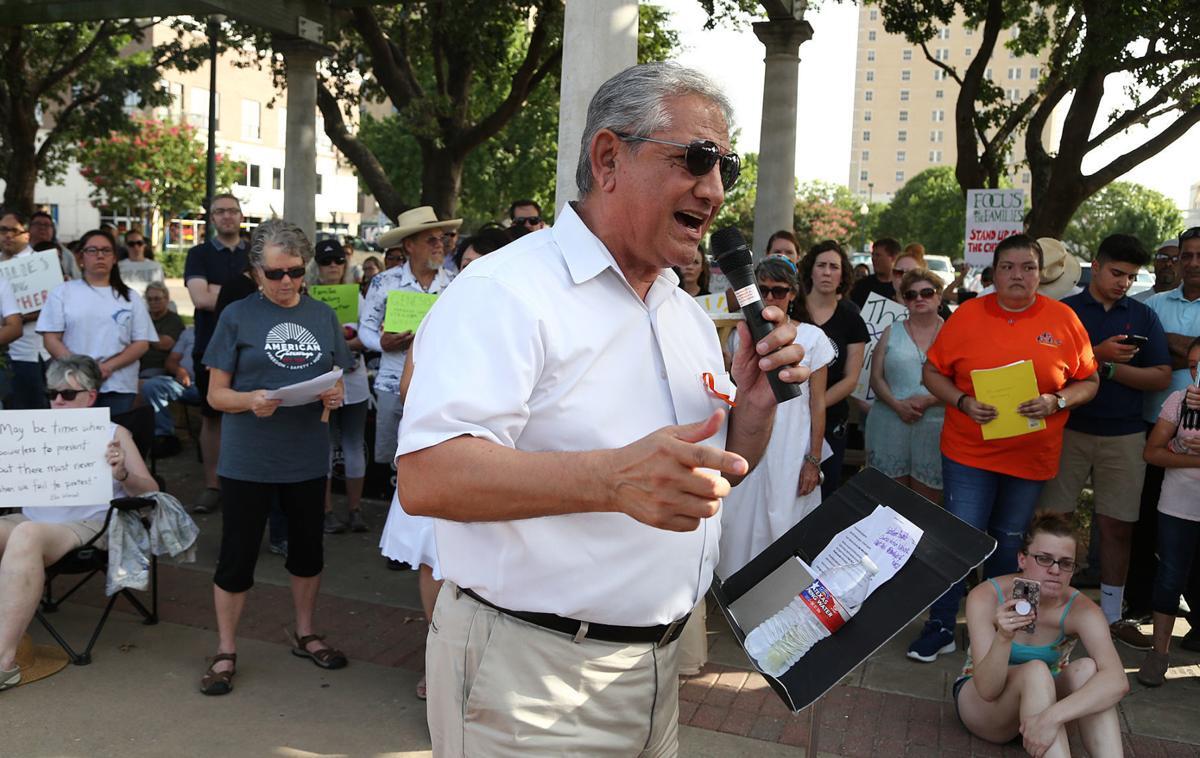
Speech
Fraga was speaking at a “Families Belong Together” rally protesting the separation of children from their guardians at the Texas border just hours before having a heart attack. Even after the closing of his beloved newspaper, Fraga remains a respected figure in the Waco area. | Source: Copeland, Mike. "Heart attack forces closure of Tiempo newspaper after 36 years." Waco Tribune-Herald, August 27, 2018: 1A.
An Invisible People
Fraga speaks to the nebulous position Latinos inhabited in a world that operated primarily in a Black and white dichotomy. They were counted white for many years on the census and on drivers’ licenses, but this did not account for their different heritage and different treatment by others. | Source: Fraga, Ernesto. Interviewed by Mark Firmin, March 26, 2009, in Waco, Texas. Baylor University Institute for Oral History. Access full interview here.1960s Activism
To address this problem of invisibility as a people, Chicano activism agitated for equal rights and representation. Fraga got his start in this climate, organizing and protesting to ensure that Latino communities would not be overlooked. | Source: Fraga, Ernesto. Interviewed by Mark Firmin, March 26, 2009, in Waco, Texas. Baylor University Institute for Oral History. Access full interview here.Urban Removal
Fraga recalls the apt nickname his community assigned to the Urban Renewal of the 1960s: Urban Removal. Families were forced out of homes, social venues and businesses had to close, and their community dispersed across Waco. | Source: Fraga, Ernesto. Interviewed by Mark Firmin, March 26, 2009, in Waco, Texas. Baylor University Institute for Oral History. Access full interview here.Need for Tiempo
Fraga felt that before Tiempo began, Latinos in Waco were only represented in media through crime statistics and obituaries. He believed that they needed a media outlet of their own in order to combat the temptation to believe the stereotypes perpetuated about them in popular media. | Source: Fraga, Ernesto. Interviewed by Mark Firmin, March 26, 2009, in Waco, Texas. Baylor University Institute for Oral History. Access full interview here.Bilingual Publication
Older generations primarily spoke Spanish in Fraga’s experience, whereas younger generations tended to speak English. Fraga himself had to relearn Spanish as an adult so that he could better serve his community. This is why he made Tiempo a bilingual newspaper, so that everyone could be included. | Source: Fraga, Ernesto. Interviewed by Mark Firmin, March 26, 2009, in Waco, Texas. Baylor University Institute for Oral History. Access full interview here.