McLennan Community College
Text
Since the nineteenth century, Waco has been renowned for the quality and number of higher education institutions in the city and surrounding area. Despite this reputation, the Waco area did not boast its own junior college until the 1960s.
The idea of starting a junior college in Waco originated with Waco Chamber of Commerce member Paul Marable. When Marable joined the chamber, one of his initial concerns was the lack of a junior college for the Waco community. Senior members of the chamber hesitated to bring up the discussion of a junior college, as they feared Baylor University would feel threatened by the possibility of a new institute for higher education in Waco. Marable, unfazed by these worries, went to Baylor administration and presented his idea to President Abner McCall. Rather than being offended, McCall supported the idea wholeheartedly. With this endorsement, the Chamber began to discuss the feasibility of a new junior college.
In November 1964, a steering committee appointed by the Waco Chamber of Commerce met for the first time to begin planning the creation of a new junior college. One year later, local voters approved the creation of the McLennan County Junior College Tax District and elected a seven-member governing board. The college was christened McLennan Community College (often shortened to MCC) in early 1966, making it the first junior college in Texas to incorporate as a community college. That same year, the board hired Dr. Wilbur Ball as the college's first president. Ball was well-suited to the position, having previously worked in the registrar’s office at Del Mar College and served as dean and vice president at Wharton College.
A great deal of consideration went into the selection of the college’s site. The board initially considered putting the new college downtown in an effort to promote business there, but MCC administrators, including President Ball, quickly decided that none of the buildings available downtown were suited to hold a college. School administration decided early on that the college should be in or near Waco proper, as that was the population center of the district. The college’s original temporary location was the deactivated James Connally Air Force Base, which it shared with the newly opened Texas State Technical College (then called the James Connally Technical Institute).
MCC held its first day of classes in September 1966. When the college opened, it boasted twenty-two faculty and had an enrollment of 858 students. MCC was open enrollment, and in its first year of operation a significant portion of the student body were minority students. In order to reflect this, MCC sought out minorities when hiring faculty as well. Ms. Ezra Henderson, a Waco native and one of the college’s original faculty members in 1966, was the first African American faculty member at MCC.
The board approved the selection of the historic William Cameron property, comprising 200 acres, for MCC’s permanent site in 1966. They acquired the land for $290,000. Construction on new, permanent facilities on the Cameron property began in 1967 and finished in 1969, with classes began at the new location that January. The next year, legislature approved a $4,000,000 bond issue to build additional facilities.
MCC became the first community college in Texas to run its own police academy in 1977. In 1987, MCC bought the old Waco High School campus, which stood empty after Waco High merged with Richfield High School. The purchase added 40 acres, four tennis courts, and new school facilities to the existing campus. The old school building became the Community Services Center. The college grew quickly, expanding to 5,750 students and 165 full-time faculty by 1990. At that point, the school had become a member of the American Association of Junior Colleges, the Texas Public Junior College Association, and an affiliate member of the Association of Texas Colleges and Universities. Into the 2020s, McLennan Community College’s enrollment and number of faculty have grown to almost ten times their original size. It has made a name for itself in academic excellence and holds true to its commitment to offering a high-quality education while remaining affordable.
Files

Local Leaders
Unlike most junior colleges, MCC’s governing board is elected by local voters. The original members of the board included (from bottom left) Henry Griffin, R.K. Moore, Goldena Ware, W.C. David, Earl Harrison, Dr. G.W. Henderson, and Bob Sheehy. They are shown here with Dr. Wilbur Ball (top center), MCC’s first president. | Source: Image courtesy of McLennan Community College Student Publications Group, “The Clan, Vol. 1, No. 2,” MCC Archives (MCC Library), https://mccarchives.omeka.net/items/show/411.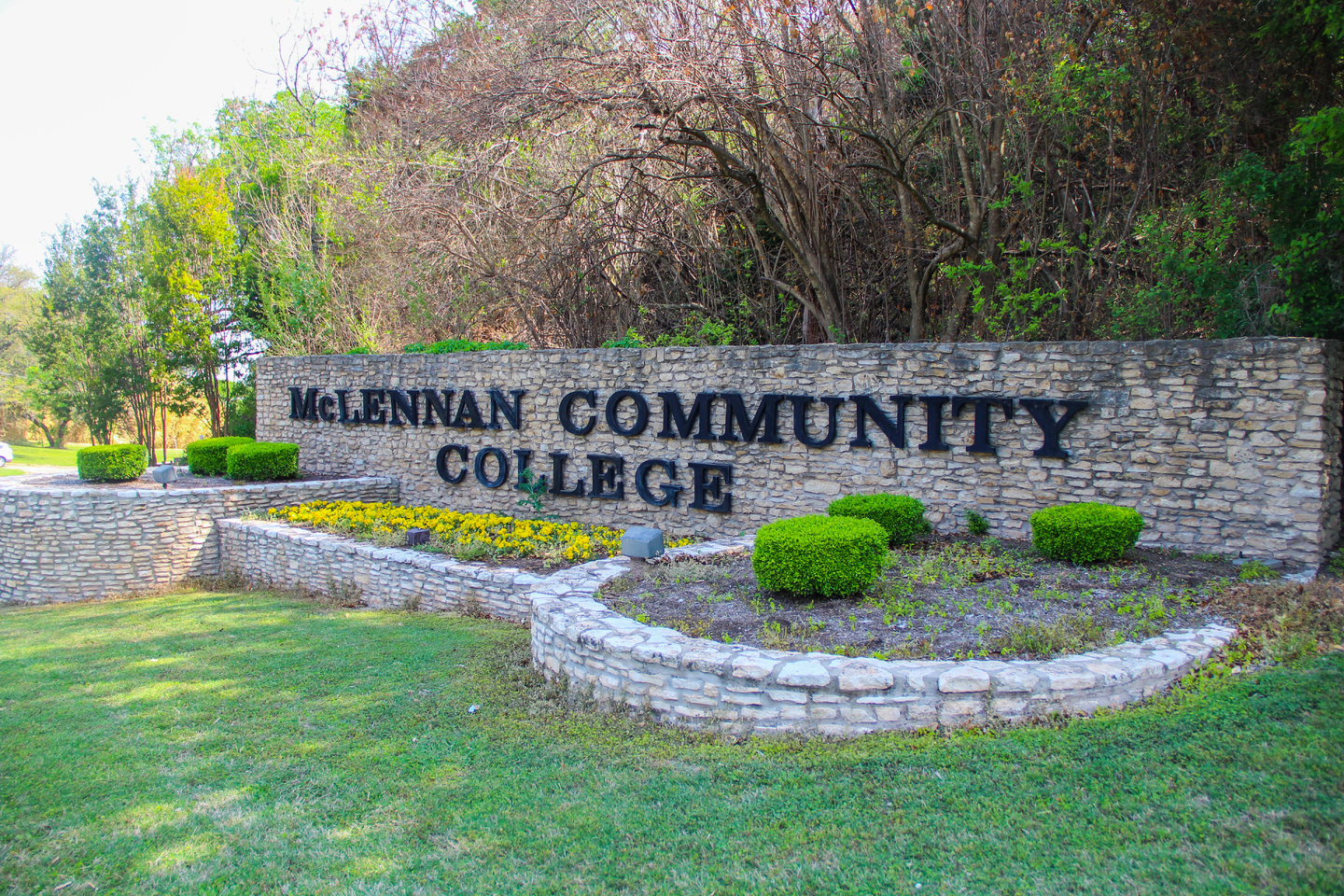
Name Games
MCC was the first junior college in Texas to use the word “community” in its name. However, some members were opposed to its inclusion, as they thought it implied that the college was part of a small town rather than a district. | Source: “McLennan Community College,” PhotoShelter, https://mclennancommunitycollege.photoshelter.com/galleries/root/C0000TO31Ws9ueRg/MCC-Public-Library.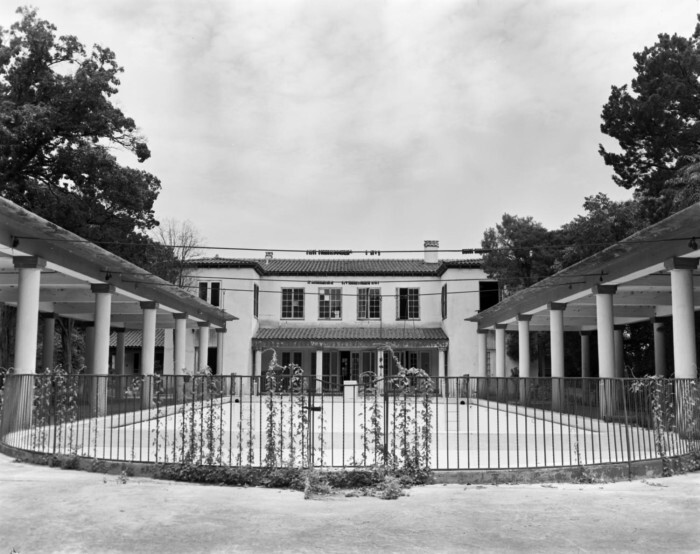
Valley View
The Cameron family’s summer home, Valley View, became part of MCC’s campus with the purchase of the Cameron property. Built in 1921, the house was the home of Art Center Waco from 1972 to 2017 but was torn down in 2024 due to structural issues. | Source: Image courtesy of McLennan Community College, “South Elevation and Pool Fence,” McLennan Community College Foundation, https://www.mclennan.edu/foundation/cameron.html.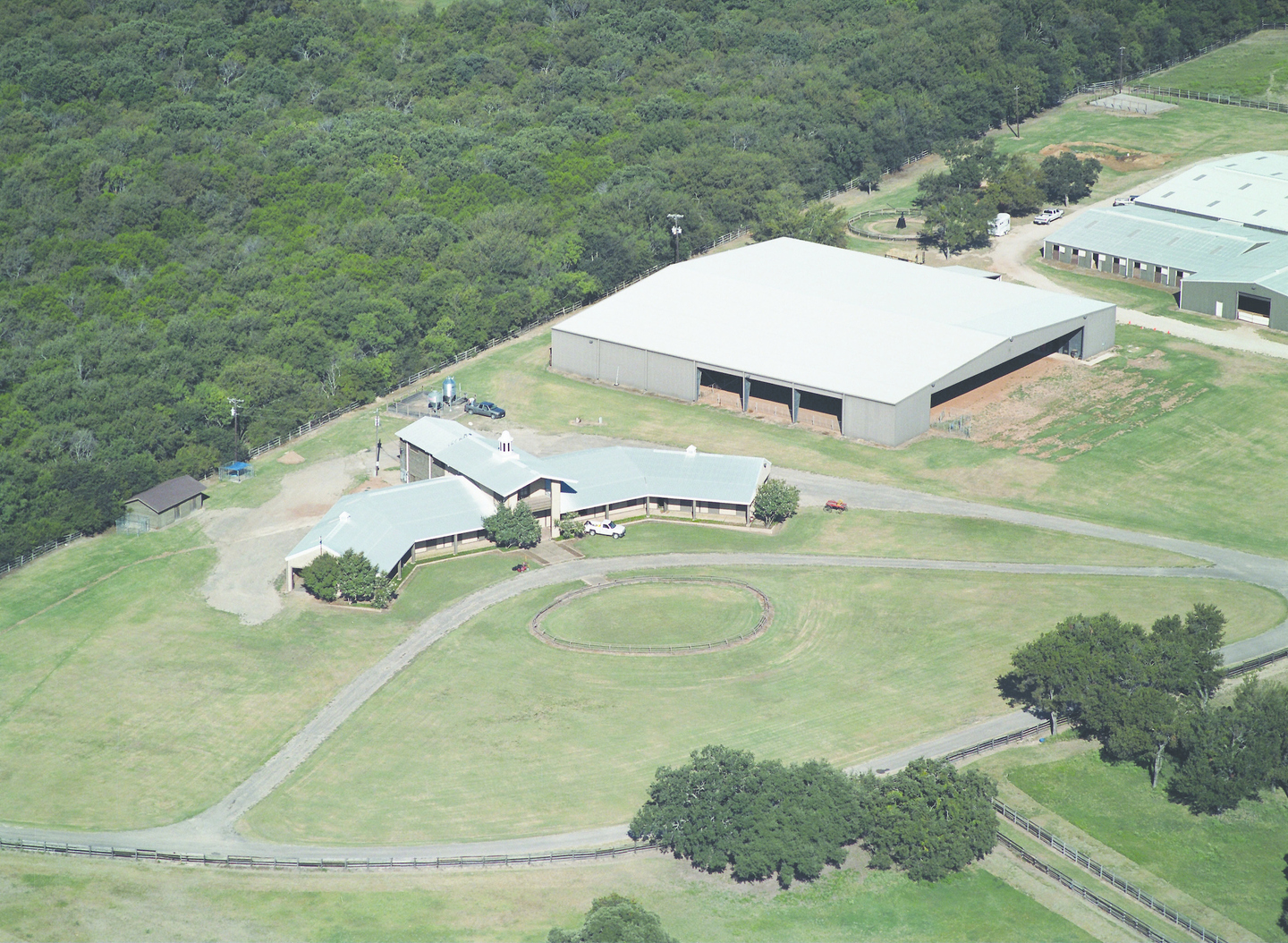
Equine Education
In 2002, MCC purchased 200 acres in Bosqueville to build Highlander Ranch, a large complex which houses both MCC’s veterinary technology and agriculture associate degree programs and its veterinary assistant certificate program. The ranch also provides equine boarding, riding lessons, and children’s camps for the community. | Source: “McLennan Community College,” PhotoShelter, https://mclennancommunitycollege.photoshelter.com/galleries/root/C0000TO31Ws9ueRg/MCC-Public-Library.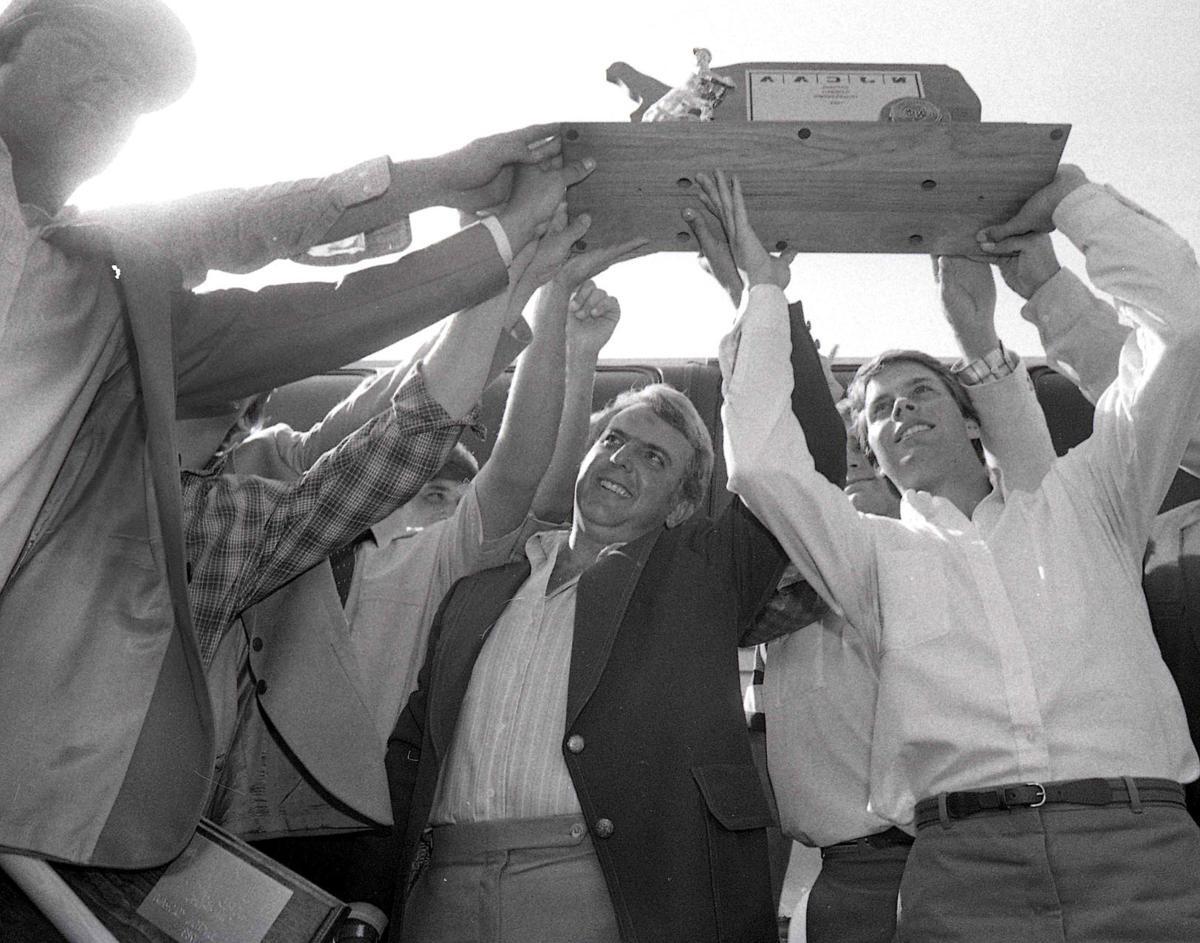
Greatest Show on Dirt
In 1983, MCC’s baseball program won its first-ever national championship. Future major league All-Star and Golden Glove winner Jay Buhner played on this championship team as a freshman. | Source: Image courtesy of Rod Aydelotte, Waco Tribune-Herald, May 10, 2020, https://wacotrib.com/sports/college/mcc/article_68a2559d-94a5-5a71-bb7f-92aaa7b9f1d1.html.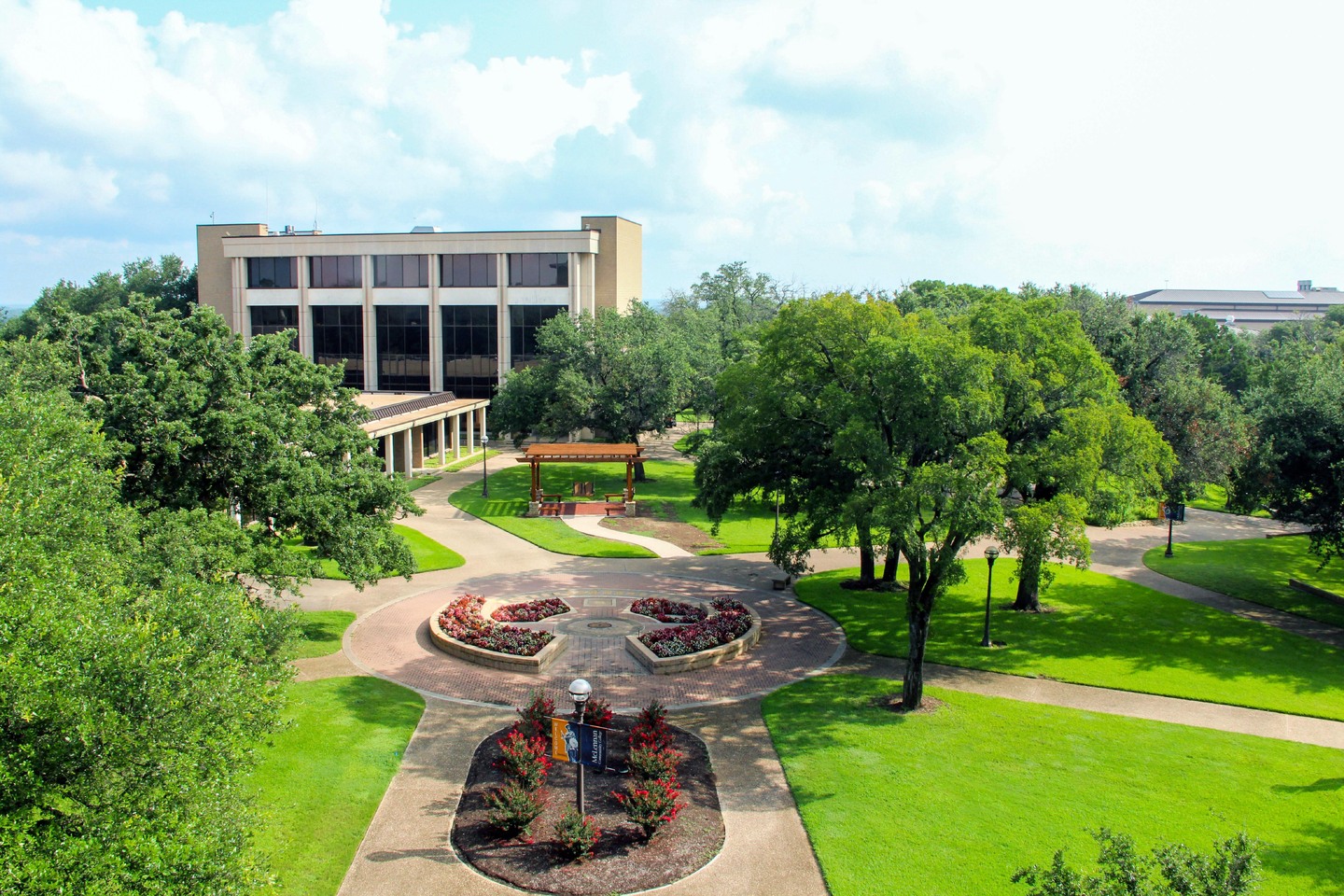
Lay of the Land
In 1966, MCC’s Board of Trustees began working with architects to plan the college’s new campus on the Cameron property. The board was instrumental in designing the appearance of the outside of the buildings, but planning the indoor spaces was left to the administrative staff. | Source: “McLennan Community College,” PhotoShelter, https://mclennancommunitycollege.photoshelter.com/galleries/root/C0000TO31Ws9ueRg/MCC-Public-Library.
Heart of a Highlander
Dr. Wilbur Ball served as MCC’s president from 1966 to 1988. Known for his optimism, willpower, and ability to get things done, Ball was the heart of the college in its founding years. | Source: Image courtesy of MCC, Fox 44 News, https://www.fox44news.com/news/local-news/mccs-first-president-wilbur-ball-has-died/.
Highlanders in Health
MCC opened its nursing program in 1967 under the leadership of director Sarah Moore and professors Mary Rose Konecny and Al Blount. One of MCC’s most successful programs, nursing alumni can be found at virtually every clinic and hospital in the Waco area. | Source: “McLennan Community College,” Community College Review, https://www.communitycollegereview.com/mclennan-community-college-profile.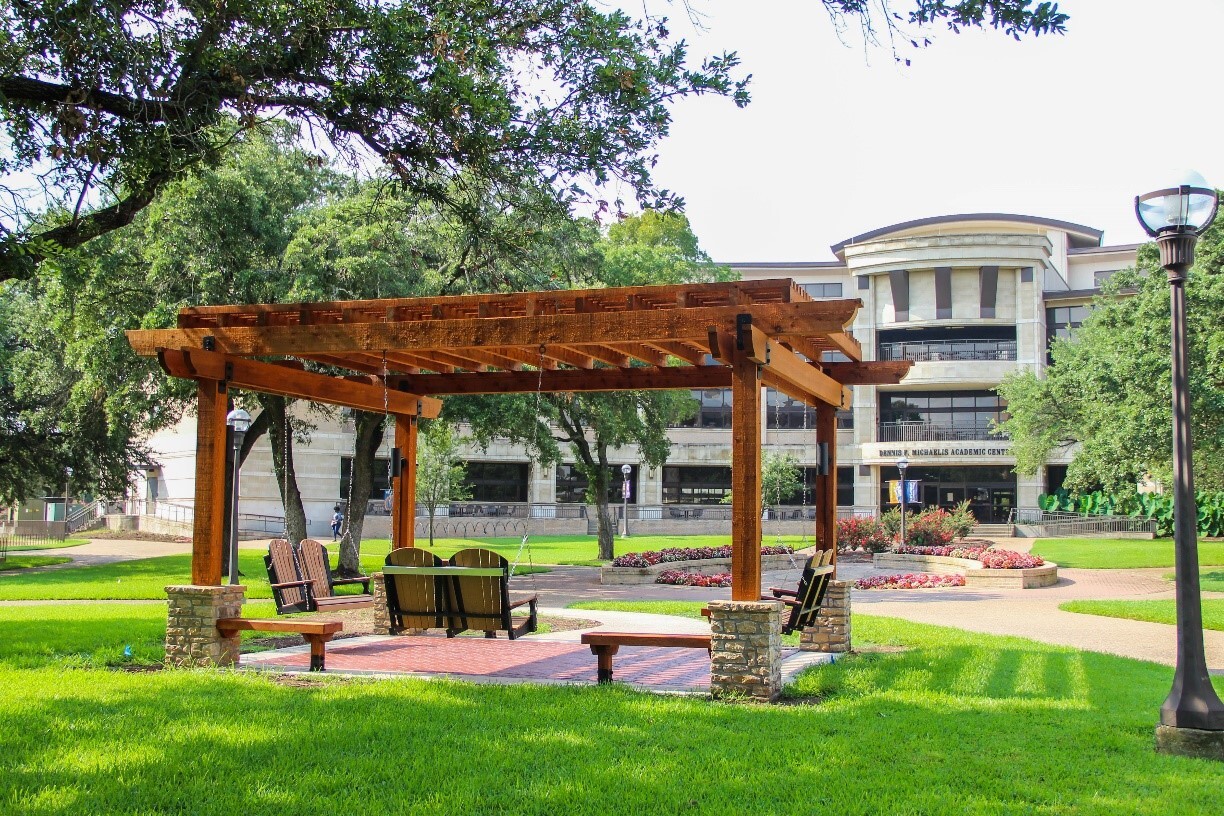
Honoring their Commitment
Texas Senator Murray Watson, Jr. was instrumental in passing legislature that made the founding of both MCC and Texas State Technical College, and the Watson family has funded more than $579,000 in endowed scholarships at MCC. The Greta and Murray Watson, Jr. Arbor on MCC’s campus honors the Watsons’ generous efforts toward the development of the college. | Source: Image courtesy of McLennan Community College, “Watson Arbor,” McLennan Community College News, https://www.mclennan.edu/news/2022/arbor-dedication.html.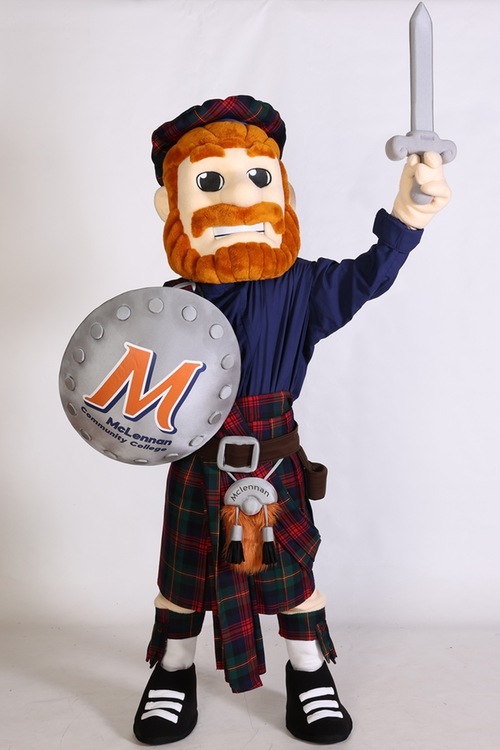
Mac the Highlander
At the suggestion of Dean of Instruction Chester Hastings, MCC students chose a Scottish Highlander as their mascot in the late 1960s. The Highlander, named Mac by students in 2012, pays tribute to the county’s Scottish namesake, Neil McLennan. | Source: “Mac the Highlander,” McLennan Athletics, https://www.mclennanathletics.com/information/Mac_the_Highlander.
What’s in a Name
MCC’s board of trustees considered many different options when naming the college. Dr. Wilbur Ball, MCC’s first president, recalls some of the potential name choices. | Source: Ball, Wilbur A., interviewed by Thomas Charlton, June 14, 1974, in Waco, Texas. Baylor University Institute for Oral History, Waco, Texas. Access full interview here.Planning the Program
Dr. Ball’s experience as vice president at Wheaton College provided him with knowledge of the staff and curriculum needed to run a college transfer program. One issue he ran into when planning, however, was that he did not know how many students might enroll. | Source: Ball, Wilbur A., interviewed by Thomas Charlton, October 16, 1974, in Waco, Texas. Baylor University Institute for Oral History, Waco, Texas. Access full interview here.Curb Appeal
MCC had one of its biggest increases in enrollment after it moved to the new campus in 1969. Dr. Ball attributes this to the beauty of the new facilities. | Source: Ball, Wilbur A., interviewed by Thomas Charlton, October 16, 1974, in Waco, Texas. Baylor University Institute for Oral History, Waco, Texas. Access full interview here.Best in Class
Dr. Ball took a great pride in the quality of the educators he and the board hired. In order to keep them up to date, he encouraged them to continue their education by taking classes at Baylor. | Source: Ball, Wilbur A., interviewed by Thomas Charlton, October 16, 1974, in Waco, Texas. Baylor University Institute for Oral History, Waco, Texas. Access full interview here.Election Fever
Because MCC operates largely on local taxes, the decision to establish the college was left to the people of McLennan County. MCC history instructor Ashley Cruseturner discusses some of the elections that brought the college into existence. | Source: “Crossroads Series Episode 8: School Crossings Part II: Education in Waco with Ashley Cruseturner and Marlene McMichael,” Waco History Podcast, interviewed by Dr. Stephen Sloan and Rick Tullis, May 31, 2023, in Waco, Texas. Produced by Baylor University Institute for Oral History, Waco, Texas. Access full interview here.Founding Faculty
MCC’s original faculty were invaluable in the formation of the college and its programs. Cruseturner recalls some defining qualities of the original twenty-two faculty members. | Source: “Crossroads Series Episode 8: School Crossings Part II: Education in Waco with Ashley Cruseturner and Marlene McMichael,” Waco History Podcast, interviewed by Dr. Stephen Sloan and Rick Tullis, May 31, 2023, in Waco, Texas. Produced by Baylor University Institute for Oral History, Waco, Texas. Access full interview here.A College for Everyone
Since its founding, MCC has had both a diverse faculty and student body. Cruseturner discusses the college’s decision to have open enrollment. | Source: “Crossroads Series Episode 8: School Crossings Part II: Education in Waco with Ashley Cruseturner and Marlene McMichael,” Waco History Podcast, interviewed by Dr. Stephen Sloan and Rick Tullis, May 31, 2023, in Waco, Texas. Produced by Baylor University Institute for Oral History, Waco, Texas. Access full interview here.Backed by the Bears
Before discussions about opening a junior college in Waco could begin, city leaders wanted to be sure the leadership of Baylor University was on board. Waco Chamber of Commerce member Paul Marable recalls seeking approval from Baylor President Abner McCall. | Source: Marable, Paul D. Jr., interviewed by Thomas Charlton, June 15, 1982, in Waco, Texas. Baylor University Institute for Oral History, Waco, Texas. Access full interview here.