Old Waco High School
Text
Old Waco High School is the oldest of several extant buildings to have housed Waco High School. Initially the school met in two small buildings in downtown Waco during the 1880s, and for many years was the only public school west of the Brazos. The high school was built in 1910, and sits in downtown Waco on Columbus Avenue in close proximity to the courthouse and the ALICO building.
The school quickly became notable in the community. In 1915, all 110 seniors passed their classes and graduated. At their graduation ceremony, the keynote speaker invited them to draw upon the efficiency, industry, and preparedness they had been taught at Waco High, for these “were the qualities by which they would eventually triumph” in life. The athletic program was also successful early on. In 1922, the Waco High Tigers defeated the Abilene Eagles, becoming the Texas State Football Champions.
The racial makeup of Waco High began to change in the 1960s when the Waco Independent School District began implementing racial integration. Prior to integration, African American students attended Jefferson Moore High School. The school board mandated incremental integration beginning with teachers and then students, but only achieved the minimum requirements to meet federal standards.
In 1971, a new structure was built to house Waco High School on North Nineteenth Street. Citizens of Waco offered many suggestions for ways to repurpose Old Waco High. For instance, many wanted the building to be used for special education and neighborhood recreation programs. Some thought it best to simply sell it to the highest bidder. Over the next twenty years, Old Waco High was used to house an alternative school, a special education department, a museum called the Metropolitan Learning Center, and a pregnancy resource center. In 1990, the building was closed to the public and sat empty.
The school board put the building up for sale in 1995. However, the cost of removing asbestos and lead-based paint from the building, nearly ten million dollars, led to buyer after buyer losing interest over the next decade. In 2004, dismayed citizens who did not want to see the historic building destroyed attempted to raise the necessary funds to renovate the building but were unable to find a lead donor to assist in the process.
In 2006, a private developer came along with a proposal to renovate Old Waco High. Rehab Builders proposed to develop the building into loft-style apartments which would be offered to low-income families. In 2008, the sale of Old Waco High was completed after the developer agreed to preserve the historic integrity of the building. Today, each unit of the Historic Lofts of Waco High is different depending on where it exists in the floor plan. For instance, some units contain chalkboards; others might have a basketball goal or game clock.
Old Waco High became deeply woven into city fabric through its dedication to the education of youth in Waco. The school educated generation after generation of Wacoans, creating a legacy that many fought to preserve after the school’s closure. Today, Old Waco High remains an important part of the community through its provision of quality housing to low-income citizens.
Files
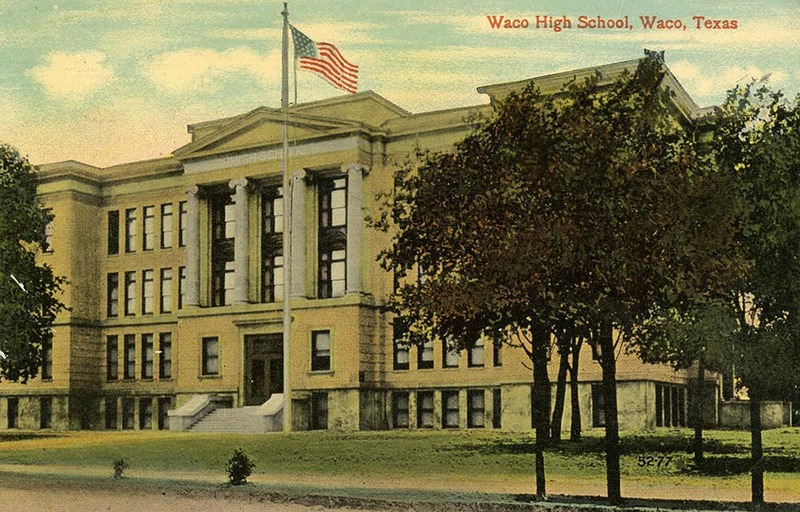
Souvenir Postcard
Waco's population rapidly increased at the beginning of the twentieth century, leading to overcrowding in schools. In 1910, voters passed a bond approving the building of a new school. On April 8, 1912, Waco High School opened to new students in grades nine through eleven. | Source: Image courtesy of the Texas Collection, Baylor University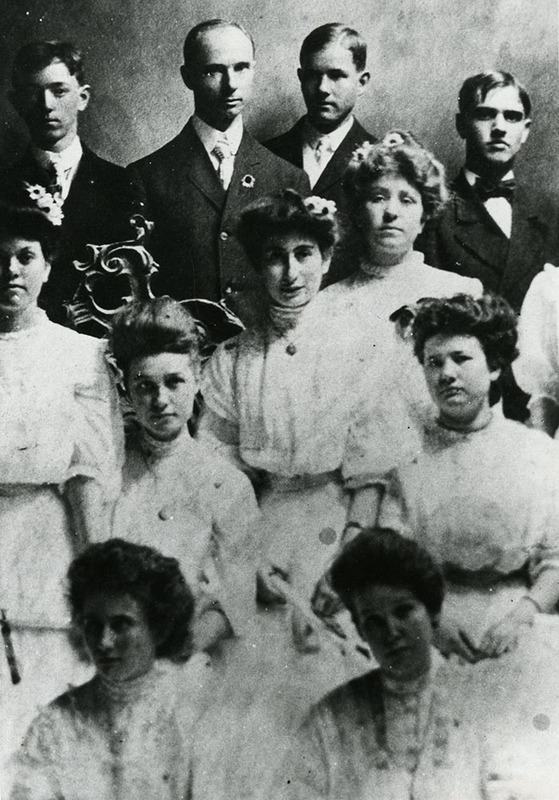
Entering Adulthood
Members of the 1911 Senior Class sit for a formal graduation portrait. Note the formal attire of the students, which conveys the importance of the occasion and the wearers desire to appear mature. | Source: Image courtesy of the Texas Collection, Baylor University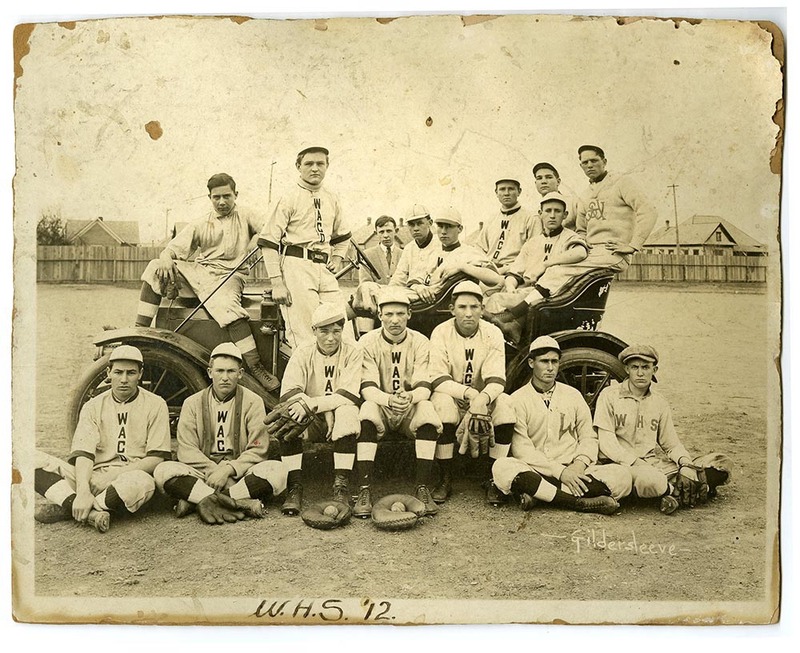
Tough Ballplayers
With the steely gazes of young men imitating their idols in the professional leagues, the 1912 Waco High baseball team poses for a group photo. Since automobiles were still a rare presence in early twentieth-century Waco, the vehicle in the photo makes it all the more novel. | Source: Image courtesy of the Texas Collection, Baylor University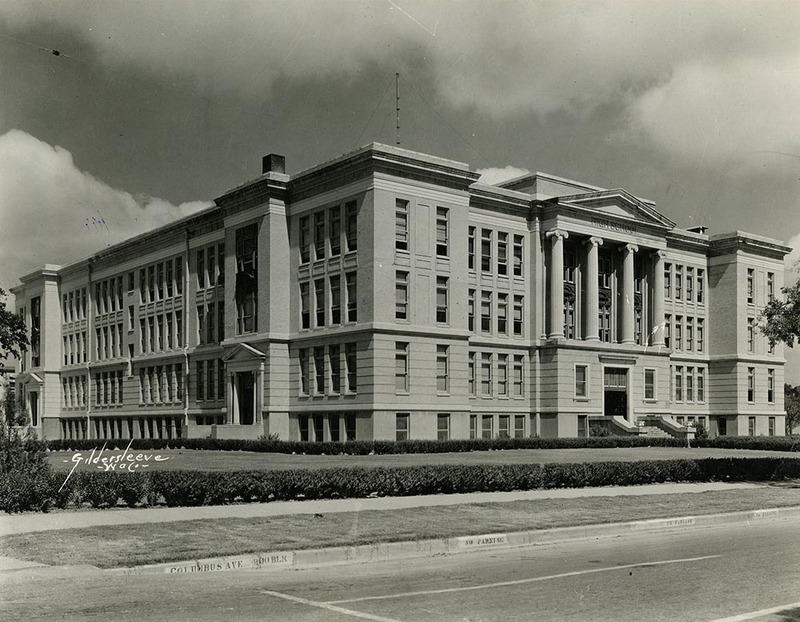
A Grand Center of Learning
Designed by architect Milton W. Scott, Waco High School was built from 1910 to 1912. The impressive classical-style architecture accented by fluted columns made the building unique, inciting many citizens to fight for its preservation over the years. | Source: Image courtesy of the Texas Collection, Baylor University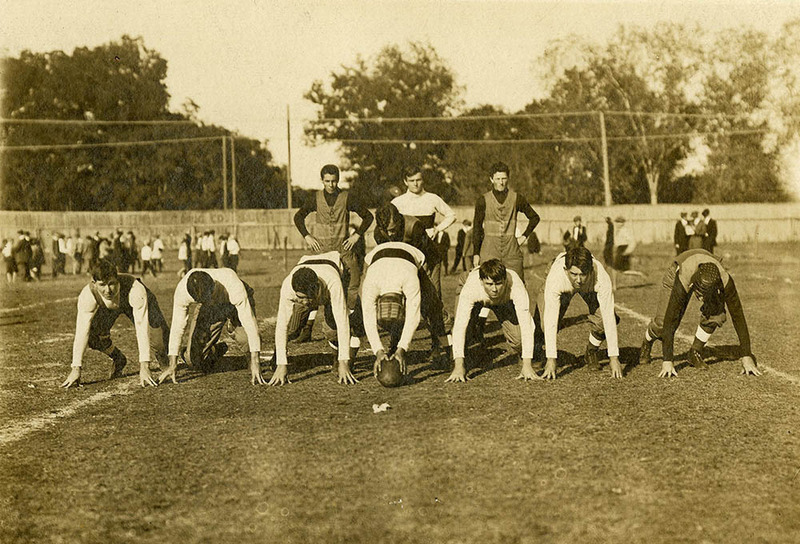
Line Drill
The Waco High School football team practices in 1911. After Paul Tyson began coaching in 1913, the team won state championships in 1922, 1925, 1926, and 1927. In 1927, the Waco High Tigers were named the national football champions. | Source: Image courtesy of the Texas Collection, Baylor University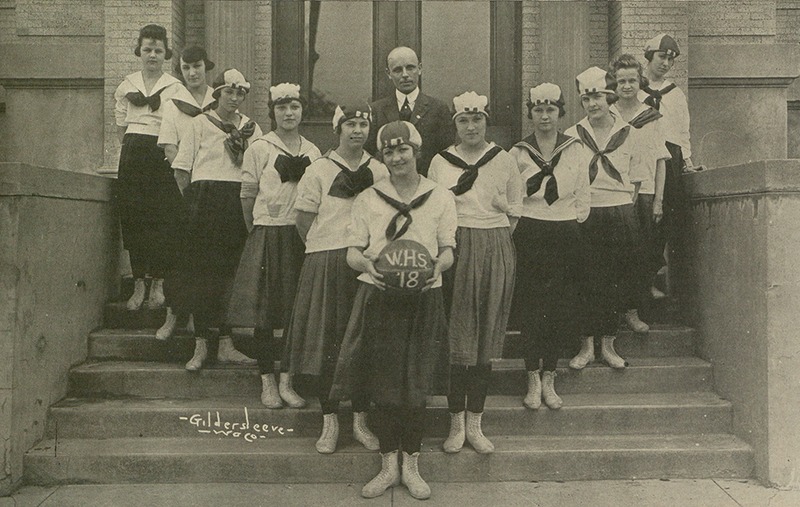
Girls' Basketball Team (1918)
Female students had the opportunity to compete in select sports at Waco High. However, early twentieth-century mores dictated that they do so in a ladylike fashion. This expectation is clearly illustrated in the modest, feminine uniform of the team, complete with its billowing skirt, long sleeved blouse, and attractive cap. | Source: "Daisy Chain" Yearbook, Waco High School, 1918, Poage Library, Baylor University.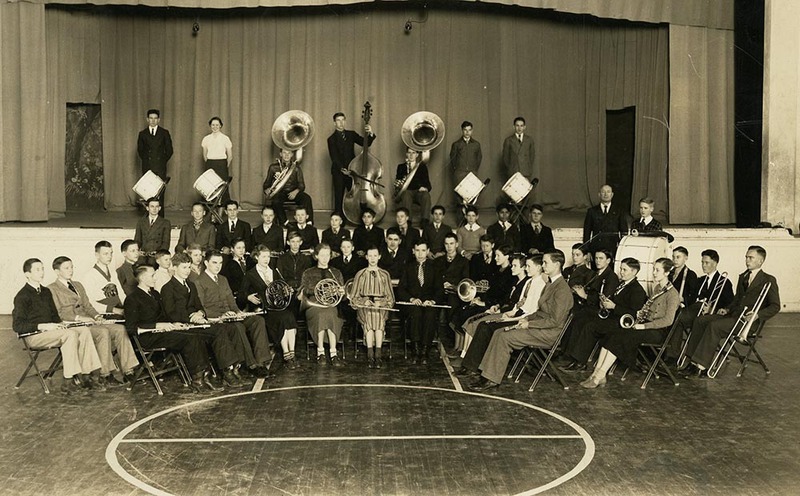
Banding Together
The Waco High Intermediate Band rehearses in the school gymnasium in 1937. In 1942, Waco High purchased the Baker residence across the street from the school so that the band and orchestra could have their own rehearsal space. In 1955, the school built a music building. | Source: Image courtesy of the Texas Collection, Baylor University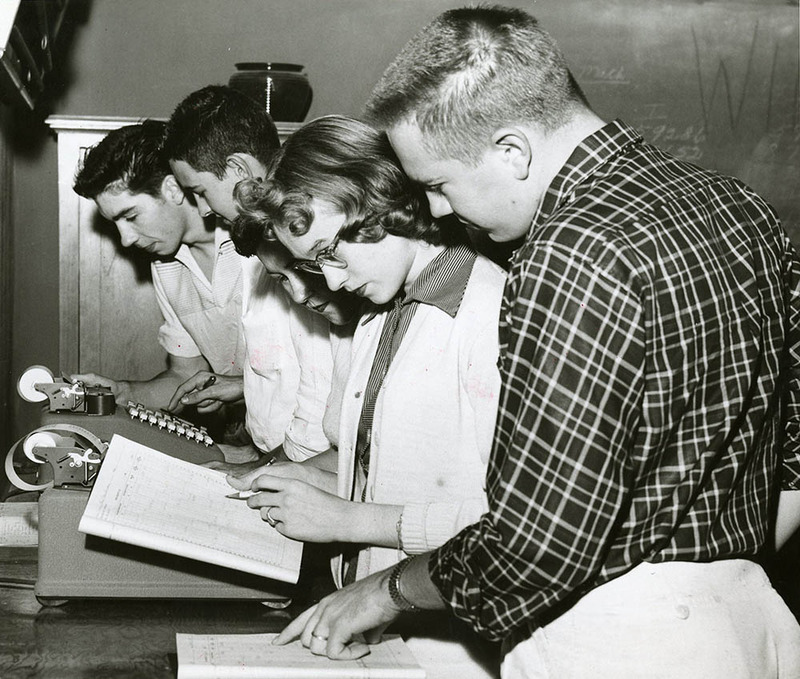
Careful Calculations
Four students use mechanical calculators to check their figures for an assignment. While they might appear primitive by today's technological standards, these adding machines were state of art at the time. | Source: Image courtesy of the Texas Collection, Baylor University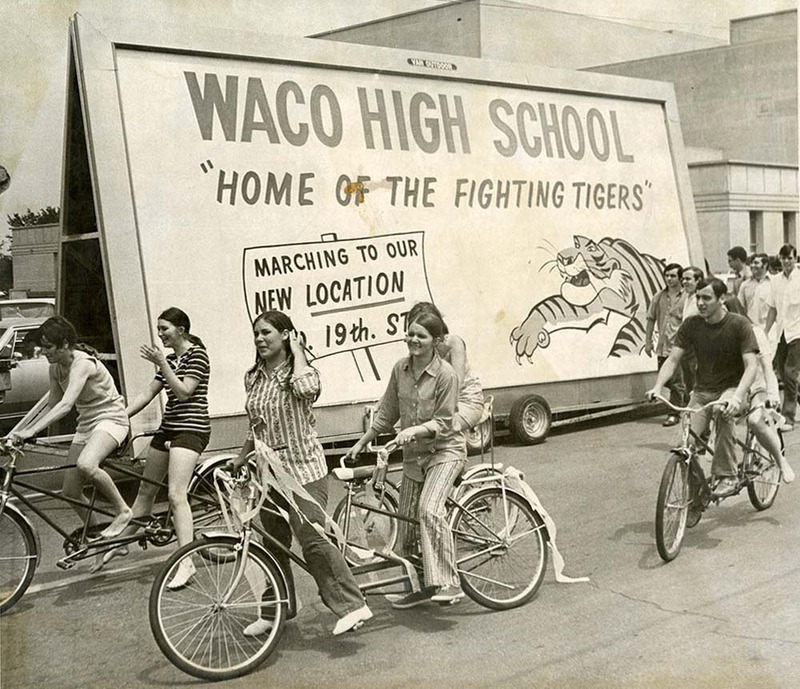
Tigers on the Move (1971)
Though the relocation of Waco High was highly contested by many citizens who wished to preserve the school's historic, original site, the school board stuck by its plan to move classes into a building more suited to the modern academic needs of students. | Source: Image courtesy of the Texas Collection, Baylor University
Waco High School Football in the 1920s
Joe L. Ward Jr. speaks about how popular the Waco High School Football team was in the 1920s. | Source: Ward Jr., Joe L., interviewed by Colbert C. "Cokie" Held, June 20, 2006, in Waco, Texas. Baylor University Institute for Oral History, Waco, TX. View the full interviewSchool Clubs
Gladys Jenkins Casimir tells about the different clubs at Waco High during the late 1910s. | Source: Casimir, Gladys Jenkins, interviewed by Lois E. Myers, June 22, 1995, in Waco, Texas. Baylor University Institute for Oral History, Waco, TX. View the full interviewScience Teacher Accused of Communicating with Mexico During WWI
Gladys Jenkins Casimir tells the story of her science teacher being accused of communicating with Mexico during WWI because of his last name. | Source: Casimir, Gladys Jenkins, interviewed by Lois E. Myers, January 22, 1995, in Waco, Texas. Baylor University Institute for Oral History, Waco, TX. View the full interviewA Huge High School in the 1930s
Colbert C. Held explains the attendance at the school when he was a student in the 1930s and what happened to the school after it closed. | Source: Held, Colbert Colgate "Cokie", interviewed by Lisa McCracken Lacy, November 8, 2010, in Waco, Texas. Baylor University Institute for Oral History, Waco, TX. View the full interview