Dr Pepper Museum
Text
Few major products are as closely identified with the people and environment where they began as Dr Pepper in Waco. Developing from a soft drink invented at a local drugstore to one of the largest and most popular industries in the world, Dr Pepper has remained attached to the city of Waco. This close identification with Waco is perhaps best exemplified in the former bottling plant building which now houses a museum on the corner of Fifth Street and Mary Avenue in downtown Waco.
In 1885, one year before the invention of Coca-Cola, a young pharmacist named Charles Alderton began experimenting by mixing different fruit flavors together at The Old Corner Drug Store on Fourth Street and Austin Avenue. The resulting concoction would become the formula for Dr Pepper. The drink became a favorite of fountain patrons, and soon people all across town ordered the drink originally known as a Waco. From around 1885 to 1891, the drink, could only be served at fountains or the drugstore, where the syrup was mixed with the carbonated water and served individually. The popularity of the beverage influenced the drugstore owner and manager, Wade Morrison and Robert S. Lazenby to form the Artesian Manufacturing and Bottling Co. in 1891 to bottle the drink.
In 1906, a three-story building was built at the corner of Fifth and Mary for the purpose of bottling and shipping the new drink. In 1922, the base of operations moved to Dallas after the formation of the formal Dr Pepper Company. Local bottling production continued until around 1965, when operations were moved to a more modern facility. The building was given to Baylor University and subsequently used as a storage warehouse for the next thirteen years.
On May 11, 1953, an F5 tornado struck downtown Waco, devastating the city. Although it did not sustain a direct hit, the bottling building was among the casualties of the tornado. The tornado damaged the Mary Street side of the building leaving a scar which is still visible today. The relatively sound construction of the bottling building, including 18-inch thick brick walls, massive timber underpinnings, and tile roof, is the reason for the fairly minor damage to the plant. The building was repaired with a lighter colored brick but not restored, and business was back to as usual until the move in 1965.
At Waco’s centennial celebration of the invention of Dr Pepper in 1985, ideas of creating a museum to tell the story of Dr Pepper production in Waco sprang up. On May 11, 1991, the thirty-eighth anniversary of the tornado, the Dr Pepper Museum and Free Enterprise Institute opened. Since then, the museum has entertained and educated thousands of visitors, with a mission of being the best museum to tell the story of the soft drink industry and to use this very industry as a testament to the free enterprise system. Complete with exhibit areas, a gift shop, soda fountain, and restored building features, the Dr Pepper Museum helps tell the story of the growth of Dr Pepper and its special place in Waco.
For more information about the museum, visit www.drpeppermuseum.com.
Files
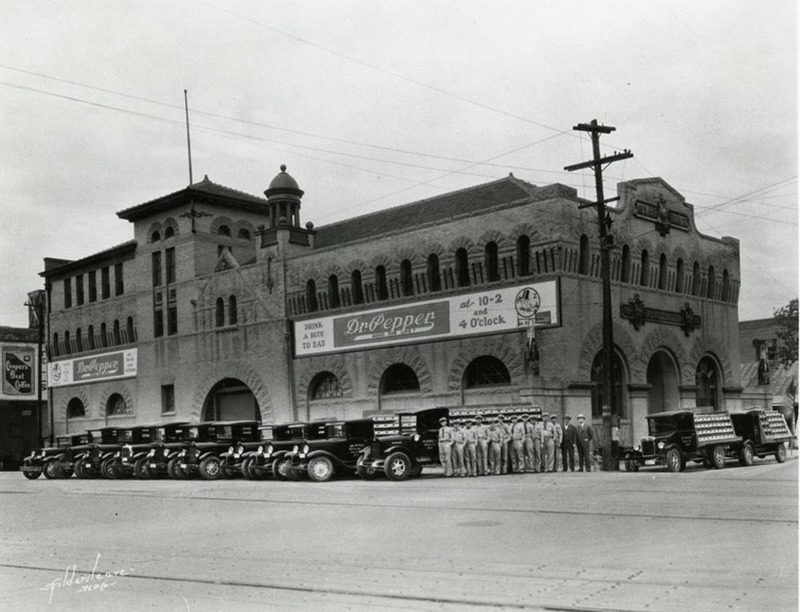
Speedy Delivery
This photograph highlights not only the Richardsonian-Romanesque arches of the Milton W. Scott-designed building but also the specially designed trucks used by the bottling plant in the mid-1920s to deliver the product to merchants. | Source: Image courtesy of the Texas Collection, Baylor University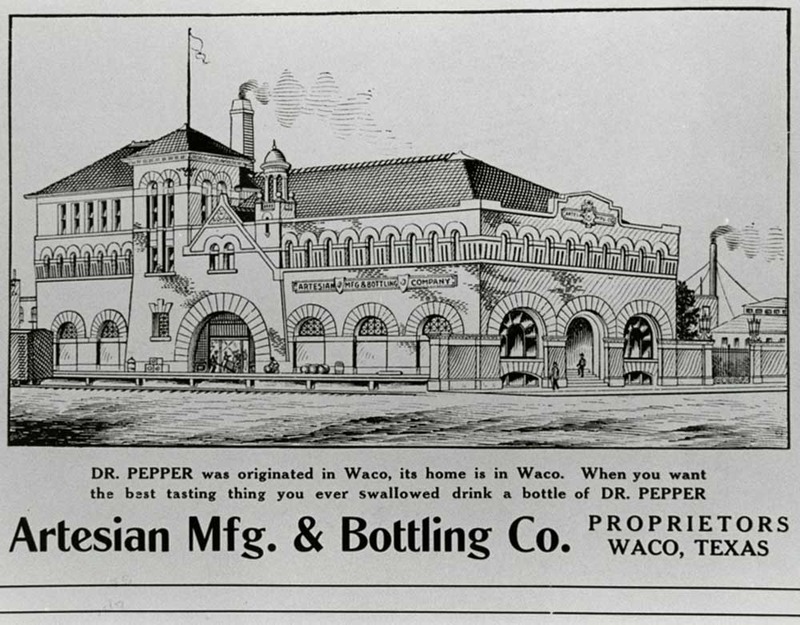
Pride of Place
Although reasonably understated in its presentation, this early twentieth-century advertisement still leaves the viewer with a sense of the manufacturer's deep pride that Dr Pepper, a soft drink then swiftly growing in popularity, originated in Waco. Note the palatial appearance of the bottling plant, a fitting location for the King of Beverages. | Source: Image courtesy of the Texas Collection, Baylor University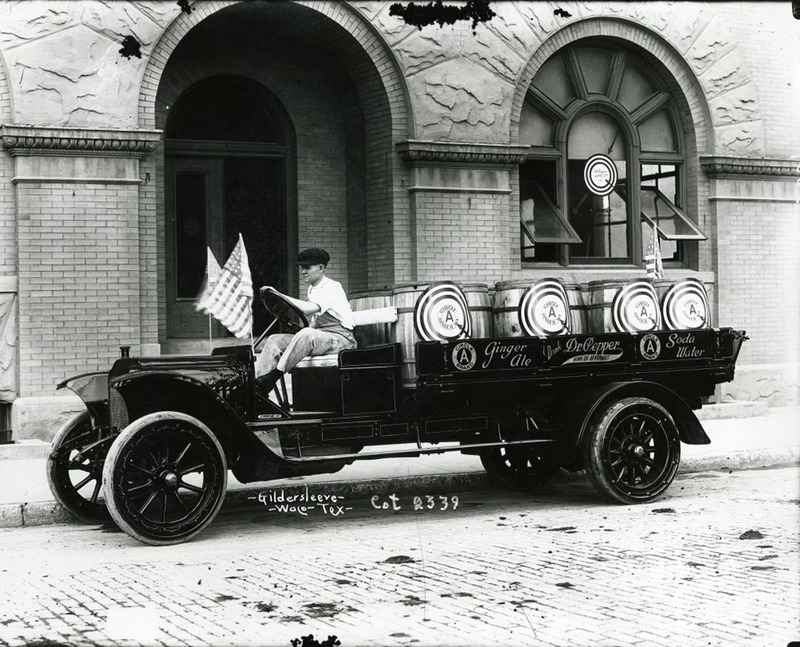
Beverages on Parade
Adorned with flags and bearing decorative casks of Circle "A" Ginger Ale, an Artesian Manufacturing and Bottling Company delivery truck prepares to travel to a special occasion. Before 1920, the plant not only bottled Dr. Pepper but other drinks like Circle “A” Ginger Ale and Soda Water. | Source: Image courtesy of the Texas Collection, Baylor University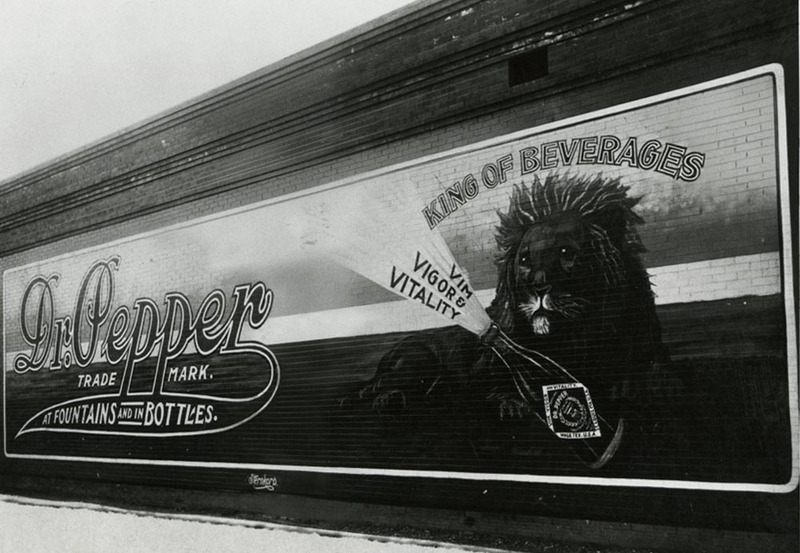
Wall Sign (circa 1889-1900)
As befitting a drink with a bold taste, there is nothing meek about this painted advertisement for Dr Pepper. The presence of the lion, popularly known as the king of the jungle, compares the beverage with both physical power and regality, positive qualities encouraging people to drink more Dr Pepper. | Source: Image courtesy of the Texas Collection, Baylor University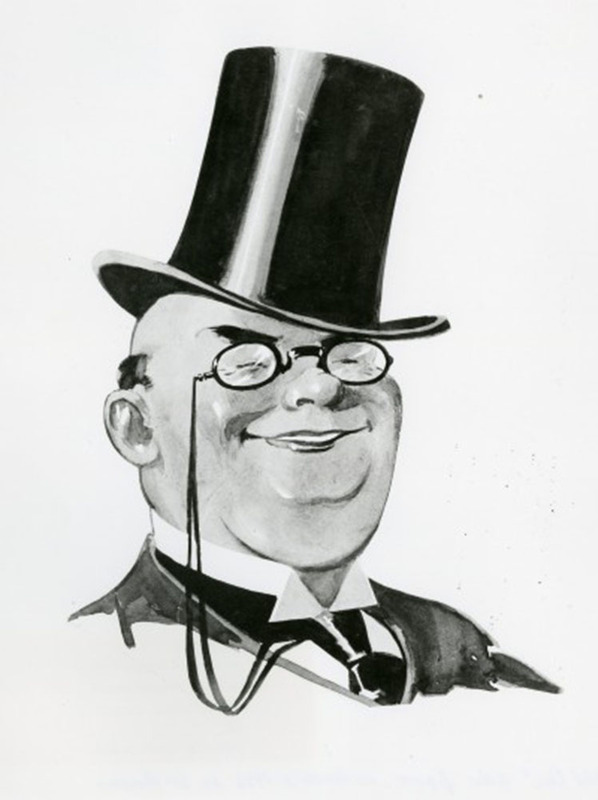
The Doctor Knows Best
Artistic rendition of the "Old Doc" advertising figure introduced in 1926 by Dr Pepper. The character was designed to portray a doctor's orders to "Drink a bite to eat" at 10, 2, and 4 o'clock to help combat hunger, thirst, or fatigue between breakfast, lunch, or dinner. | Source: Image courtesy of the Texas Collection, Baylor University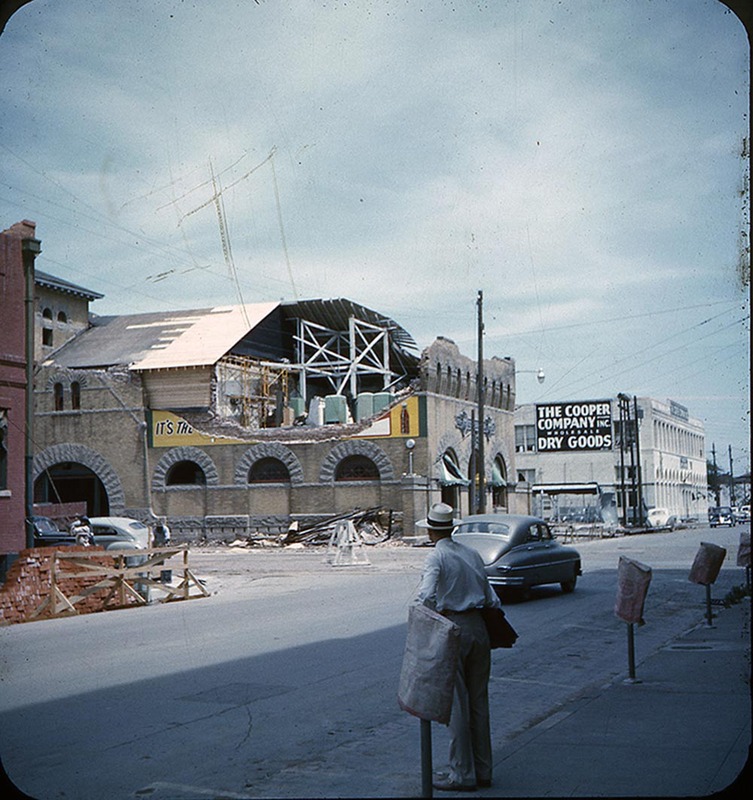
Tornado Aftermath (1953)
A rare color image of the damage done by the Waco tornado. The U-shaped area where the bricks were blown from the building was repaired with lighter-colored bricks which now serves as a visual reminder of one of the worst natural disasters to befall Waco. | Source: Image courtesy of the Texas Collection, Baylor University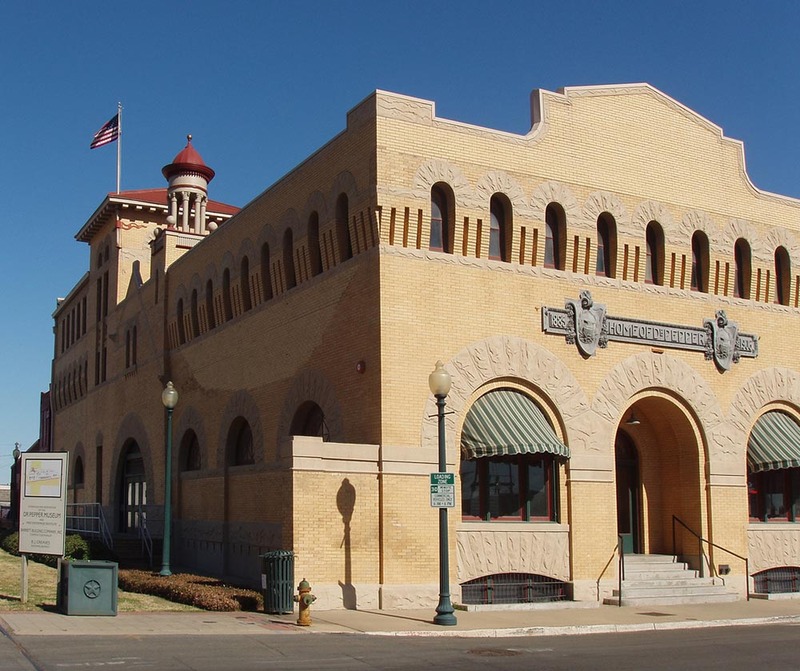
Standing the Test of Time
The original Artesian Manufacturing and Bottling Company building now houses the Dr Pepper Museum. Its walls stand as a testament to not only the importance of Dr Pepper to Waco but also to the community's ability to adapt in the face of adversity. | Source: https://www.flickr.com/photos/ninmah/97151080/
Receiving the Call to Get Involved
Calvin Bruce Smith speaks how he became involved with the plans of the Dr Pepper Museum. | Source: Smith, Calvin Bruce, interviewed by Leslee A Elliott and Becky Shulda, April 17, 2007, in Austin, Texas. Baylor University Institute for Oral History, Waco, TX. View the full interviewBecoming a Consultant for the Museum
Calvin Bruce Smith remembers speaking with the CEO of Dr Pepper, moving to Waco, and helping with the long-range master plan of the Dr Pepper Museum. | Source: Smith, Calvin Bruce, interviewed by Leslee A. Elliott and Becky Shulda, April 17, 2007, in Austin, Texas. Baylor University Institute for Oral History, Waco, TX. View the full interview