Waco Tornado
Text
On May 11, 1953, a destructive force tore through Waco and forever altered the face of the city. The tornado injured 600 people, took 114 lives, and damaged hundreds of businesses. The chaotic aftermath of this deadly storm left an indelible mark upon the Waco community.
On the morning of May 11, the New Orleans Weather Bureau issued a tornado warning for West and Central Texas. Yet life in Waco continued at its normal pace. Some Wacoans placed stock in the old Waco Indian legend that claimed that the hills and bluffs surrounding the city kept it safe from tornados. Others, such as Baylor geologist emeritus O.T. Hayward, argued that Waco was situated atop an an uplift on the Balcones escarpment (or fault line) served to precipitate severe weather along the I-35 corridor, which roughly follows the escarpment. Still, few took heed of the storm warnings issued by the National Weather Service that day, as the weather was the same as it had been for days: warm and muggy.
The weather grew severe as the day progressed. Thunderstorms developed, and many downtown shoppers and businessmen rushed into buildings in order to take cover from the rain. Around 4 p.m. the sky suddenly darkened and hail the size of baseballs fell. It seemed to many as though night had fallen. As the storm worsened, some tried to contact family and loved ones, only to find the phone lines had gone dead.
Around 4:30, a tornado touched down southwest of Waco and tore through residential areas. At 4:36, it struck downtown Waco. The F-5 tornado cut a swath nearly one-third of a mile wide with winds up to 260 miles per hour. After tearing through downtown, it exited the city and continued northeast for several more miles.
Many of the buildings in downtown Waco were not built with such a severe storm in mind. Only buildings with steel-frame structures, such as the Amicable (ALICO) building and the Roosevelt Hotel, were able to withstand the severe winds. Others, such as the R. T. Dennis building, collapsed, killing thirty of the people within and injuring several more. The tornado destroyed 196 buildings, and damaged hundreds of others so badly that they were later torn down. Some, such as the Dr Pepper bottling plant, withstood smaller amounts of damage which the owners later repaired. Outside of downtown, the tornado demolished nearly six hundred homes in East Waco.
The aftermath of the storm was chaotic, and confusion and disorganization characterized initial rescue efforts. The destruction was massive, and the city was entirely unprepared to handle such a disaster. Survivors served as the first responders, and as personnel from James Connelly Air Force Base, local and state law enforcement, Baylor University students, and others joined the work, an organizational system developed. Members of the Red Cross, Salvation Army, National Guard, army, and air force also arrived to aid in the rescue efforts.
Though estimates vary, approximately $51 million of property damages occurred. The city received around $9 million in order to aid recovery, including federal assistance, a grant from the Red Cross, and private donations collected by local civic leaders. Yet even this relief could not counter the serious blow the tornado dealt to the downtown business community. Some areas of the city never fully recovered.
Although this catastrophe, recognized as the deadliest Texas tornado since 1900, devastated downtown, it also brought the Waco community together. Countless hours of volunteer efforts poured into the recovery of the city. The aftermath of the Waco tornado also contributed to the development of an efficient tornado warning system for the entire nation, and promoted greater communication amongst relief agencies to better deal with future disasters.
Files
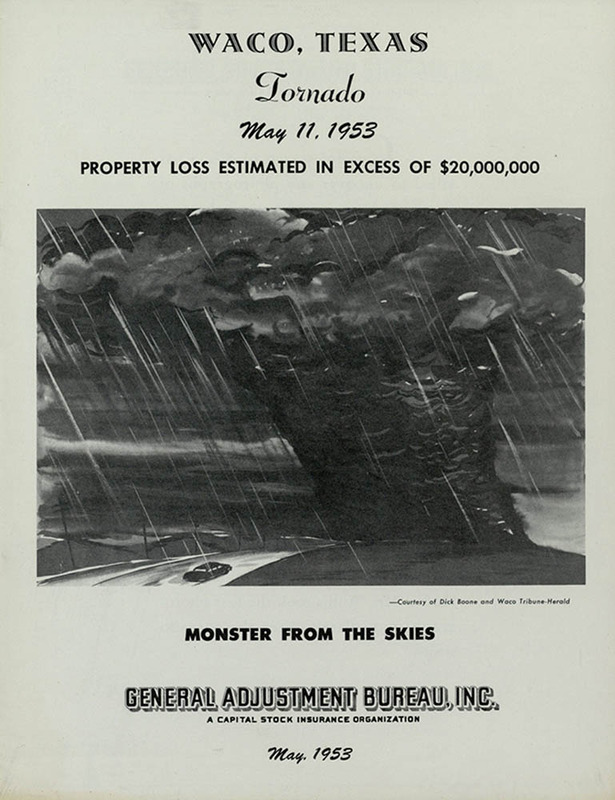
Monster from the Skies
No photos exist of the tornado approaching the city. T. E. Caldwell saw the tornado about eight miles out of the city and explained that the tornado was so wide and the rain so heavy, that those in the city could not see the “monster” approaching. He sketched the tornado from memory, and a staff artist at the Waco Tribune-Herald produced this image. | Source: Image courtesy of the Texas Collection, Baylor University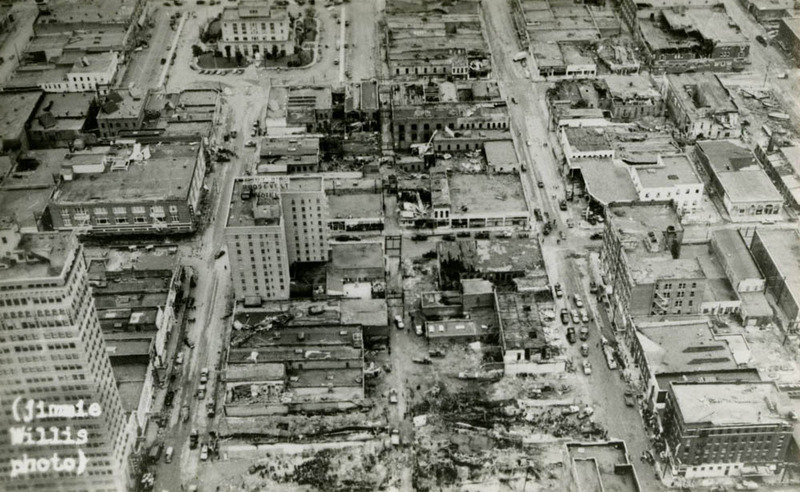
Aerial View of Downtown
This aerial photo reveals the extent of damage sustained to downtown Waco. Though the storm wreaked havoc, many Wacoans believed the recovery and rescue efforts made the city a closer, more tight-knit community. | Source: Image courtesy of the Texas Collection, Baylor University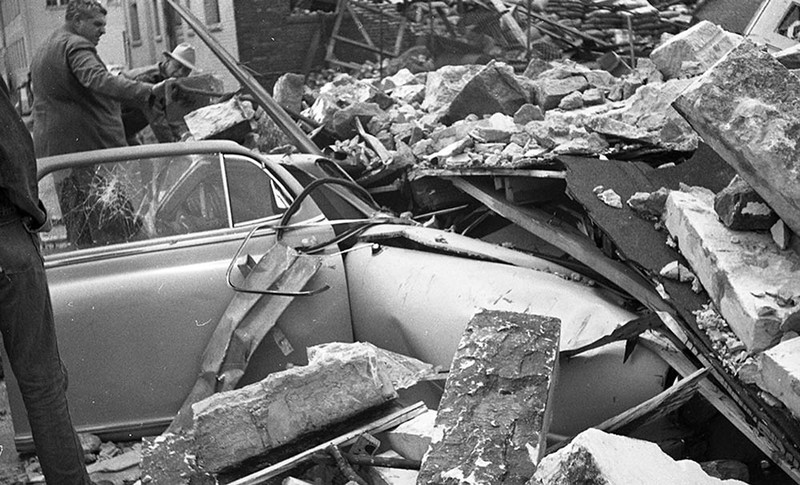
Damaged Car
Witnesses of the tornado said they saw cars flying around the square, picked up and tossed around by the storm’s 260 mph winds. Dozens of cars downtown were destroyed by the winds and falling debris, some with people still inside. | Source: Image courtesy of the Texas Collection, Baylor University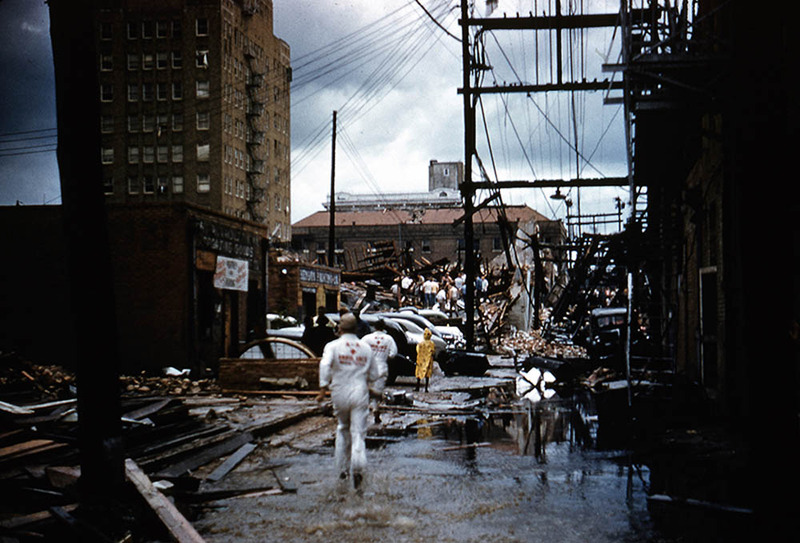
Facilitating Communication
The tornado wiped out the city’s effective means of communication, but local news stations worked to relay accurate reports of the extent of the damage to the rest of the nation. Additionally, Southwestern Bell set up temporary phone lines in order to speed rescue efforts. | Source: Image courtesy of the Texas Collection, Baylor University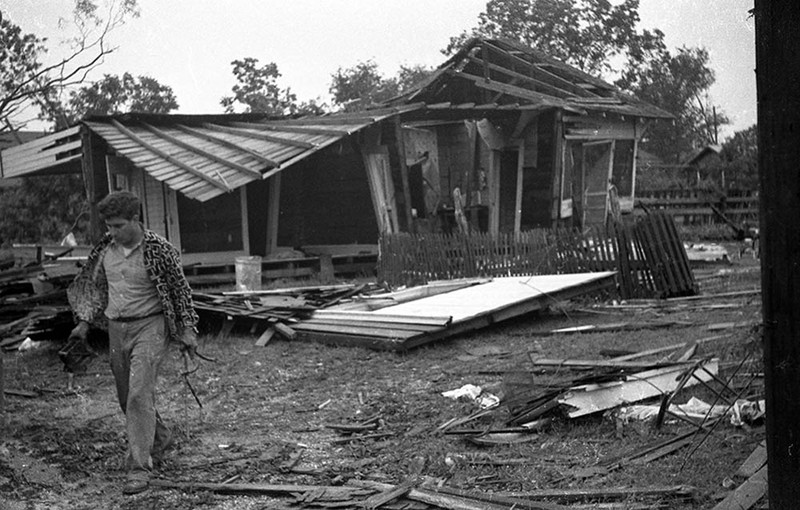
Damaged House
The tornado destroyed more than six hundred houses. The East Waco community was hit especially hard by the storm’s deadly force. | Source: Image courtesy of the Texas Collection, Baylor University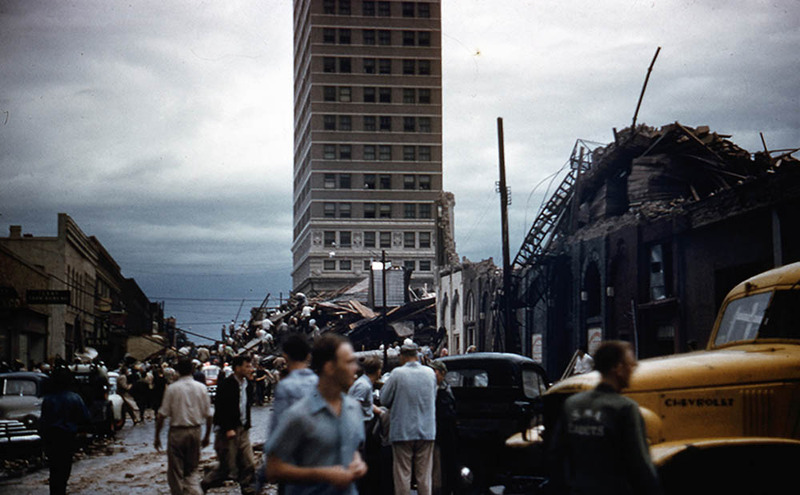
Rescue Efforts
Waco was entirely unprepared to handle such a disaster, and initial rescue efforts were chaotic. Survivors dug barehanded through the debris to help others who were trapped. Later, police, military, and Red Cross volunteers cooperated in order to organize the work. | Source: Image courtesy of the Texas Collection, Baylor University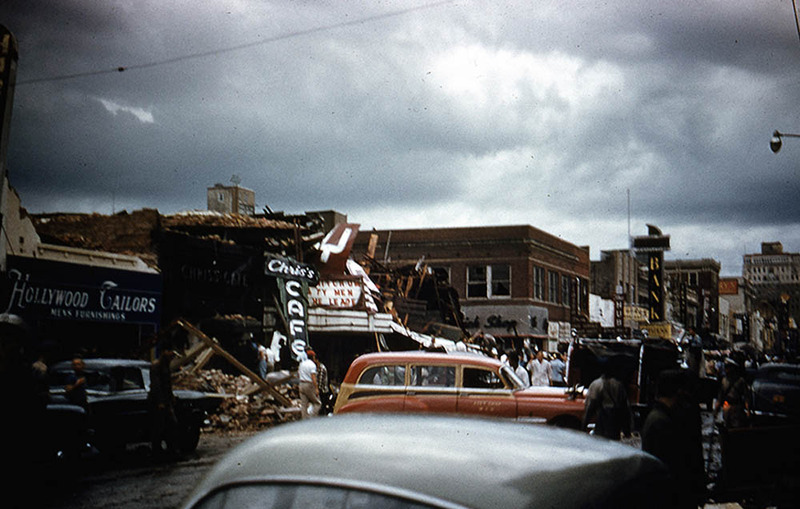
A Day Like No Other
The day started as any other, and most Wacoans went about their usual business until the storm hit. Miraculously, all one hundred people within the Joy Theater emerged from the building alive following the tornado, though several were harmed in Chris’s Café next door. | Source: Image courtesy of the Texas Collection, Baylor University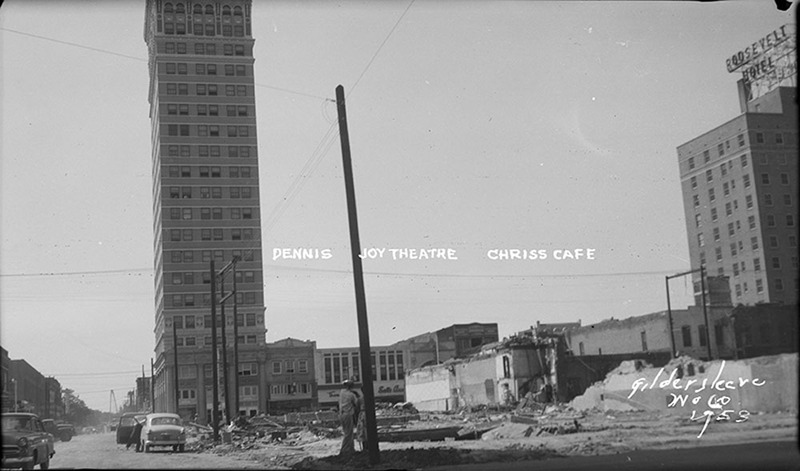
New Regulations
This photo shows where R. T. Dennis, the Joy Theatre, and Chris’s Café once stood. The wooden frames of these buildings could not withstand the high winds of the storm. After this tornado, the city required all new buildings to have steel frames, such as those that kept the Amicable building standing. | Source: Image courtesy of the Texas Collection, Baylor University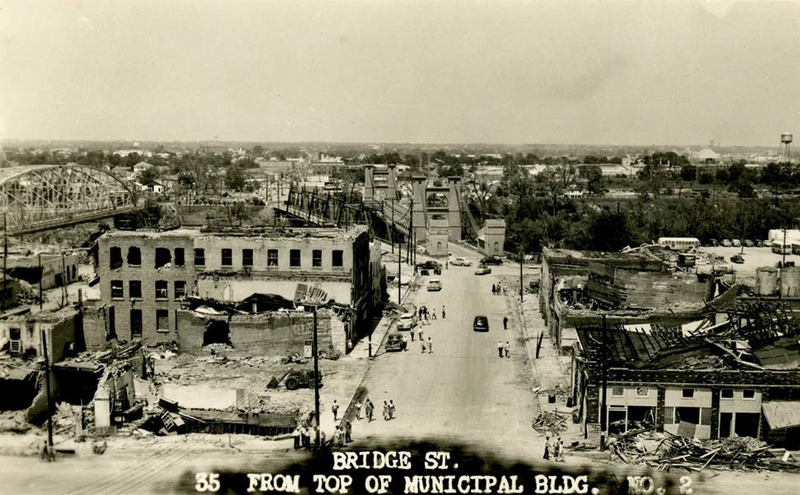
A Dispersed Community
Before the tornado, Bridge Street served as the main thoroughfare downtown and as a hub for Waco’s many ethnic groups, connecting North, South, and East Waco. Many businesses could not afford to completely rebuild their buildings, and either moved elsewhere or closed for good. | Source: Image courtesy of the Texas Collection, Baylor University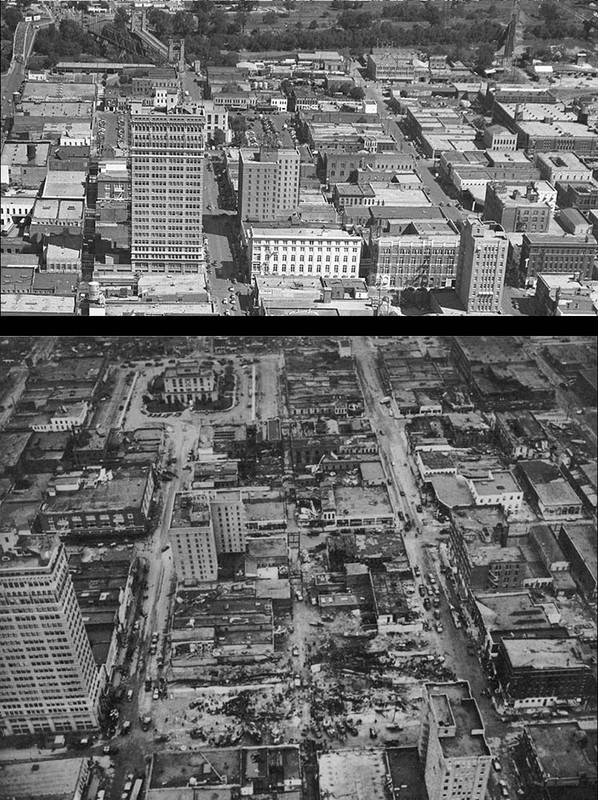
The End of an Era
This aerial photo shows a portion of downtown before and after the storm. The tornado left an indelible mark upon the city. As businesses and residents moved out into the suburbs in the decades following the tornado, the downtown business district declined. | Source: Image courtesy of the Texas Collection, Baylor University
Waco Indian Legend
Grace Hasseltine Jenkins Kee states that she never expected a tornado because of the reason why the Waco Indians settled in Waco. | Source: Kee, Grace Hasseltine Jenkins, interviewed by Margaret Miller, June 3, 1980, in Waco, Texas. Baylor University Institute for Oral History, Waco, TX. View the full interviewHelping Out at the First National Bank
Hannibal "Joe" Jaworski tells about helping the frightened people at the First National Bank. | Source: Jaworski, Hannibal "Joe" Lucas, interviewed by Thomas Lee Charlton, March 12, 1981, in Waco, Texas. Baylor University Institute for Oral History, Waco, TX. View the full interviewSetting Up Relief Headquarters
Lyndon Olson remembers setting up headquarters for the relief efforts in the First National Bank with the help of the Army and National Guard. | Source: Olson, Lyndon Sr., interviewed by Jerry P. Campbell, November 7, 1980, in Waco, Texas, Baylor Institute for Oral History. View the full interviewWitnessing the Tornado
Martha Roane Lacy Howe describes her experience of watching the tornado when she was a child. | Source: Howe, Martha Roane Lacy, interviewed by Lois E. Myers, June 16, 2009, in Waco, Texas. Baylor University Institute for Oral History, Waco, TX. View the full interviewChanges in Waco After the Tornado
Gertrude Levinson Lewis talks about the changes the occurred in Waco after the Tornado of 1953. | Source: Lewis, Gertrude Levinson, interviewed by Lois E. Myers, April 7, 1994, in Waco, Texas. Baylor University Institute for Oral History, Waco, TX. View the full interview