L. L. Sams and Sons
Text
Though L. L. Sams and Sons became one of the nation’s largest and most popular church furniture suppliers in the twentieth century, it developed from humble beginnings. Rev. L. L. Sams, a traveling Baptist preacher, desired to build a church for his congregation in Whitney, Texas, in 1898. He became frustrated after meeting with local carpenters to discuss the costs of constructing pews for the new building. Unhappy with the options they presented, and suspecting the local carpenters were in cahoots to take advantage of him through their prices, he decided to look elsewhere for furniture.
Though the Michigan-based company E. H. Stafford did not have Texas representatives, they sent Sams a catalog of their furniture. After Sams ordered furniture for his new church and for several other pastors in the area, the firm signed him on as their first Texas sales representative. Sams visited other pastors two Sundays of each month and turned great profits for Stafford. In turn, he received a commission enabling him to send all four of his children to Baylor University. The family moved to Waco in 1918 to be closer to Baylor and set up an official sales office for the company on South Fifth Street.
Sams’ sons Ross and Rowe both joined the furniture business following their graduation from nearby Baylor. The company adopted the name L. L. Sams and Sons, and the brothers set to work expanding the enterprise established by their father. For instance, Ross designed a set of pew samples which could be disassembled and placed in a railroad trunk. He then traveled throughout the state pitching their products to his former Baylor classmates, now pastors.
L. L. Sams retired and sold the business to his two sons in 1927. The hard economic times of the Great Depression slowed business considerably. In 1938, the two brothers introduced a new aspect to the company in order to attract more customers: furniture delivery and installation. This addition, combined with the boom of church construction in the United States following the conclusion of World War II, greatly expanded the company’s customer base.
In order to meet the needs of the now booming business, Ross employed a Waco cabinetmaker in 1946 to construct some of the pulpits which the company sold. Recognizing the value of the company producing its own furniture, L. L. Sams and Sons bought out the cabinet business and purchased an abandoned textile mill, establishing Sams Manufacturing Company.
To avoid another downturn in sales after the boom in church building ended in the mid-1950s, L. L. Sams and Company expanded its services into church renovation. The company also began to design and install stained glass in 1960. In the next few decades, the business continued to adapt its products in order to meet customer needs, changing atmospheres, and new trends. By 1989, the company branched out to offer its services to commercial as well as religious institutions.
In 1994, Ross Sams Jr. merged L. L. Sams and Sons with Royal Seating Corporation, and in 1997 the business moved approximately 50 miles south to Cameron, Texas. The development company T. D. Watson Interests bought the factory that year and converted it into loft-style apartments intended to preserve the history of the factory through “adaptive reuse.”
L. L. Sams’s dedication to the provision of quality furniture and good customer service developed into a thriving family business. The Waco-based company operated for nearly a century, providing authentic worship environments for churches nationwide.
Files
Renewed Industry
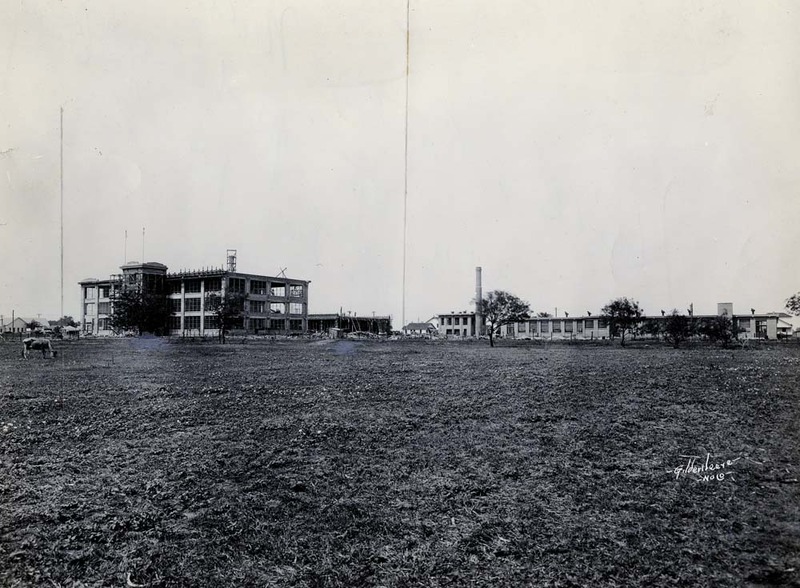
This photograph shows the construction of Miller Cotton Mill, which later housed Sams Manufacturing Company. The decline of the cotton industry in the mid-twentieth century led to the abandonment of the factory and transfer of the property to L. L. Sams and Sons between 1946 and 1965. | Source: Image courtesy of the Texas Collection, Baylor University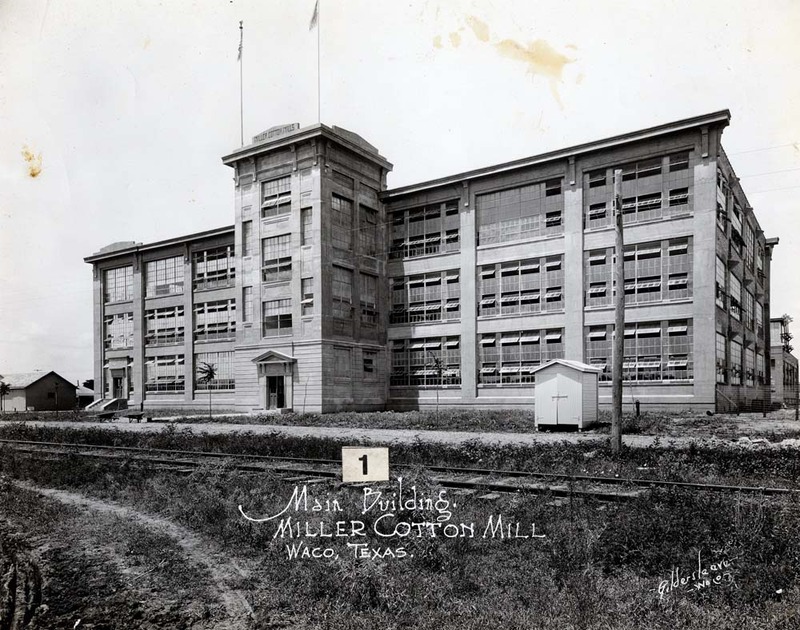
Miller Cotton Mill
The purchase of the textile mill allowed L. L. Sams and Sons to expand the company from only eighteen employees to over two hundred. The railroad tracks which ran through the center of new property provided the company with easier access to the solid oak lumber out of which most of the pews were constructed. | Source: Image courtesy of the Texas Collection, Baylor University
A Lucrative Career
The furniture company provided a lucrative career opportunity for many people. After Ross Sams Sr. graduated from Baylor in 1920, he was offered $200 per game to sign with the Green Bay Packers. Yet after working for only three months with his father’s company, he made so much more money than he would have playing football that he decided to remain with L. L. Sams. | Source: Image courtesy of the Texas Collection, Baylor University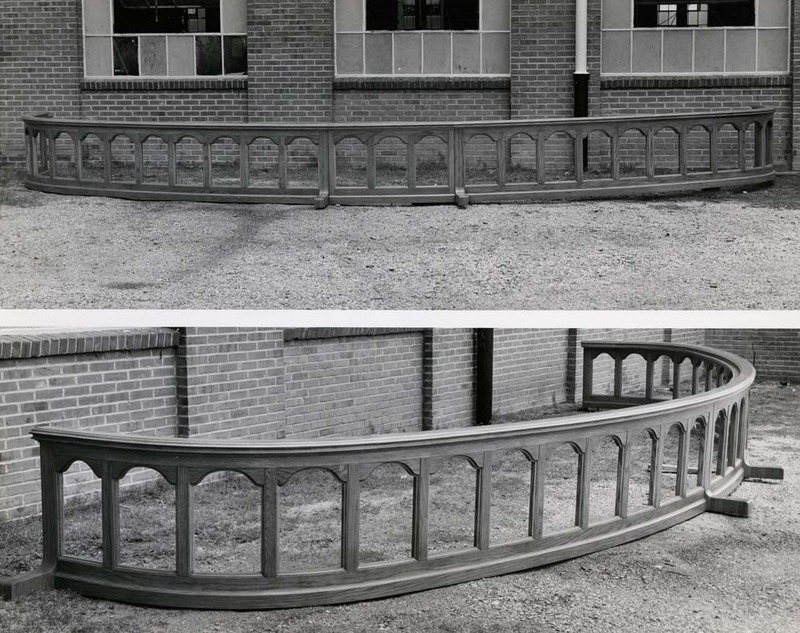
Altar Rails
Ross Sams Jr., grandson of the company’s founder, described the church furniture business as a constant learning process because the company served a variety of denominations. The all-Baptist management team often spent much of their time learning how to design furniture for different methods of worship. | Source: Image courtesy of the Texas Collection, Baylor University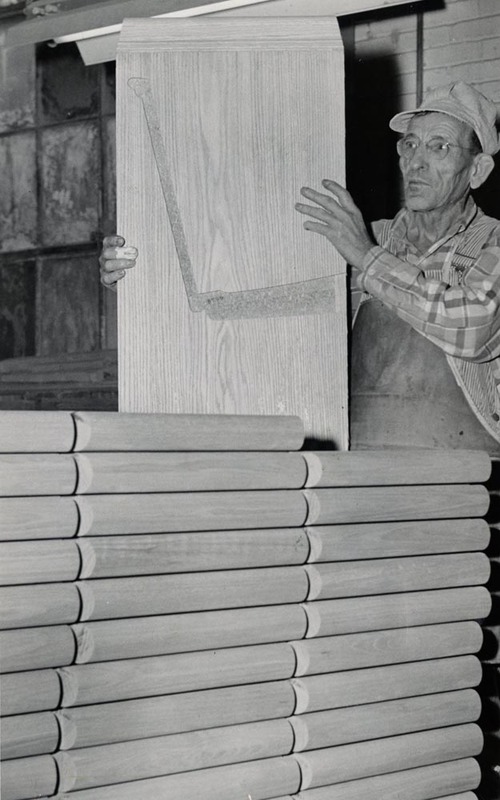
Guaranteed Artistry
L. L. Sams and Sons’s commitment to artistry, quality, and customer service contributed to the firm’s growth to one of the most popular church furniture suppliers in the nation. All of the furniture produced by the company came with a lifetime guarantee. | Source: Image courtesy of the Texas Collection, Baylor University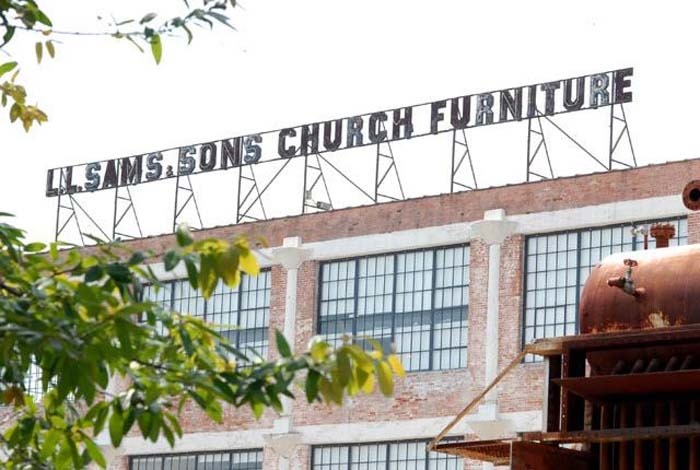
Adaptive Reuse
In 1946, the growing furniture company replaced Miller Cotton Mills with a rooftop sign advertising L. L. Sams and Sons Church Furniture which still stands atop the building. The factory has been converted through “adaptive reuse” into loft-style apartments. | Source: Image courtesy of L. L. Sams Historic Lofts