Sanger Brothers Department Store
Text
Sanger Brothers department stores were often described as the pioneer retail stores of Texas. Yet these successful mercantile ventures arose from humble beginnings. Between 1852 and 1874, five of the seven Sanger brothers immigrated to America from Germany to pursue greater entrepreneurial opportunities. Although the brothers initially separated and spread throughout the country, they slowly came back together in the years following the Civil War to join the dry goods business that Isaac, the eldest brother, operated from a storefront in McKinney. As more brothers joined the business, it slowly expanded along the Houston and Texas Central Railroad, opening stores in cities such as Millican, Decatur, Bryan, Dallas, and eventually Waco.
Sam Sanger traveled to the United States in 1866 and lived in the Northeast for several years serving as a rabbi and a teacher. In 1872, he opened a small shoe store in New York, but closed it the following year when Isaac summoned him to Texas in order to open their newest location. On March 4, 1873, Sam opened Sanger Brothers in the heart of downtown Waco on the square between Austin Avenue and Bankers’ Alley.
The new enterprise started out small, with just $1,300 worth of stock and only two employed clerks at its opening. Despite this, the business still carried a variety of goods. The Waco Daily Examiner ran a full-page advertisement listing the items which could be found at Sanger Brothers, including “dry goods, clothing, boots, shoes, hats, caps, gents’ furnishing goods, carpets, oil cloths,” and more. By 1876, business expanded beyond the capacity of the small shop, and Sam Sanger purchased a new, larger building on Austin Avenue between Fourth Street and Fifth Street. That same year, all of the branches of the Sanger Brothers franchise closed, except for the two most successful locations in Waco and Dallas.
Despite the closures, the success and expansion of the Waco Sanger Brothers store continued. In 1882,Sanger purchased another building on Austin Avenue and began to rent out the old Waco Opera House and warehouse in order to open a wholesale department. Sanger Brothers continued to develop their reputation in Waco based upon providing the best selection of goods in town and a dedication to meeting customer needs in any situation.
News of the onset of World War I and the decline of the cotton market in 1915 provided the first hint of trouble for the Waco department store. Farmers who purchased goods on credit from the wholesale department were increasingly no longer able to pay their bill. But business boomed during the actual war as industry production increased throughout the country, and on December 17, 1918, Sanger Brothers incorporated.
The store received a second and more serious indication of trouble on December 18, 1919, when Sam Sanger died. His charismatic leadership of the company contributed greatly to its success, and none of the other executives were prepared to take over. Although his son, Asher Sanger, took over leadership, the company sustained fiscal losses between 1918 and 1926, when it was then sold to a Saint Louis firm. Unable to recover from these losses, and hit hard by the Great Depression, Sanger Brothers finally closed its doors on March 15, 1931. In its announcement of Sanger Brothers’s closure, the Waco Tribune-Herald noted the dismay of many Wacoans at the loss of this institution, stating that thousands were expected to show up for the sales during the store’s final days.
For over half a century, Sanger Brothers served as a highly successful venture in the heart of downtown because of its commitment to variety and quality in merchandise, as well as excellence in customer service.
Files
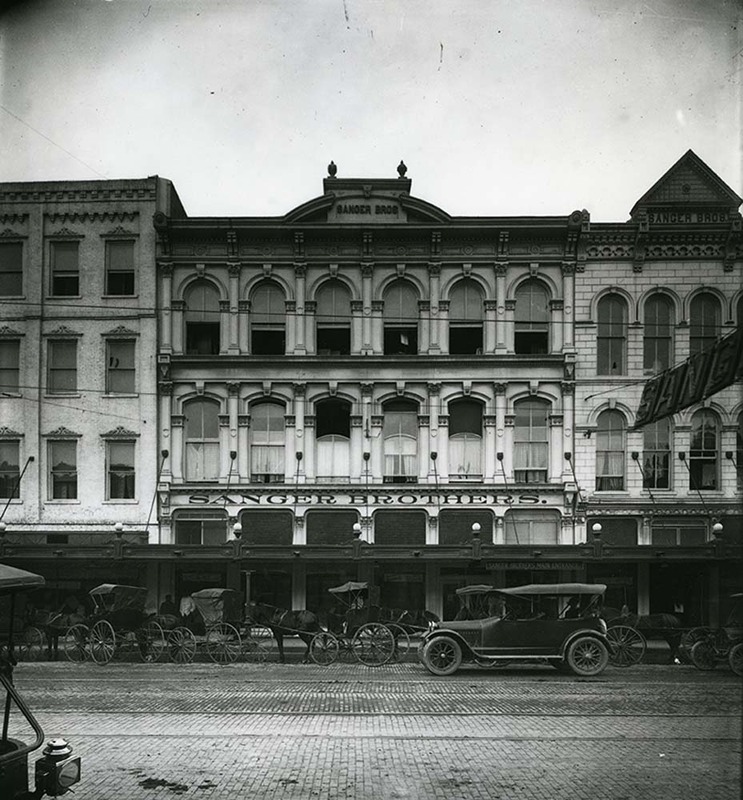
Store Exterior (1912)
The Sanger brothers immigrated to America because they saw it as a land of great promise. They settled down in Texas because the state seemed to offer them better retail opportunities. | Source: Image courtesy of the Texas Collection, Baylor University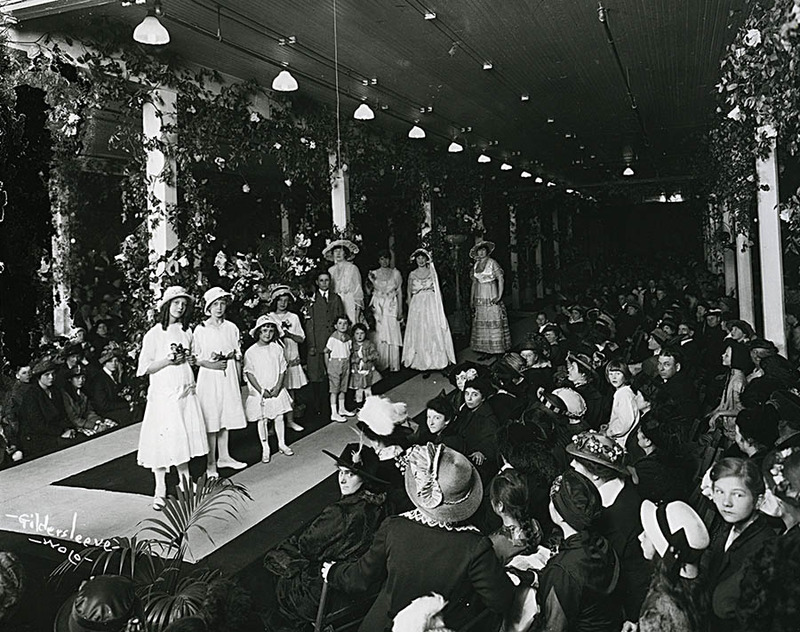
Fashion Show
Sanger Brothers employed a variety of methods in order to draw more customers to the store. It is likely that the young girls in the foreground of this picture were modeling Easter dresses from the store's line as part of an elaborate promotional event. | Source: Image courtesy of the Texas Collection, Baylor University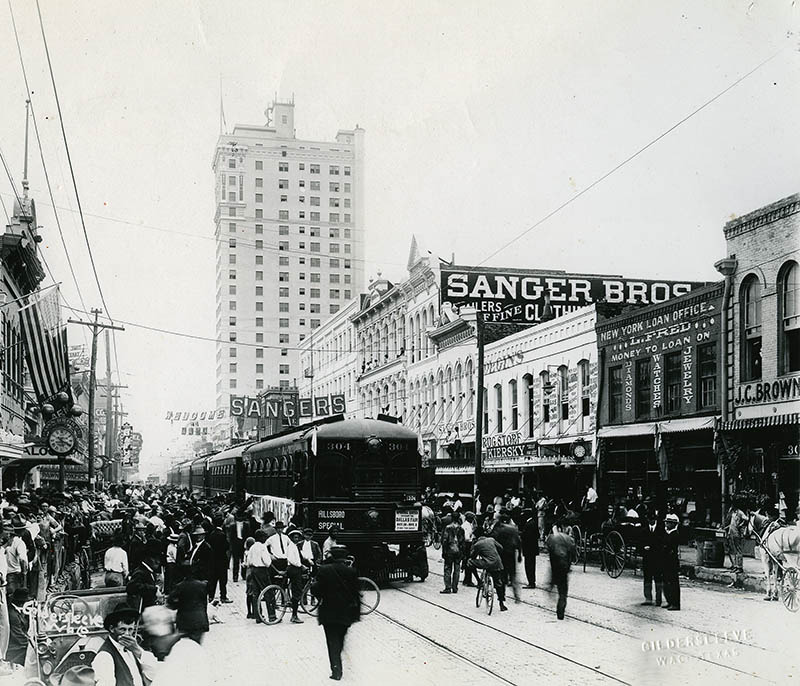
A Significant Landmark
Sanger Brothers's location at the heart of downtown placed it in the background of many photographs depicting major events in Waco's history, such as the arrival of the interurban railroad in 1913. | Source: Image courtesy of the Texas Collection, Baylor University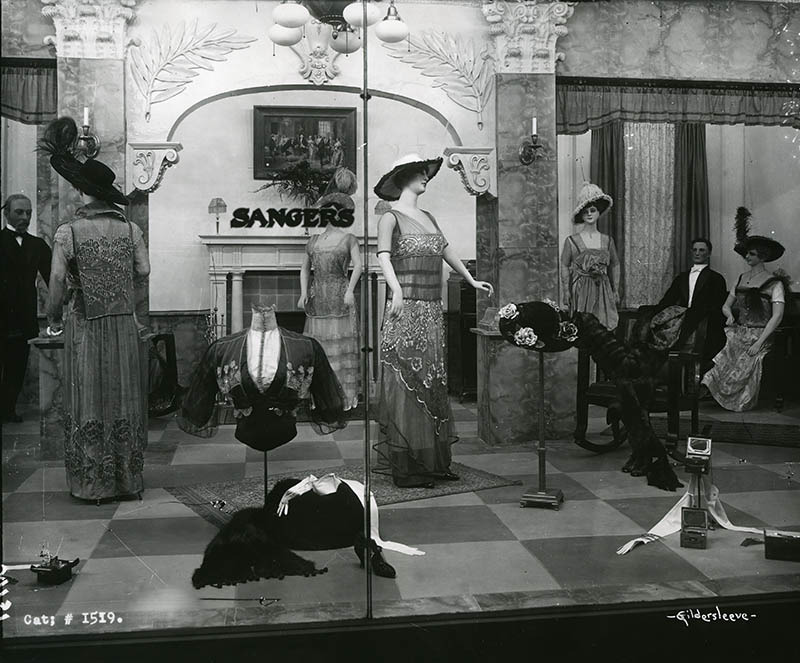
Window Dressing
Isaac Sanger permanently resided in New York City year-round in order to stay on top of the latest fashion trends. The store also employed buyers in other major cities like Boston to scour the markets for bargains. | Source: Image courtesy of the Texas Collection, Baylor University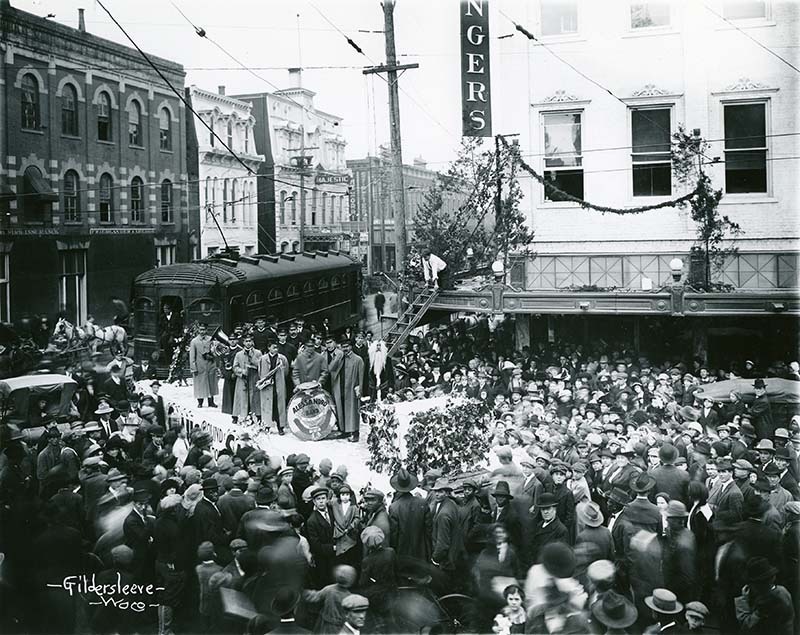
Santa Shops at Sangers (1913)
The department store's annual Christmas display often drew a great deal of attention. Here, Santa Claus arrives outside the main doors at the corner of Fourth Street and Austin Avenue, surrounded by members of the renowned Waco music group, the Alessandro Band. | Source: Image courtesy of the Texas Collection, Baylor University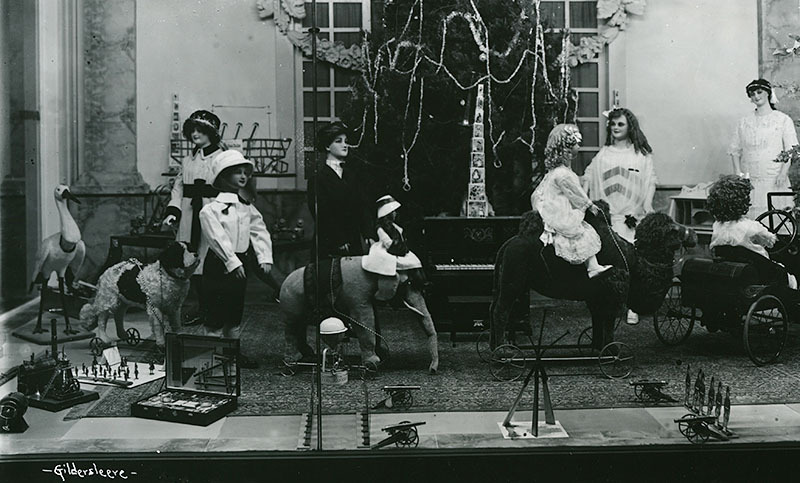
Fun and Games
In the early twentieth-century, department stores started to directly market to children. This window display clearly seeks to attract the attention of both boys and girls with its enticing model sets and overstuffed animals. Note how American commerce is still being influenced by European tastes, as the boy mannequin sports a British-style pith helmet and the stuffed animals are creatures from exotic colonial locales. | Source: Image courtesy of the Texas Collection, Baylor University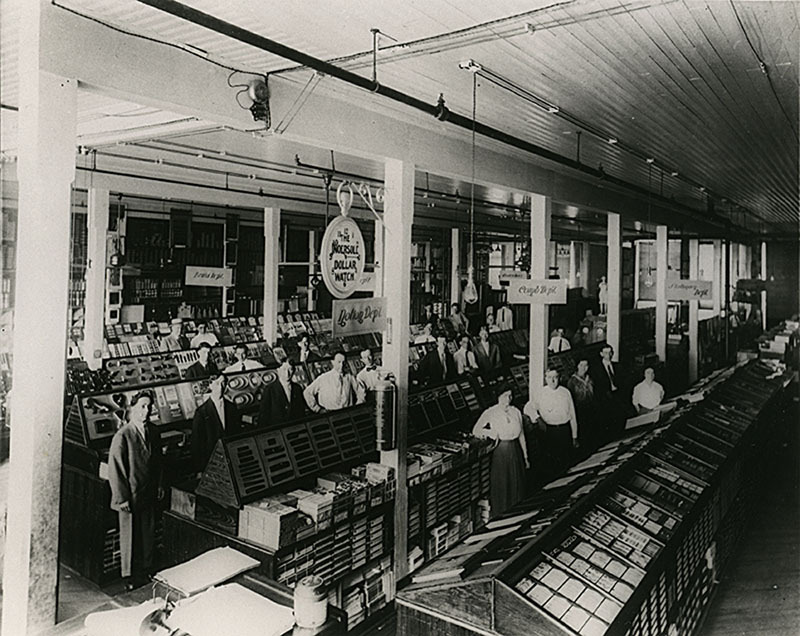
Sanger Employees (1910)
Although the Waco branch of Sanger Brothers started out small, employing only two clerks and carrying just $1,300 worth of merchandise, it rapidly developed into a thriving mercantile venture with numerous employees and a wide range of goods. | Source: Image courtesy of the Texas Collection, Baylor University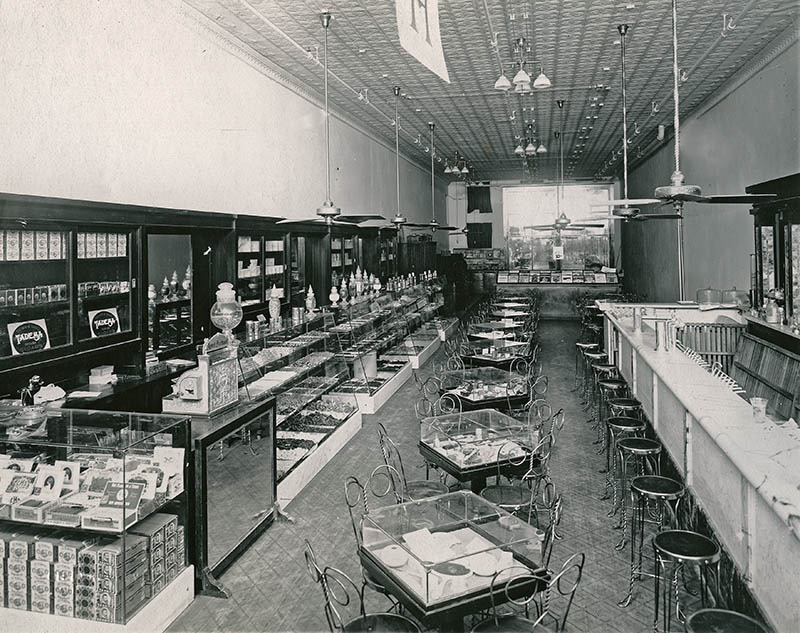
Of Refreshments and Retail
Customers could take a break from shopping and purchase refreshments in the fountain room, while sitting at clear glass tables which also served as display cases for the store's wares. | Source: Image courtesy of the Texas Collection, Baylor University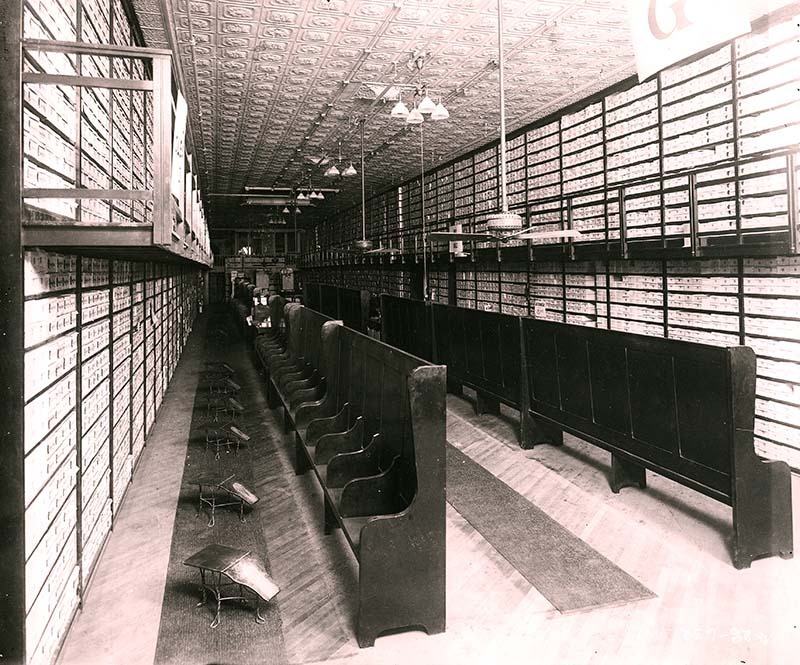
Menswear Department (1910)
Customers found the best selection of goods anywhere in town at Sanger Brothers. For instance, the menswear department had an entire room devoted to the store's collection of men's shoes. | Source: Image courtesy of the Texas Collection, Baylor University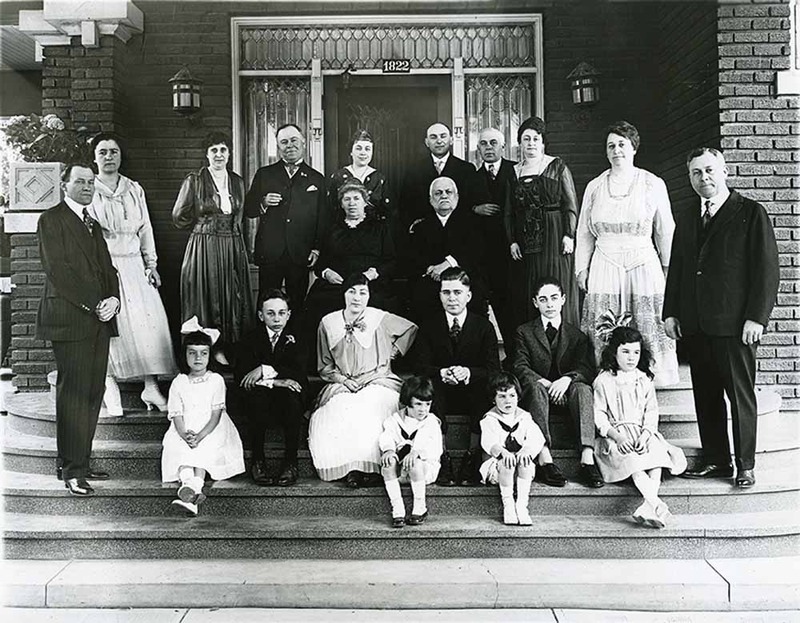
Sanger Family Portrait
Sam and Hannah Sanger sit in the center, surrounded by members of their immediate family. The success of the department store meant the Sanger family did not want for much in the early years of the twentieth-century. | Source: Image courtesy of the Texas Collection, Baylor University