The Junior League of Waco
Text
According to founding Junior League member Margaret Barclay Megarity, mid-twentieth-century service opportunities for young women in Waco were limited to society luncheons and church-sponsored activities primarily run by older women. Frustrated and desiring to organize more public service avenues, Megarity invited nine women to her home on December 12, 1935, to discuss creating a new organization.
The fruits of that first gathering were almost immediately tangible. Thirty women attended the first official meeting of the Junior Service League of Waco on January 1, 1936. These founding members drew up a constitution for an organization meant to provide young women with a better understanding of their community, its needs, and its problems. Within one month of drawing up the constitution, the organization began its work in the community.
Children have long served as the focus of the service organization. The first function of the Junior Service League raised $36 (equivalent to nearly $615 in contemporary currency) to provide children’s shoes for Waco’s needy families. In the near century of service which followed, the organization pursued projects such as establishing a children’s symphony, providing resources for clients of Child Protective Services caseworkers, volunteering in children’s hospitals, and providing a playground in Cameron Park.
Though certainly proud of the projects accomplished by the league, leaders often spoke of the organization’s goal as being centered upon training volunteers to become active members in their community. In 1946, the Waco service group incorporated with the Association of Junior Leagues International, becoming the Junior League of Waco. From this time forward, new provisional members underwent an intensive, year-long course in community volunteer service. As early as 1959, the course consisted of two main parts: a history of the Leagues of America, and a history of Waco. The first portion consisted of lectures on the history of the leagues and working in Fort House, the Volunteer Service Bureau, and the Strecker Museum. The second half of the course consisted of lectures on Waco’s background and development, as well as on welfare and public health. Provisional members also toured the city, visiting school administrations, city commissioner meetings, and school board meetings. Information and skills gained from these training measures allowed members to serve the community in the most effective manner.
Despite its focus upon children, the Junior League remained involved in other aspects of the Waco community, as well. In 1956, the group purchased and restored Fort House, one of the historic homes dating back to the Civil War. The organization ultimately decided to turn the deed over to the Waco Society for Historic Preservation (later Historic Waco Foundation) after realizing the home’s historic value. The Junior League later purchased and restored another home, the Clifton House. Today, this historic house (noted on the Waco History map) continues to serve as the Waco chapter’s base of operations.
The reach of the Junior League’s programs is vast. Over decades of service, the group has aided numerous organizations throughout Waco such as the Advocacy Center for Crime Victims and Children, Mission Waco, the Waco Independent School District, the Waco Hippodrome, Compassion Ministries, and many others. Today, the Junior League continues to serve the local community through its dedication to providing well-trained volunteers desiring to work for the good of the community.
Files
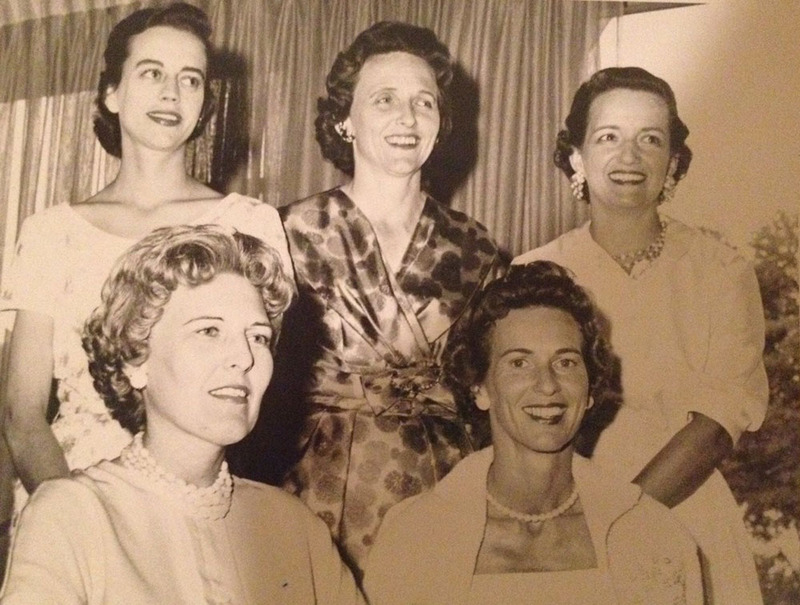
Officers (c. 1960)
The mission of the Junior League includes the tenet to improve "the surrounding community through the effective action of trained leaders." The officers of the Waco chapter worked tirelessly to ensure that each member became a strong leader and an active part of the local community. | Source: Image courtesy of the Junior League of Waco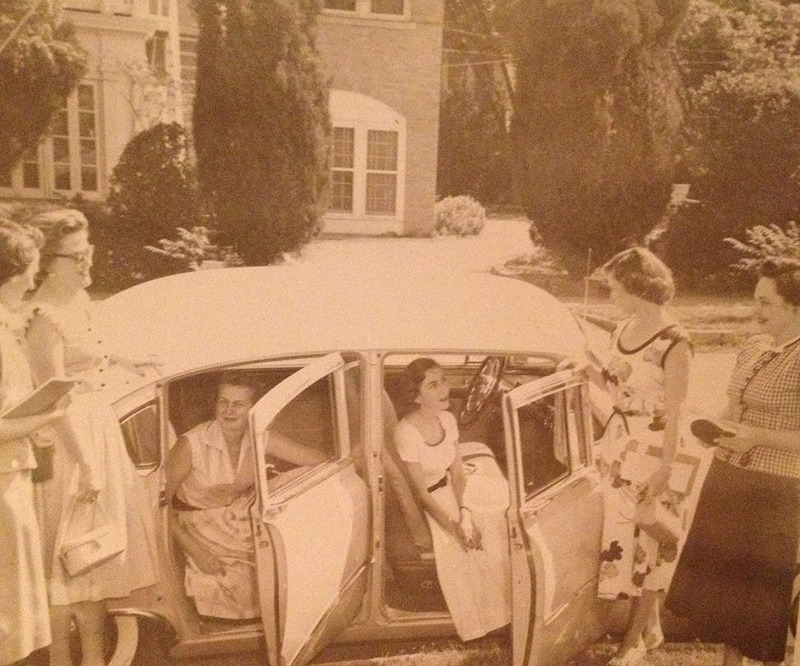
Leading Ladies
The year-long provisional course, developed after the Waco service group incorporated with the Association of Junior Leagues International, also played a significant role in developing members into effective forces of change in the community. The women in this photograph are taking part in one of the provisional field trips in 1955. | Source: Image courtesy of the Junior League of Waco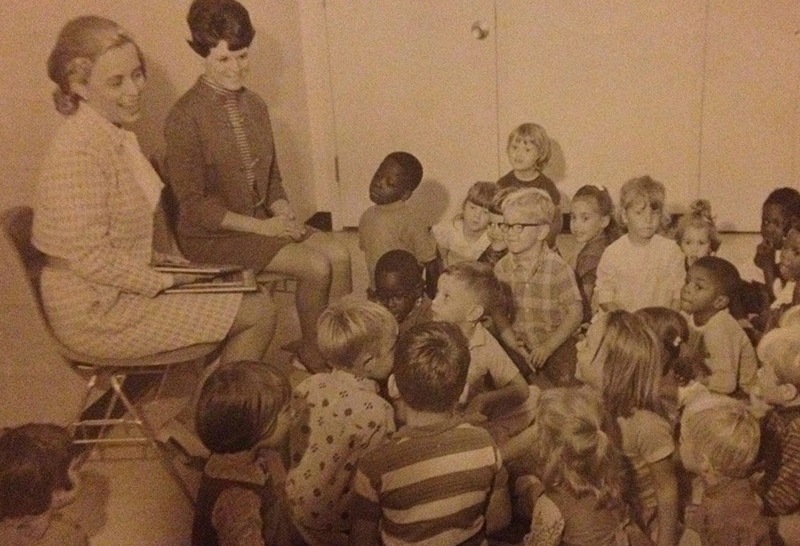
Sharing Stories
Throughout the Junior League's many years of service in Waco, children have remained a key focus of the organization's work. In this photograph, Junior League members read to young children during story hour at a local nursery school in 1968. | Source: Image courtesy of the Junior League of Waco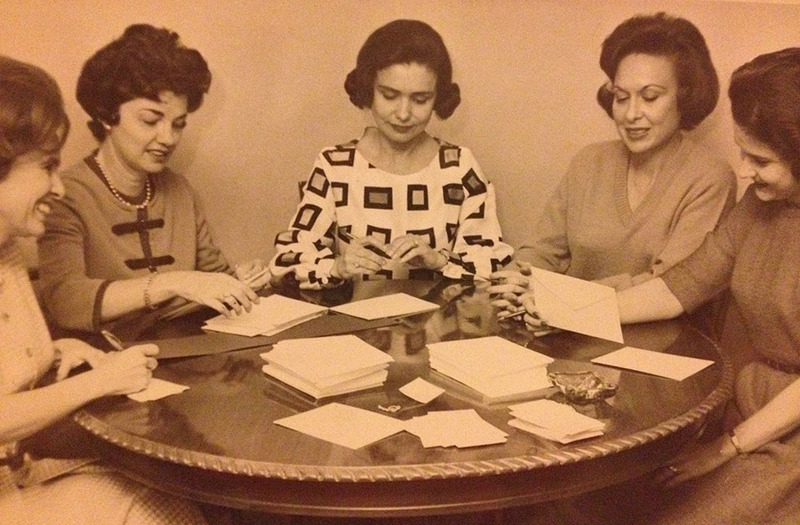
Hard at Work
The 1965 Charity Ball Committee works tirelessly to send out invitations to that year's big event. The Junior League originally launched the charity ball program in order to fund their various community projects. The Deck the Halls Annual Gift Market, a large holiday crafts show, replaced the ball in the twenty-first century. | Source: Image courtesy of the Junior League of Waco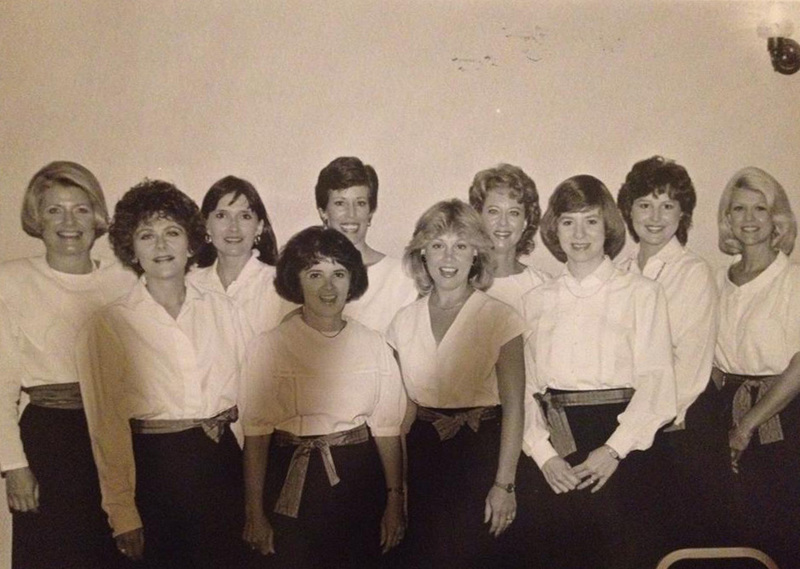
Sunshine Singers (c. 1980)
Although children and education remained key focuses of the organization, the Junior League was also involved in other aspects of the community as well. The Sunshine Singers, a musical therapy group, traveled to local nursing homes in order to provide entertainment, love, and care for senior citizens. The group still sings today, although it's now known as the Musical Therapy Troup. | Source: Image courtesy of the Junior League of Waco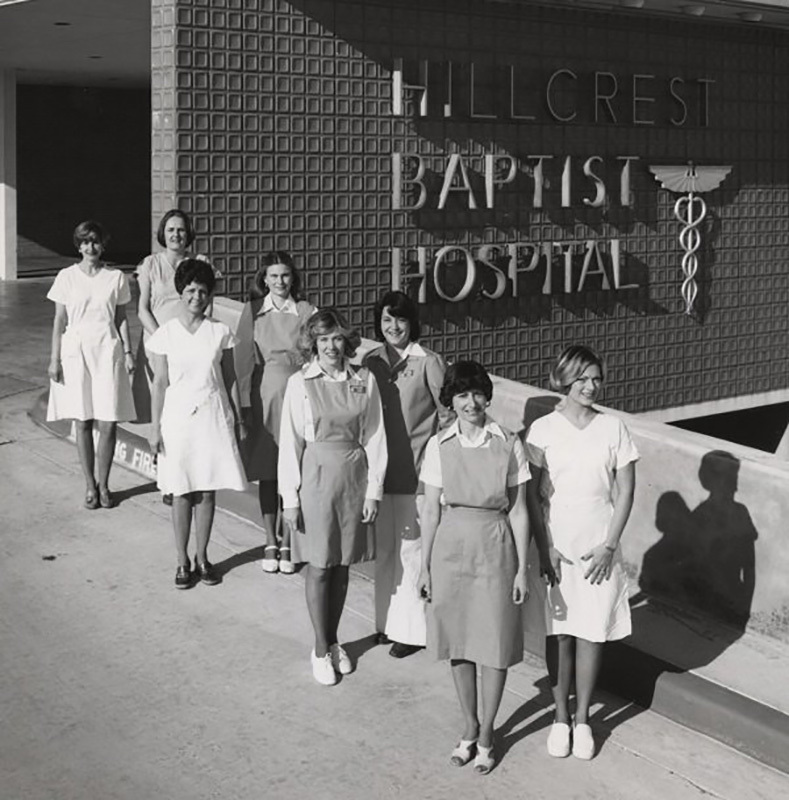
Caring for the Community
Through fundraising and volunteer efforts, the Junior League of Waco has provided hospitals and health-care centers with much-needed supplies. Members often volunteered in children's wards and collaborated with other local organizations in efforts such as the creation of the polio immunization program. | Source: Image courtesy of the Junior League of Waco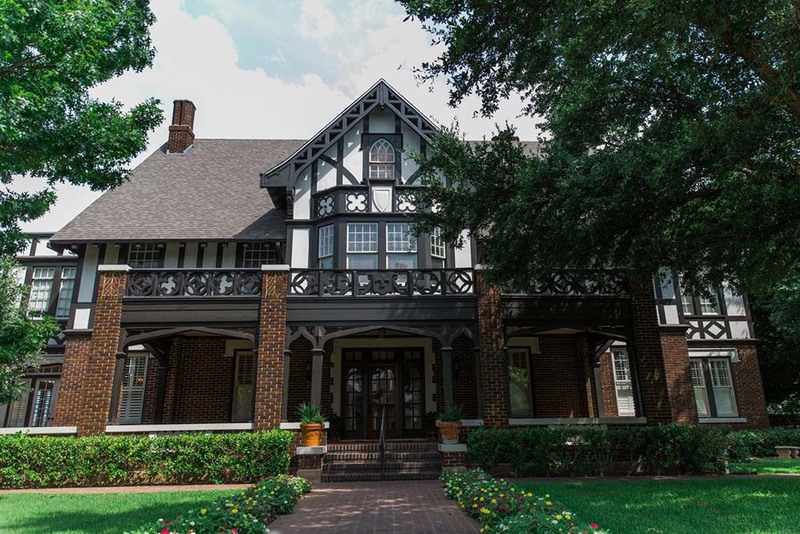
A New Home
A grant from the Cooper Foundation allowed the Junior League to purchase Clifton House. The group renovated the home and restored it to its historic dignity in 1995. Today it serves as the organization's permanent base of operations, although it is often rented out to different community members for special events and weddings. | Source: Image courtesy of the Junior League of Waco