Walker's Auditorium
Text
Beginning in 1945, the sounds of big bands, the blues, and rock blended on the dance floor of East Waco’s Walker’s Auditorium.
Continually looking for ways to serve his community, African American entrepreneur Herbert Walker founded the club. Prior to opening the venue, Mr. Walker provided his neighbors with leisure and transportation through his taxi stand and stables. Later he added a BBQ pit and apartment buildings to his business portfolio. As the only establishment of its kind open to blacks, Walker’s Auditorium served as a prominent social spot for Waco’s African American community. Its pea green, maroon, and grey interior was complemented with elegant furnishings, a sizable dance floor, pool tables, and a mirrored bar that offered patrons drinks and entrées. Mr. Walker told a local paper he envisioned the spot as offering “Wacoans a good place to go for amusement.”
Walker’s Auditorium operated as part of the “Chitlin’ Circuit,” a cross-country touring route used by black entertainers prevented by segregation from playing in white-only locations. A network of black-owned and -patronized businesses, the circuit created an opportunity for African American artists to freely express themselves and their experiences. By being a stop on this route, Walker’s Auditorium connected blacks in Central Texas to national trends in African American social and cultural life. It fueled creativity but was a grueling lifestyle. Musical acts such as Ike and Tina Turner, James Brown, B.B. King, and Etta James, all of whom would go on to greater success, played Walker’s Auditorium for gigs of a night or two when they traveled through Texas in the 1950s and 60s. They went on to other clubs, but some of the talent drawn to Waco by Walker’s Auditorium decided to stay in the area.
In 1963, Herbert Walker invited Louisiana-born blues musician Classie Ballou to lead his house band. Ballou played music all across the world, but his growing family made Walker’s invitation of localized work appealing. As often as six nights a week, Ballou provided the soundtrack at Walker’s Auditorium. When business diminished for Walker’s Auditorium and the rest of the Chitlin’ Circuit, Ballou chose to remain in Waco playing regular gigs around town.
Outside its primary function as a music venue, Walker’s Auditorium hosted holiday parties, debutant balls, parades, and various celebrations. Fraternities and sororities like Alpha Phi Alpha used the club for dances and gatherings. In 1953, it held a fundraiser for the March of Dimes. Civic clubs and organizations also used the space for business functions and teas. Walker’s Auditorium provided Waco’s African American community with a multipurpose venue suited both for amusement and formal meetings.
The patrons of Walker’s Auditorium, however, were not exclusively African American. White Wacoans, and many Baylor students, also frequented the club. “Mingling” between whites and blacks occurred more frequently by the 1960s, than in previous decades of the club’s operation. This shift resulted in broader acknowledgement of the club by all Waco’s citizens. Community members, like state senator Murray Watson, met with Mr. Walker and held him in high esteem. Additionally, local and student newspapers, whose racialized reporting on Walker’s Auditorium early on tended to revolve around petty crime, now increasingly carried advertisements and other news about the establishment in the 1960s and early 1970s. It is in this era that it became a community institution, expanding Mr. Walker’s vision to its fullest extent.
The advent of the civil rights movement, the closing of James Connally Air Force Base, and competition from other entertainment eventually hurt Walker’s Auditorium. Like many venues on the Chitlin’ Circuit, it fell into disrepair. In 1977, Walker’s Auditorium came under new management, but only a year later it ceased operating. By the 2000s, nothing remained where the legendary venue once stood. Through over three decades of operation, Walker’s Auditorium gave Wacoans, particularly its black citizens, a place to relax and celebrate.
Files
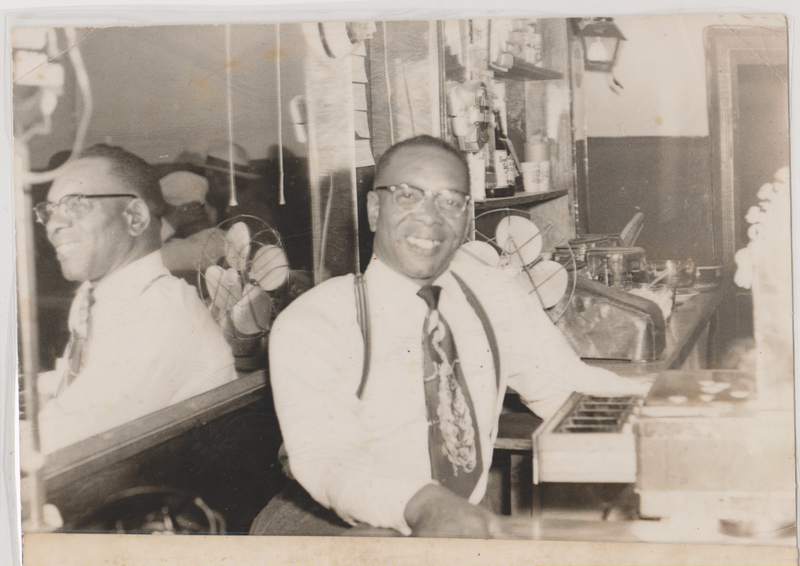
Built on Trust
Herbert Walker cultivated deep respect and loyalty in his community. He’d leave the cash register open and send uncounted money home with employees. His generosity and integrity built him such a reputation that patrons and employees regulated errant behavior before it became an issue for him. This attitude extended to the Walker home where a hospitable environment meant people constantly stopped by for counsel or a bite to eat. | Source: Courtesy of Charlotte Floyd-Love and Family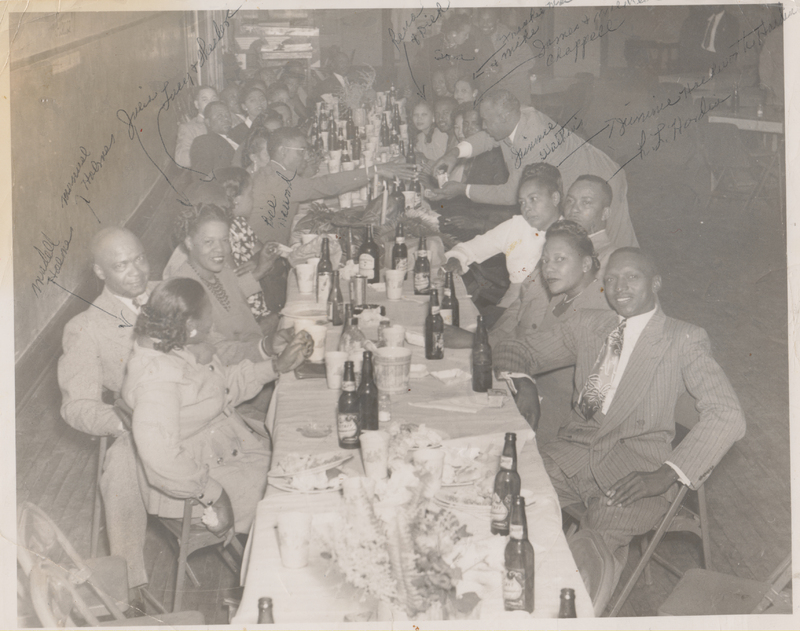
A Happening Place
Walker’s Auditorium had abundant entertainment: food, dancing, billiards, and plenty of sofas for relaxing. Before his health deteriorated in the early 1970s, Herbert Walker desired to expand his club with separate floors for dining and dancing. He even had blueprints drawn up. Even though these plans didn’t come to fruition, Walker’s Auditorium still offered many amusements to its patrons. | Source: Courtesy of Charlotte Floyd-Love and Family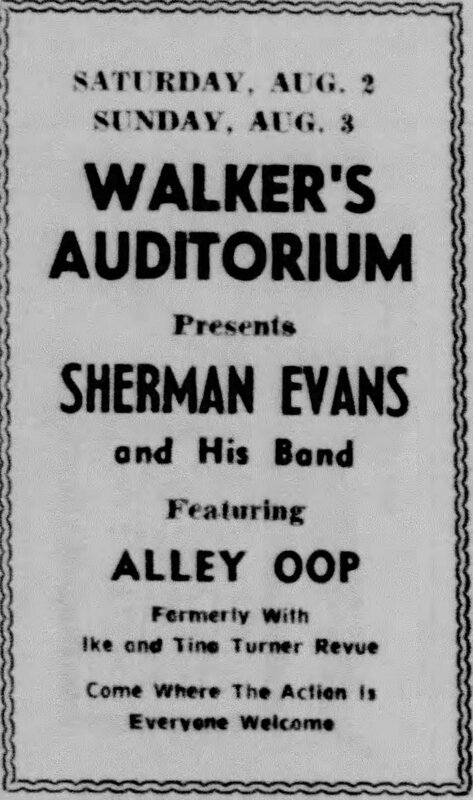
Coming Soon…
Walker’s Auditorium used various marketing techniques to announce upcoming acts. Newspapers provided an efficient way to reach a larger audience. Some artists that came to Walker’s were regional, like Sherman Evans, while others enjoyed greater renown. No matter who headlined, the acts at Walker’s drew crowds ready to have a good time. | Source: “[Walker’s Auditorium Advertisement]” The Waco Tribune-Herald, August 3, 1969, p.46. Accessed via newspapers.com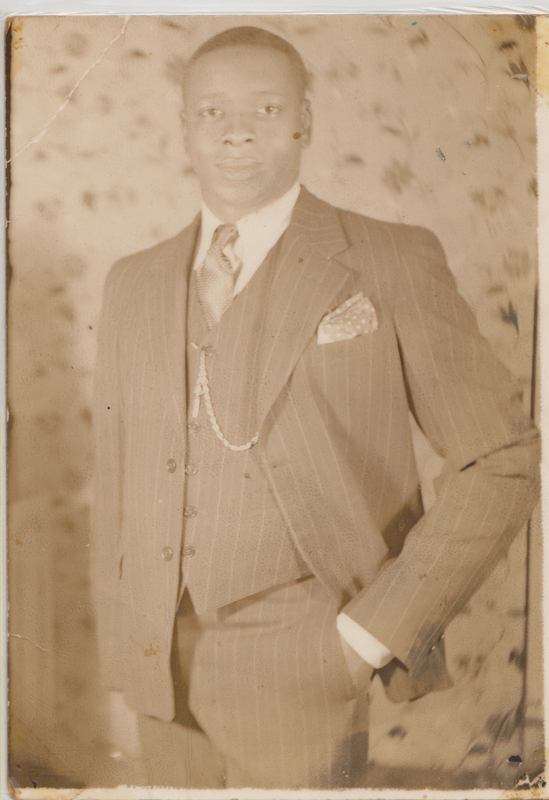
A Sharp-Dressed Man
Herbert Walker carried himself well, which also bolstered people’s respect for him. He was an immaculate dresser, with his attire neatly tailored and pressed. The owner of dozens of suits, some of them iridescent, Walker liked to accessorize with alligator skin shoes and a fedora. He also possessed a rich bass voice that was as smooth as his clothing. | Source: Courtesy of Charlotte Floyd-Love and Family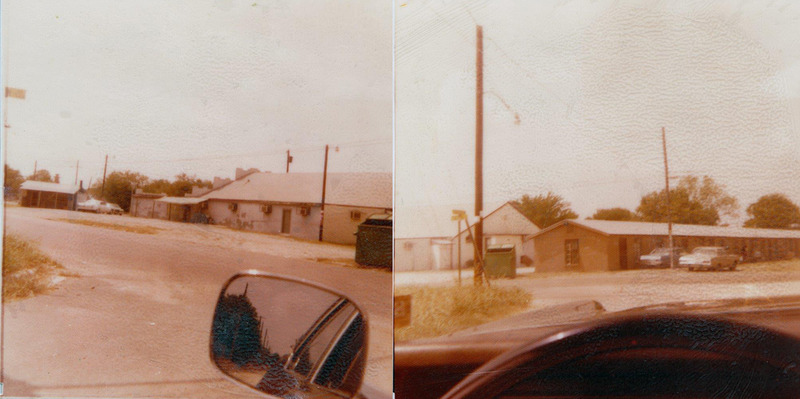
Location, Location, Location
Herbert Walker wanted African Americans in Waco and those visiting the community to have access to high-quality recreation and accommodation. Putting the club (center), apartments (right), and BBQ pit (left) in close proximity to one another made them easier to manage and able to mutually reinforce one another’s business. | Source: Courtesy of Charlotte Floyd-Love and Family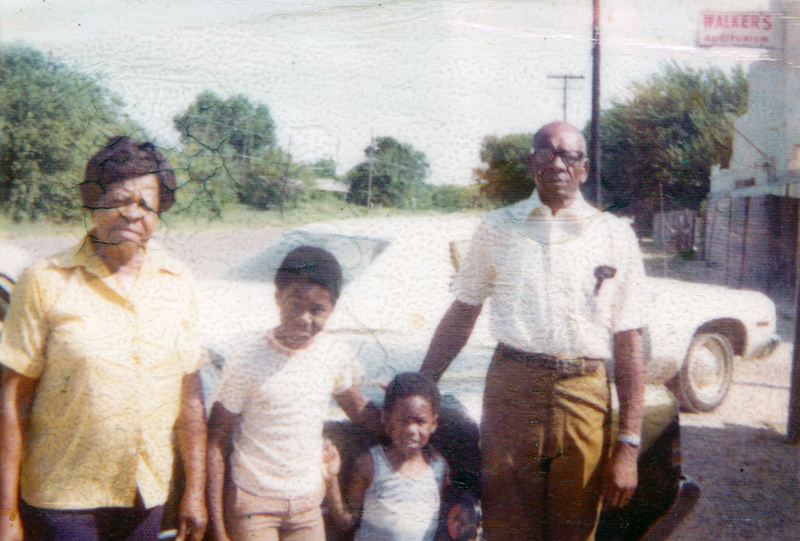
Separate Spheres
Though an enterprising businessman, Herbert Walker (right) kept his work and family life separate. His wife, Julia (left), daughter, and grandchildren (center) visited Walker’s Auditorium only when it was closed, or they engaged in aspects of running the club that did not require them to be on site. For example, his daughter, Charlotte, handled the booking of acts from the family home. This strict separation came from Walker’s belief that the club was not a place for underage persons. | Source: Courtesy of Charlotte Floyd-Love and Family
A Little Something for Everyone
Herbert Walker’s grandson and daughter, Adrion Floyd and Charlotte Floyd-Love, describe the interior of Walker’s Auditorium. Though it was a relatively open space, the club contained several distinct areas where patrons engaged in a variety of activities. | Source: Floyd-Love, Charlotte, Adrion Floyd, and Roderick Floyd, Interviewed by Stephen Sloan, July 4, 2020 in Waco, TX. Baylor University Institute for Oral History, Waco, TX.Look Who’s Coming to Town
Charlotte Floyd-Love elaborates on the publicity methods that Walker’s Auditorium employed. In addition to newspapers, other forms of media also advertised acts that were coming to Waco, usually only a couple weeks prior to their arrival. | Source: Floyd-Love, Charlotte, Adrion Floyd, and Roderick Floyd, Interviewed by Stephen Sloan, July 4, 2020 in Waco, TX. Baylor University Institute for Oral History, Waco, TX.Let the Good Times Roll
Wacoan Marshall Baldwin socialized at Walker’s Auditorium as a young man. He narrates the role the club played in Waco’s nightlife and how the Chitlin’ Circuit operated in Central Texas. | Source: Baldwin, Marshall, Interviewed by Sean Sutcliffe, June 24, 2016 in Waco, TX. Waco and McLennan County Project, Baylor University Institute for Oral History, Waco, TX. Access full interview here.