Armstrong Browning Library & Museum
Text
One of the most beautiful buildings on Baylor University’s campus is the Armstrong Browning Library & Museum. Sources such as Campus Grotto and Flavorwire have named the library to their lists of the fifty most beautiful libraries in the United States and in the world, respectively. The three-story Italian renaissance style building houses the world’s largest collection of Robert and Elizabeth Barrett Browning material. Collected by Dr. Andrew Joseph Armstrong throughout his life, the artifacts have resided in the Armstrong Browning Library since its opening in 1951.
Born in 1873 in Louisville, Kentucky, A.J. Armstrong grew up wanting to be a college professor. He lost his father when he was fourteen, so when his mother fell ill a few years later, he delayed his college education to care for her. She died when he was twenty-six, and he began his studies at Wabash College. After he graduated in 1902, he accepted a position teaching English at East Texas Baptist Institute, where he met his future wife, fellow English teacher Mary Maxwell. Armstrong went on to earn his doctorate from University of Pennsylvania in 1908. That same year he accepted an interim teaching position at Baylor University. After three years teaching at Georgetown College, he returned to Baylor as the chair of the English department.
Dr. Armstrong possessed an interest in Robert Browning from an early age. Browning and his wife, Elizabeth Barrett Browning, were two of the greatest of the English Victorian poets. A master of dramatic monologue and psychological portraiture, Browning was a prolific poet, writing hundreds of poems and eight plays in verse.
Around 1905, Armstrong began to collect Browning's writings. His interest grew greatly upon his meeting the Brownings’ only son, Robert Wiedeman Barrett Browning, called Pen, on a visit to Italy in 1909, and he resolved to collect every artifact he could. When Pen died in 1912 without a will, Sotheby’s auction house in London sold off the Browning estate. Armstrong was able to acquire a copy of the sale catalogue, including sale prices and purchasers, from a Sotheby staff member named E.H. Courville. From this starting point, Armstrong began to track down the Browning effects to bolster his fast-growing collection of Browning writings and relics.
Armstrong donated his collection of Browning materials to Baylor in 1918. Throughout his life, he continued to track down Browning artifacts, funding his passion with donations, gifts, and profits from events he hosted on campus. Many of these events were live readings, concerts, or dramatizations, featuring poets, musicians, actors, politicians, and scholars such as Robert Frost, Basil Rathbone, W.B. Yeats, Vachel Lindsay, William Taft, and Katharine Cornell. The university kept the Browning materials in Carroll Library, and designated a Browning Room to house the collection after the 1924 building renovation.
The collection grew quickly, and in 1943 Baylor President Pat Neff provided $100,000 to begin work on a new library to house the artifacts. Dr. Armstrong took upon himself the task of raising the remaining money. With the aid of his wife, Mary, he began an enormous fundraising campaign, writing to alumni, colleagues, politicians, and celebrities for whatever donation they could spare. Each letter he wrote was personal, and each gift was recognized with a thank you note. According to Dr. Armstrong, one person out of every four asked provided a donation. Several local and campus groups with which Dr. Armstrong was involved sponsored specific features of the building. For example, Dr. Armstrong’s Literature Survey class funded the front stairs, and the Tuesday Club of Brady, Texas and Mr. & Mrs. John Leddy-Jones of Dallas donated the Pippa statue on the front lawn.
Five years later, having obtained the $1.75 million dollars necessary for the construction of the building, the university held a groundbreaking ceremony for the new Armstrong Browning Library. In 1950, about halfway through the building’s construction, a second ceremony was held for supporters to place keepsakes such as pictures, books, and papers in the library’s cornerstone along with a list of the 5,117 individuals that contributed to the Browning fund. Finally, in December of 1951, the library officially opened to the public. By now, Dr. Armstrong’s collection was the biggest collection of Browningiana in the world.
The library stands three floors high. Its majestic Italian Renaissance architecture serves as a stunning backdrop for the thousands of artifacts housed within its walls. The Armstrong Browning stained glass collection is the largest collection of secular stained glass in the world, featuring sixty-two stained glass windows depicting the lives and poetry of the Brownings. The ground floor of the library underwent renovation in 1995. Until then, the first floor held offices and classrooms for the English department, while the second and third displayed the various Browning materials. The ground floor now houses the Cox Reception Hall, the ABL Gift Gallery, the Mary Armstrong Seminar Room, the Lewis-Birkhead Lecture Hall, and climate-controlled book stacks. The second floor holds the Martin Entrance Foyer, the Hankamer Treasure Room, the John Leddy-Jones Research Hall, the McLean Foyer of Meditation, and the Cloister of the Clasped Hands, which holds a bronze cast of the hands of Robert and Elizabeth Barett Browning done by artist Harriet Hosmer. The stairwell joining the three floors holds a collection of paintings by Pen Browning. The third floor boasts the Austin Moore-Elizabeth Barrett Browning Salon and the Belew Scholars’ Room (originally Dr. Armstrong’s personal classroom) as well as a balcony overlooking the Foyer of Meditation. Spaces found outside the building include the Garden of Contentment, added in 2012, and an amphitheater.
The Armstrong Browning Library & Museum is a testament to how the tireless effort of one person can accomplish a lofty goal. The library continues to inspire students, scholars, poets, and tourists with its beauty and resources.
Files
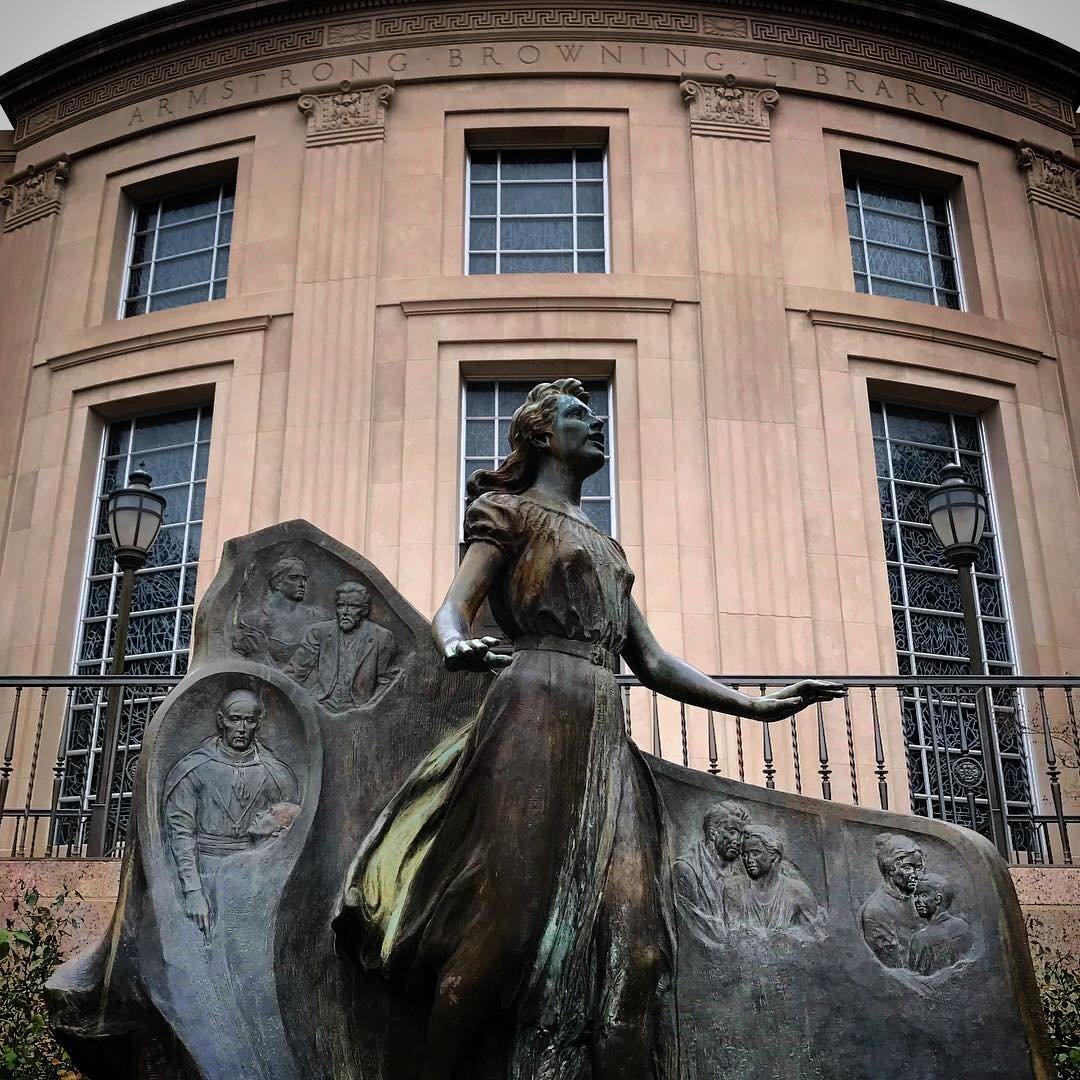
Pippa and the Poet
A large sculpture on the library’s front lawn depicts the titular character of Browning’s play, “Pippa Passes.” In the play, Pippa, a poverty-stricken young silk-winder, wanders through her hometown singing, inspiring the people around her. | Source: Image courtesy of Tom Barnard, City of Waco Convention and Visitors, January 30, 2018, https://destinationwaco.org/places/armstrong-browning-library/?asset=1934-ig-1703825541739321594_4102656276.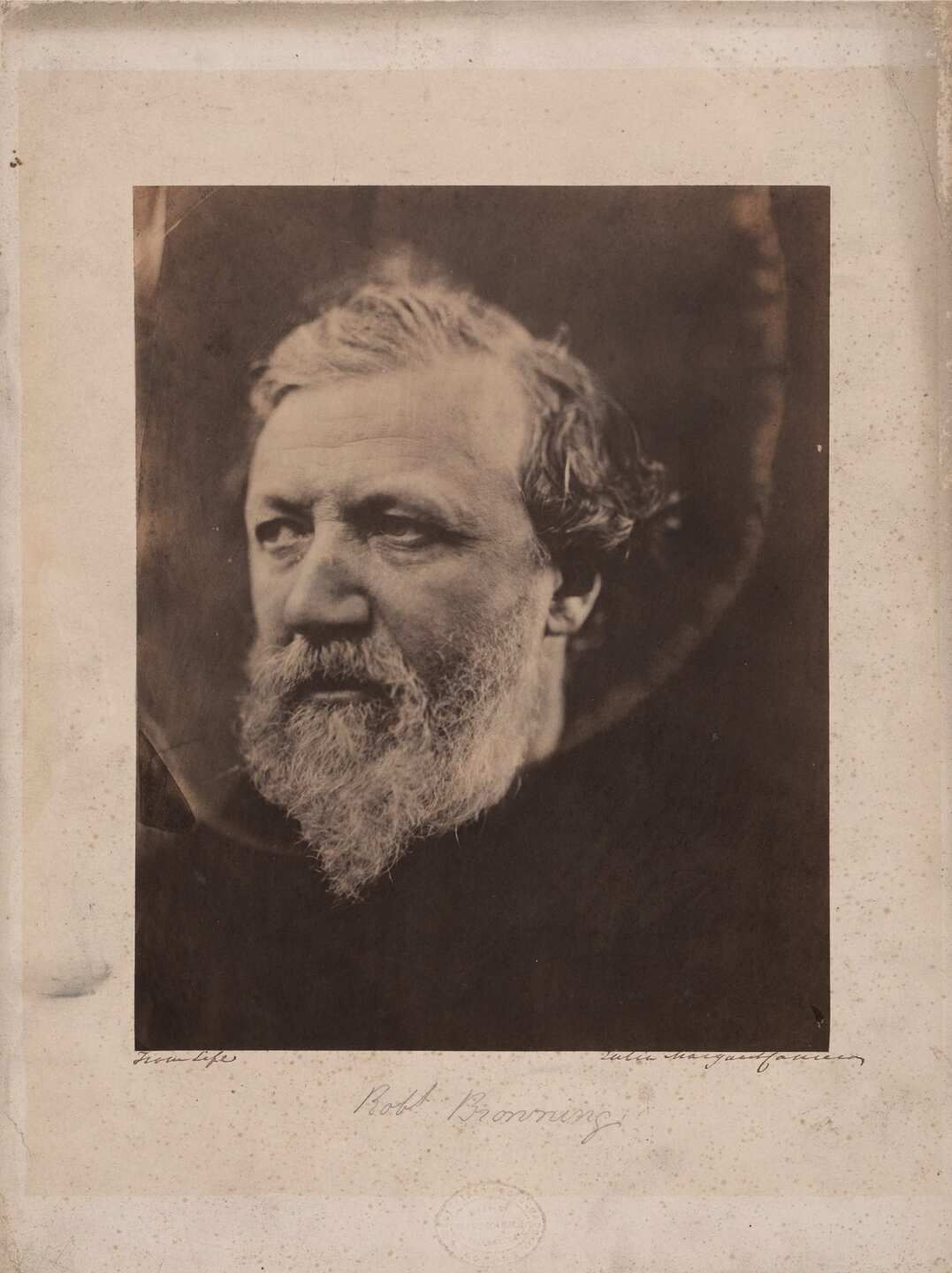
Literary Giant
Robert Browning (1812-1889) spent his life between England and Italy. Browning’s greatest work, a twelve-part dramatic narrative poem called The Ring and the Book, cemented him as one of the greatest literary figures of his time. | Source: Armstrong Browning Library - Julia Margaret Cameron Photographic Archive, Baylor University, Digital ID: ab-phoarch-pho_g0047-1-browning_1865.
Feminist Icon
Elizabeth Barrett Browning (1806-1861) is most well-known for her lines “How do I love thee? Let me count the ways.” Considered an early feminist, she laments a lack of education and creative freedom granted to women of her time in her verse novel, Aurora Leigh. | Source: Baylor University Media and Public Relations, March 5, 2020, https://news.web.baylor.edu/news/story/2020/how-do-we-celebrate-thee-happy-214th-birthday-elizabeth-barrett-browning.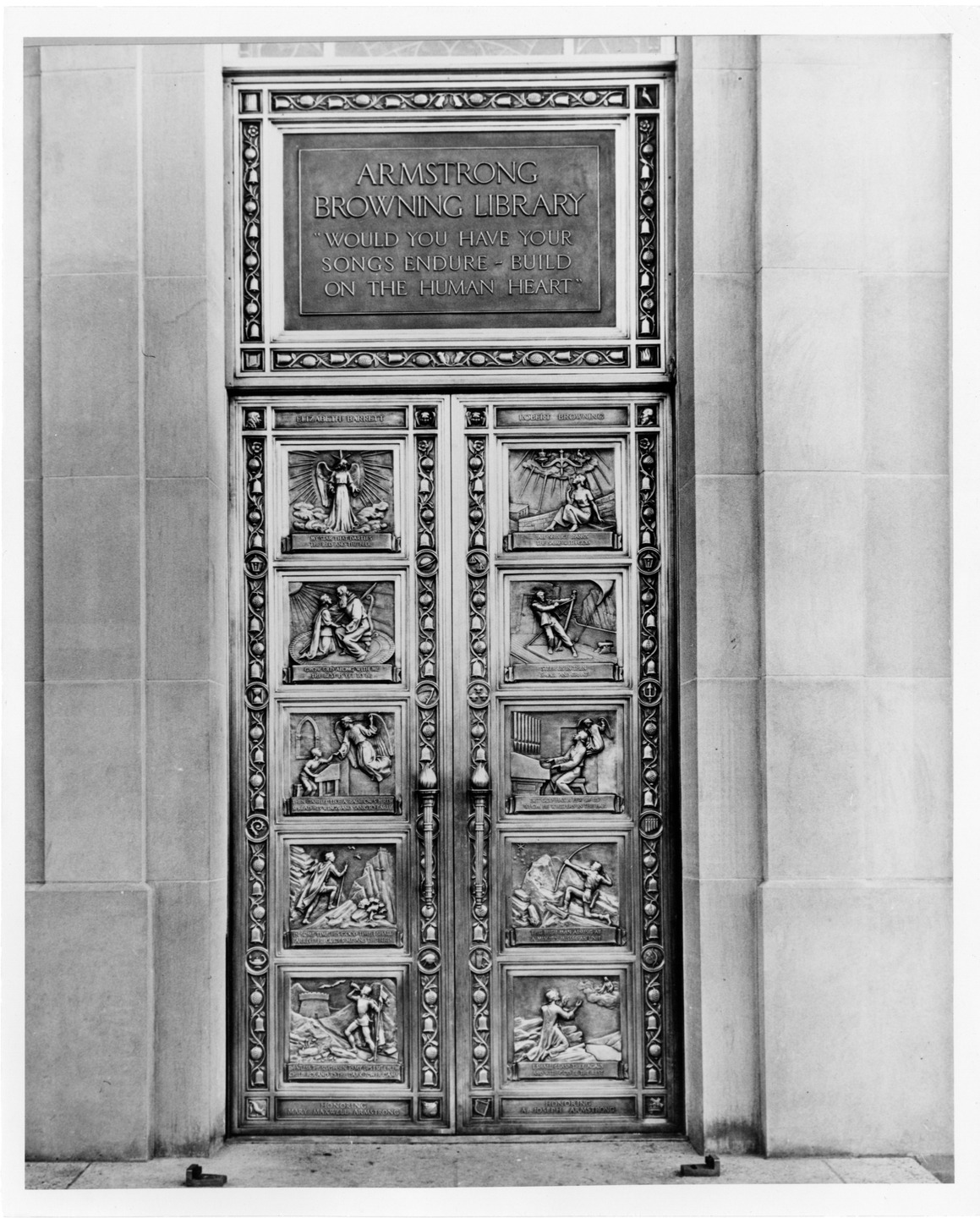
A Grand Entrance
The solid bronze front doors of the library depict scenes from the Brownings’ poetry. Each door weighs three quarters of a ton. | Source: The Texas Collection, Baylor University, Digital ID: tx-phoarch-pho_gen-bu-bls_000204.
Variable Vestiges
The Hankamer Treasure Room is the host of the library’s rotating exhibits. These exhibits often showcase the works of Victorian poets or other Victorian artifacts. | Source: Baylor University Libraries, Museums, and the Press, https://library.web.baylor.edu/visit/armstrong-browning-library-museum/about/architecture.
Extraordinary Elements
The McLean Foyer of Meditation’s design evokes the style of the home of Victorian artist and classicist Frederick Leighton in London. Cathedral windows, a two-ton bronze chandelier, quotations from Robert Browning’s poetry, and paintings of an Italian garden scene adorn the impressive space. | Source: The Texas Collection, Baylor University, Digital ID: tx-phoarch-pho_gen-bu-bls_000228.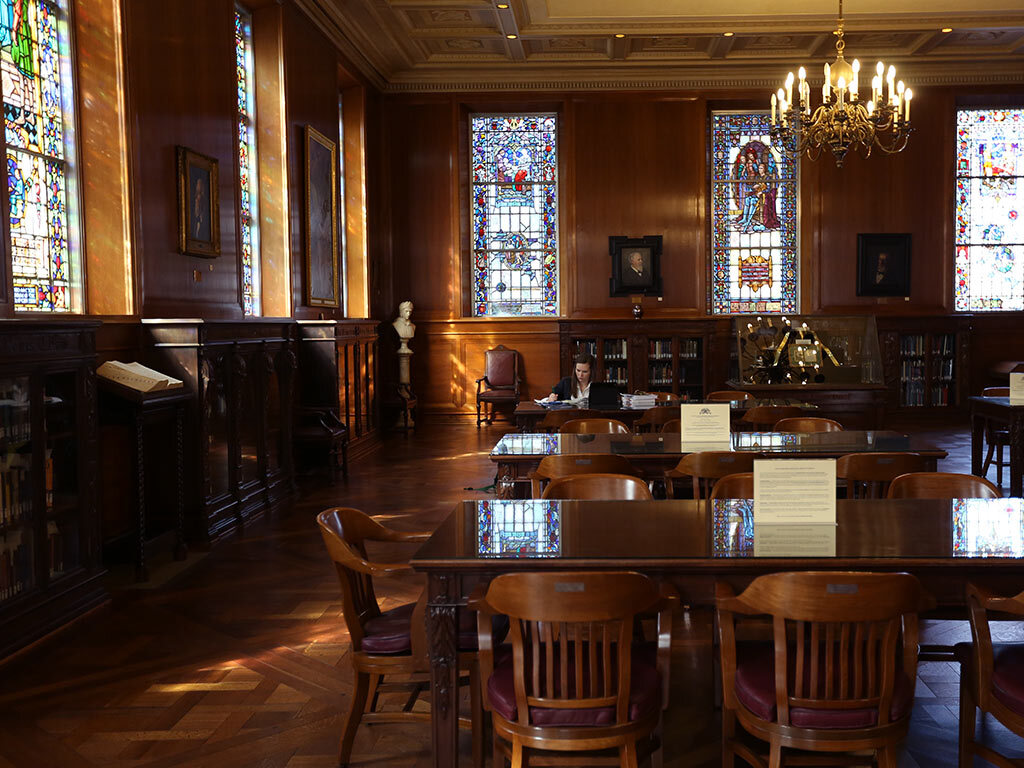
Books and Browningiana
The John Leddy-Jones Research Hall is a popular study spot among Baylor students due to its quiet and reflective atmosphere. Alongside the tables and books stand an assortment of paintings, sculptures, carvings, stained glass, and artifacts. | Source: Baylor University Libraries, Museums, and the Press, https://library.web.baylor.edu/visit/armstrong-browning-library-museum/visit/building-map-online-tour.
Tale as Old as Time
A popular myth among Baylor University students claims that the McLean Foyer of Meditation served as inspiration for the ballroom in Disney’s 1991 animated feature “Beauty and the Beast.” While this is untrue, a Baylor alumnus, Jim Hillin, did serve as Computer Generated Imagery Supervisor for the film and helped design the scene. | Source: Baylor University, https://about.web.baylor.edu/campus/vibrant-baylor-campus#&gid=1&pid=2.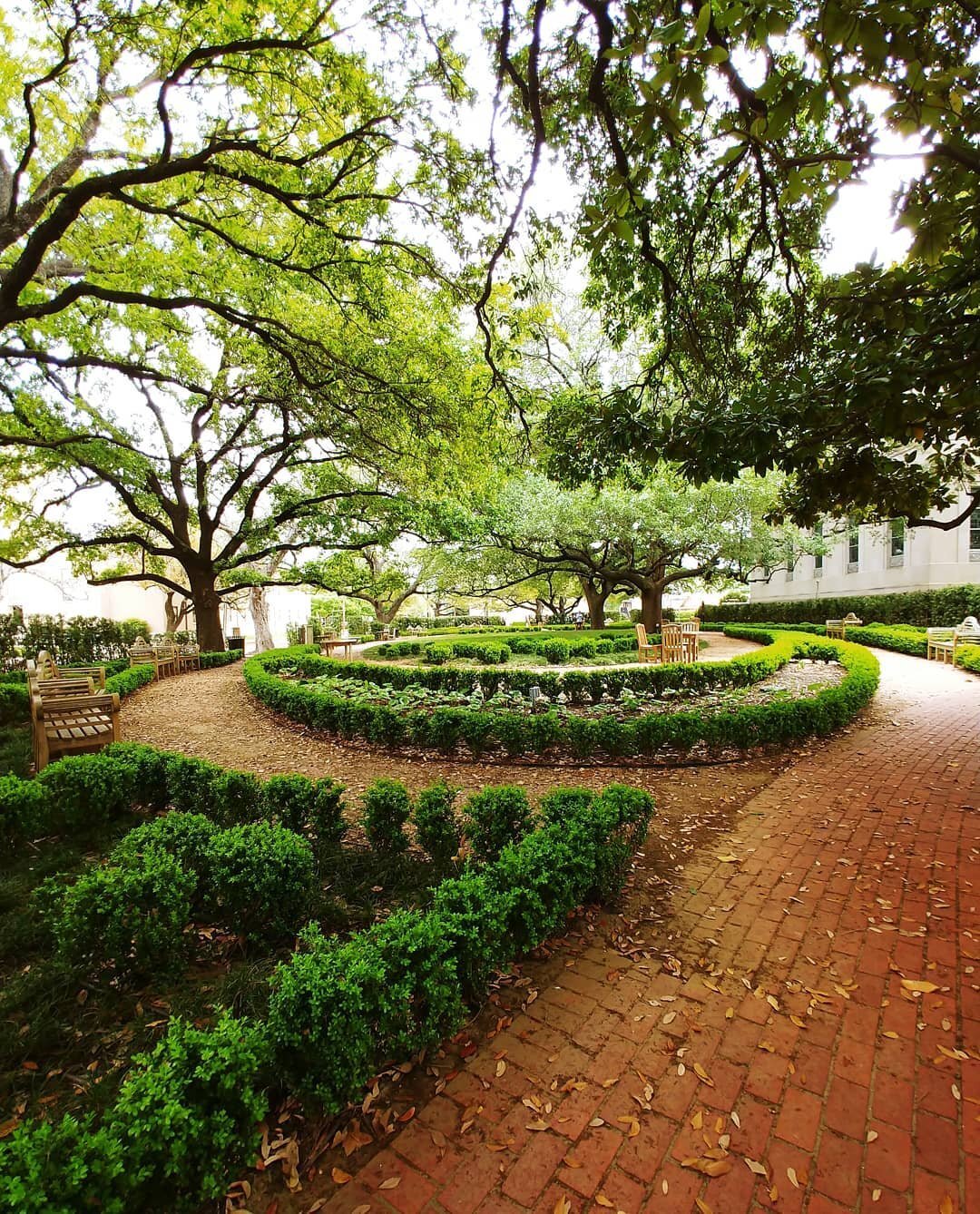
A Grand New Garden
Dedicated in 2012, the centennial year of Armstrong's arrival as Chair of the English Department at Baylor, the Garden of Contentment stands in stately beauty outside the Armstrong Browning Library & Museum. The focal point of the garden is a fountain bearing an inscription of two lines from Robert Browning’s poem “The Guardian Angel, A Picture at Fano.” | Source: City of Waco Convention and Visitors, April 1, 2018, https://destinationwaco.org/places/armstrong-browning-library/?asset=1934-ig-1748220201398221572_1543342747.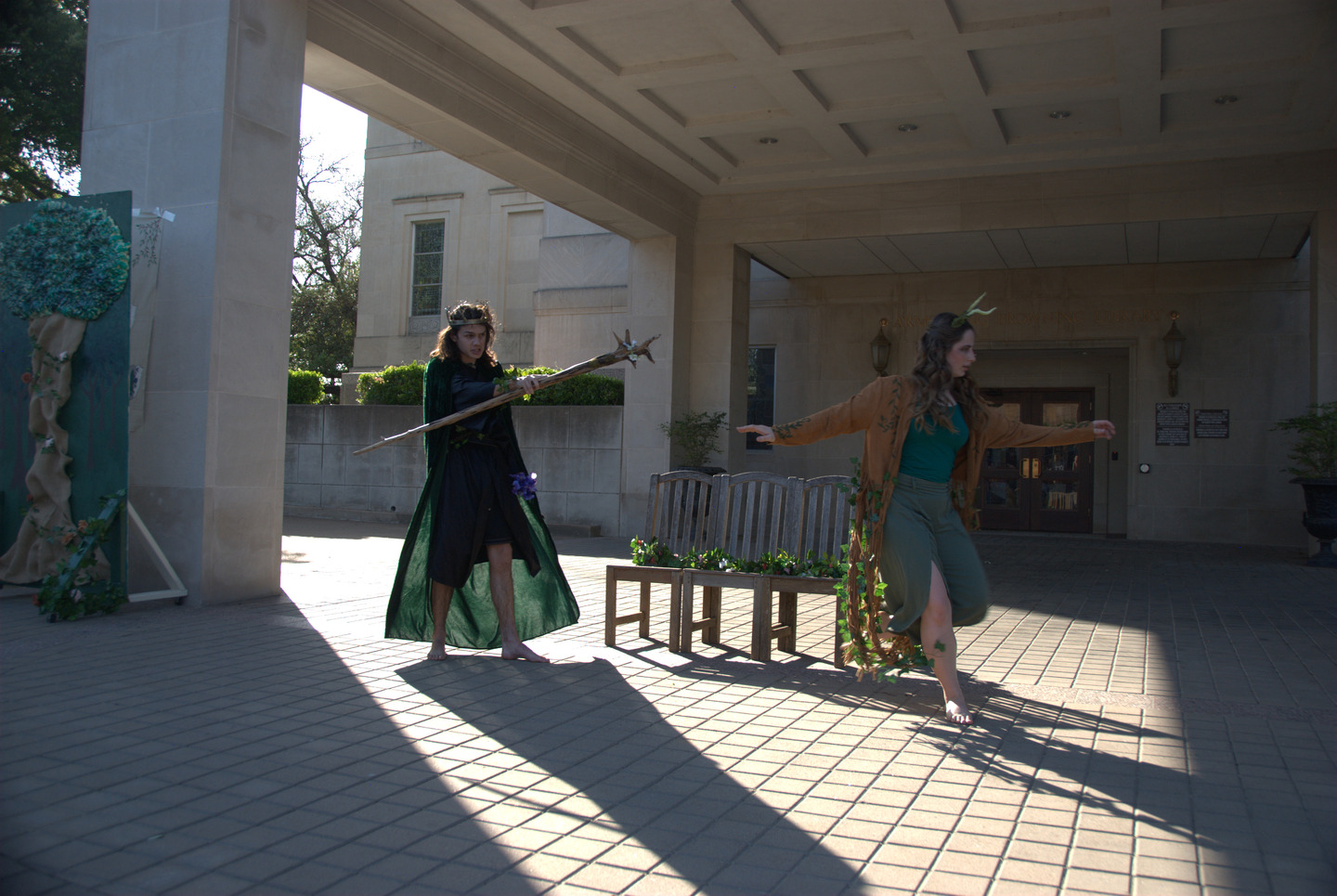
A Night at the (Amphi)Theater
The other outdoor space connected to the library is the outdoor amphitheater. Featuring a large awning and grassy, tiered seating, the amphitheater provides a beautiful backdrop for plays and concerts. | Source: Image courtesy of the Baylor University Honors Residential College Public Relations Committee.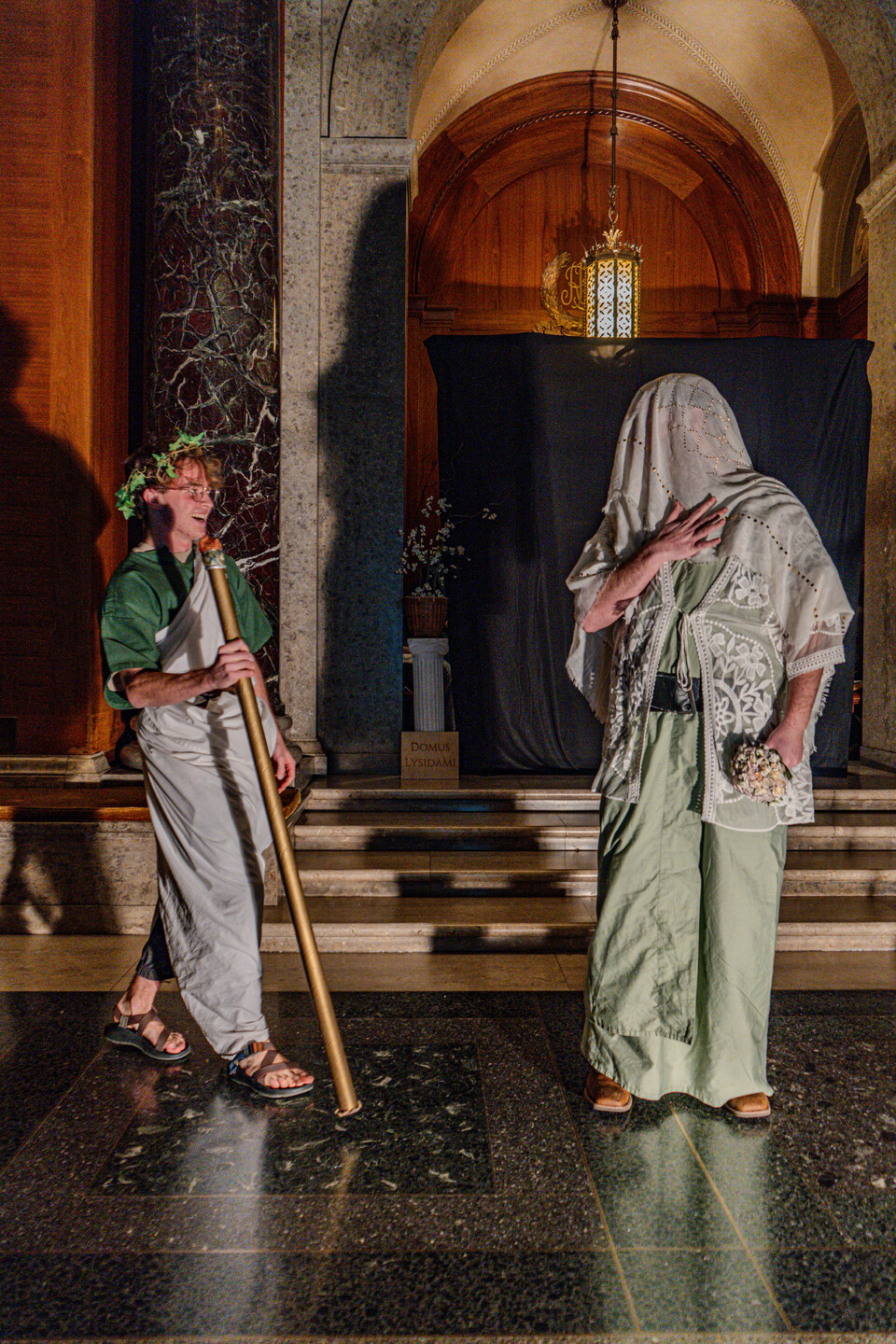
Foyer Affairs
The McLean Foyer of Meditation hosts a number of university events each semester. One such event is the yearly Baylor Classics Department play, shown here. | Source: Baylor University College of Arts and Sciences, Flickr, https://www.flickr.com/photos/198951526@N07/55069228301/in/album-72177720331744172.
Pictured: A Popular Piper
Three of the stained glass windows in the John Leddy-Jones Research Hall were originally part of the Browning Room in Carroll Library. One of these depicts “The Pied Piper of Hamelin,” Robert Browning’s best known poem. | Source: The Texas Collection, Baylor University, Digital ID: tx-phoarch-pho_gen-bu-bls_000112.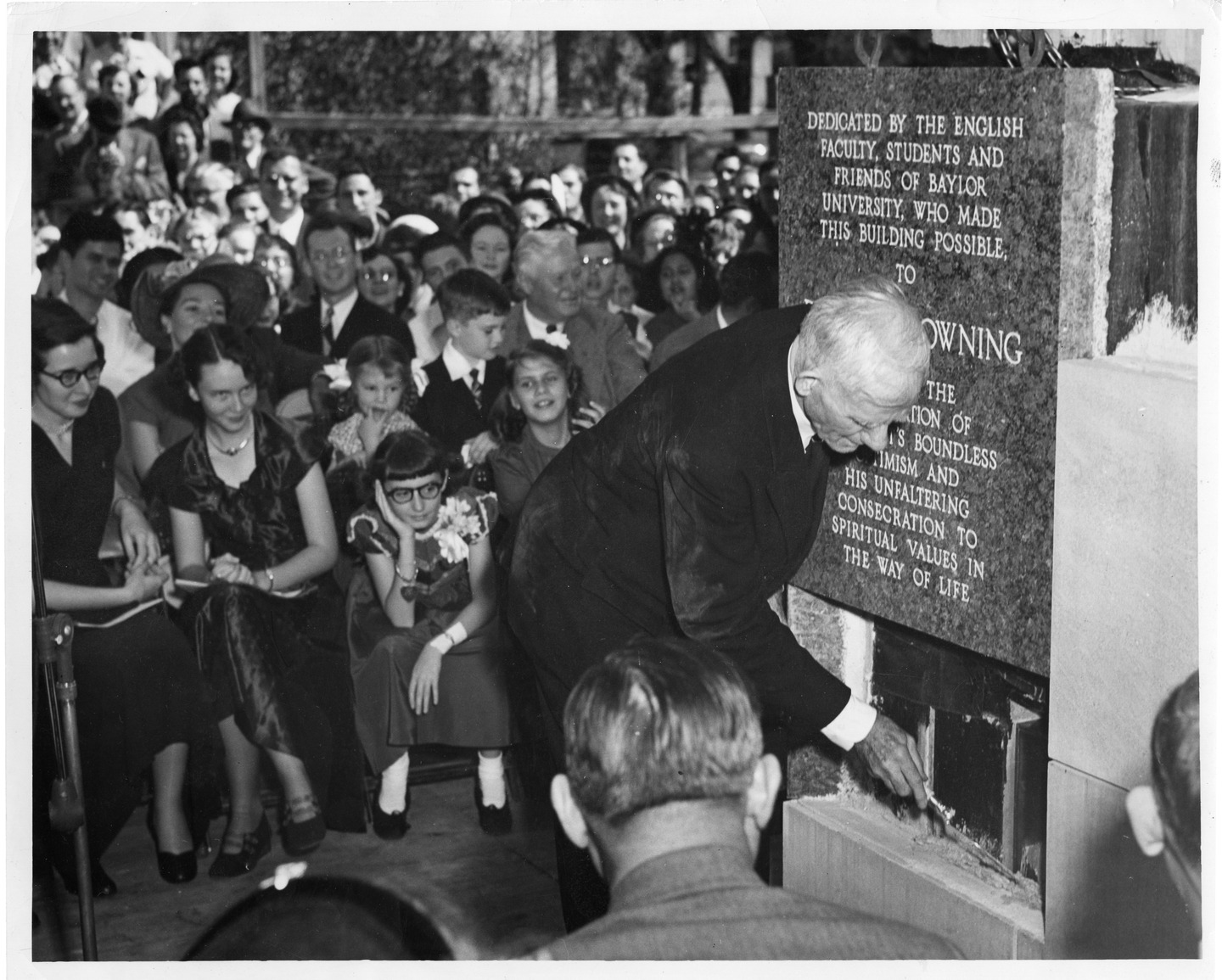
Inexhaustible Armstrong
Dr. Armstrong was a man of remarkable drive and energy. In his forty years as chairman of the Baylor English department, he always worked eighteen hour days; led a men’s group at the First Baptist Church; oversaw the English honors society, Sigma Tau Delta; led a Literature Survey class for Waco women; gave lectures; taught university classes; and, of course, never ceased to hunt items to augment the Browning collection. | Source: The Texas Collection, Baylor University, Digital ID: tx-phoarch-pho_gen-bu-bls_000135.
Locus of Learning
The casual observer might find it odd that the world’s center of learning regarding two English poets who spent their lives in Italy resides in the middle of Texas. To alleviate the financial stress of travel for more distant scholars, library administration offers one-month fellowships, and to aid those researchers who are unable to visit, they maintain digital collections of many of their materials. | Source: The Texas Collection, Baylor University, Digital ID: tx-phoarch-pho_gen-bu-bls_000165.
Wondrous Windows
In the late 1990s, the Cox Reception Hall on the first floor of the library became the home of a stained glass window collection called “Italy and the Brownings.” The collection consists of six windows depicting Italy and significant Italian cities with meaningful elements and quotations from the Brownings’ poetry regarding each location. | Source: Image courtesy of the author.
Leading Lady
The Austin Moore-Elizabeth Barrett Browning Salon is the only room in the library devoted predominantly to Elizabeth Barrett Browning. Among the many replicas and artifacts in the salon is the Browning Music Collection, consisting of about 1,500 scores for musical renditions of the Brownings’ poetry. | Source: Image courtesy of the author.
Paintings in Numbers
The library houses many of the paintings of Robert and Elizabeth Barrett Browning’s son, Pen. One portrait portraying his father hangs proudly over the “Browning Study” exhibit in the Martin Entrance Foyer. | Source: Image courtesy of Kelsey Kennedy, The Waco Things, January 27, 2025, https://thewacothings.com/armstrong-browning-library-museum/.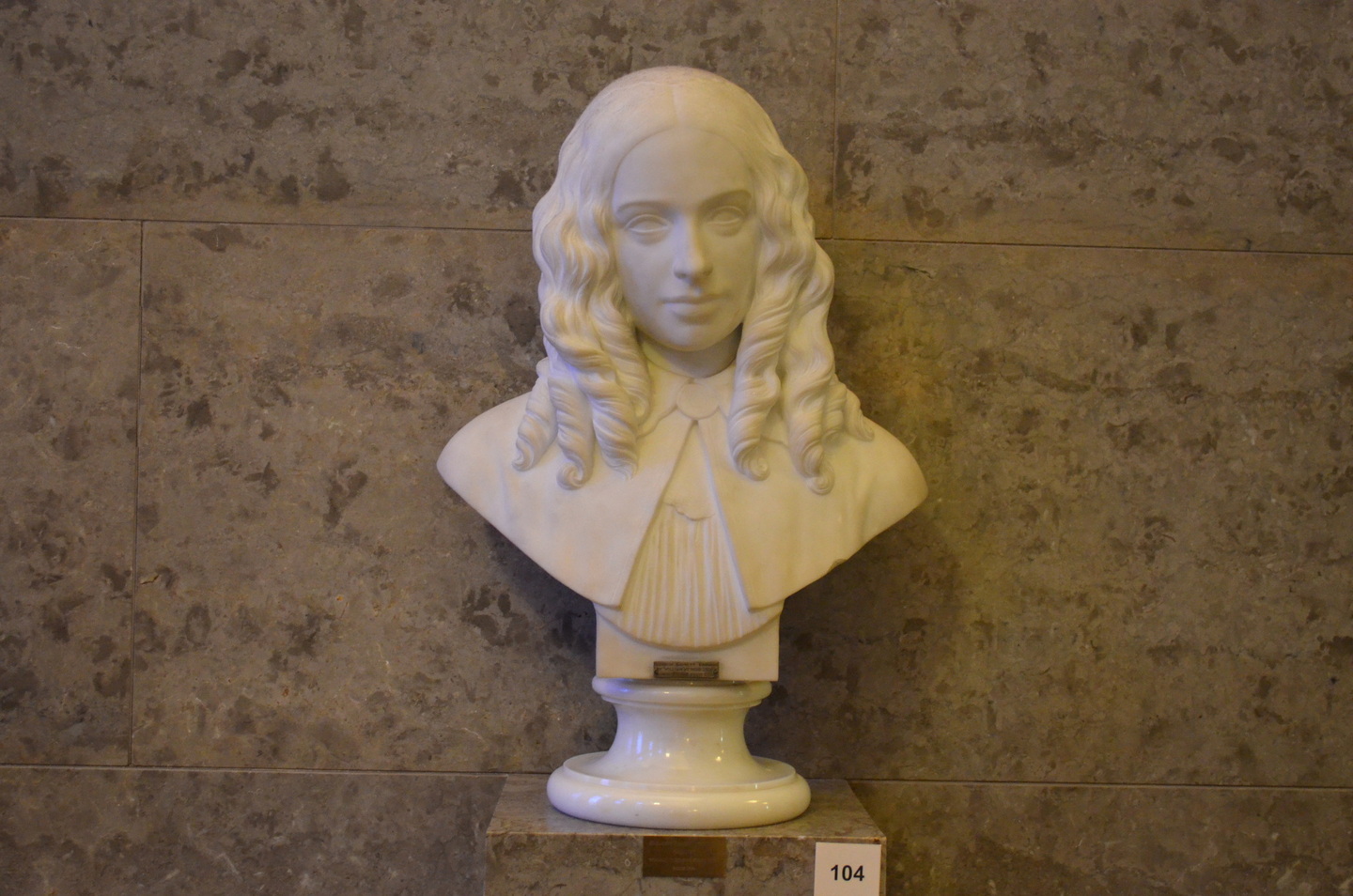
Marble Masterpieces
The sculpture collection at Armstrong Browning features busts of the Brownings as well as their friends and inspirations, such as Percy Shelley and Dante. Much like Dante, Elizabeth Barrett Browning was a writer of epic—she wrote an epic poem entitled The Battle of Marathon at the age of twelve. | Source: Baylor University Media and Public Relations, March 5, 2020, https://news.web.baylor.edu/news/story/2020/how-do-we-celebrate-thee-happy-214th-birthday-elizabeth-barrett-browning.