1936 Flood
Text
Prior to local and federal efforts in the mid-twentieth century to control rivers through the construction of dams, the Brazos River routinely overflowed its banks. In 1913, the most violent flood to date overwhelmed East Waco, taking two lives and destroying numerous houses and businesses. This, combined with other disastrous floods throughout the nation, spurred a movement to harness the powerful force of the river.
In 1923, the Texas State Legislature conducted a flood control study which recommended the creation of a state agency with the power to carry out the tasks necessary to curb the destruction of the Brazos River. In 1929, the state formed the Brazos River Conservation and Reclamation District. That same year, after much local debate, a small dam on the Brazos River was constructed. This dam primarily provided the city with a constant water supply, though it also offered minimal amounts of flood protection.
Rain fell heavily throughout Central Texas in 1936. In September, a torrential downpour filled the Brazos River to record levels, cresting at 41 feet. The surging river proved to be too much for the small protective measures taken for the city. About one mile north of Waco, the river burst through a levee and flooded into the city.
The river rose to just a few inches below the floor of the Washington Avenue Bridge and the Suspension Bridge and overflowed its banks, overwhelming East Waco. Although no lives were lost, the flood resulted in approximately $1.5 million worth of property damage and left two thousand residents homeless. In order to restore order and begin the process of rebuilding, city manager W. C. Torrence declared martial law in the flooded area.
As Torrence appealed to citizens for monetary relief for flood victims, Congressman Bob Poage appealed to the federal government for help in taking more serious protective measures for the city. In 1937, the US Army Corps of Engineers conducted a study which recommended the construction of a series of dams on tributary streams of the Brazos River. This ultimately led to the construction of the Lake Whitney and Lake Waco Dams, which today protect the city from disasters such as the 1936 flood.
Files
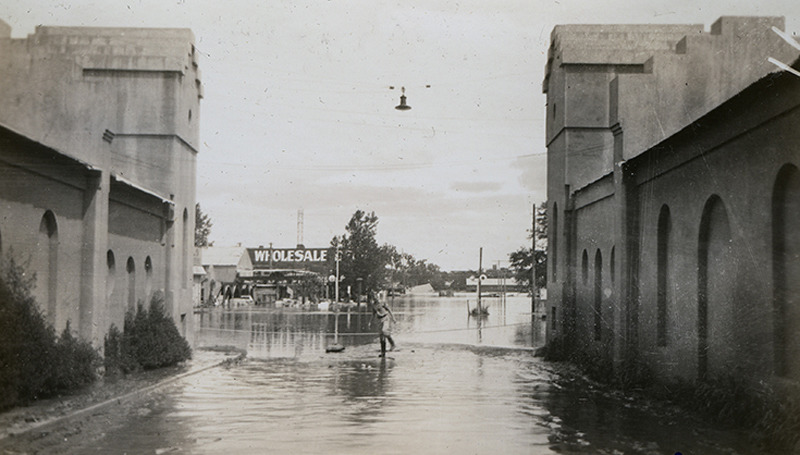
Safe Crossing
A man wades through the waters at the entrance to the Waco Suspension Bridge. Though other bridges were shut down during the 1936 flood, officials deemed the Suspension Bridge safe to cross because it was suspended from either side of the river. | Source: Image courtesy of the Texas Collection, Baylor University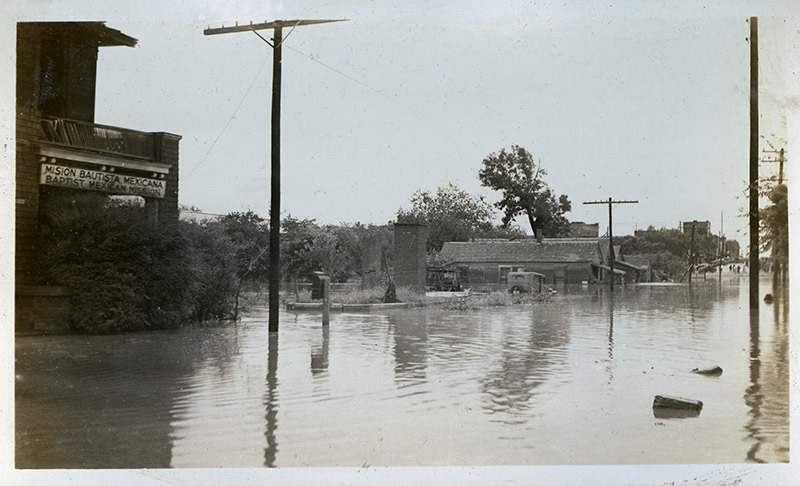
Baptist Mexican Mission
Water overflowed the banks of the Brazos River, making streets in East Waco impassable for days. Here, the Bautista Mexicana or Baptist Mexican Mission is pictured on the flooded North Second Street. | Source: Image courtesy of the Texas Collection, Baylor University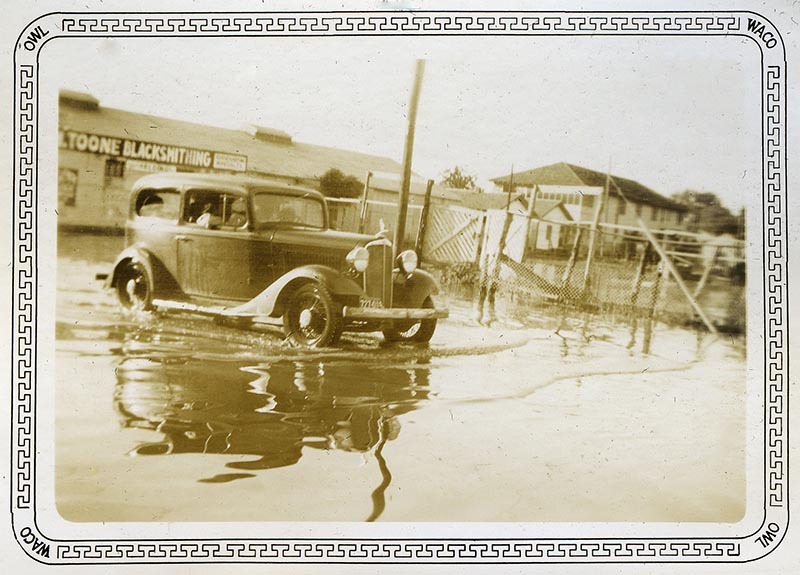
Flooded Street
Worse even than the 1913 flood, the torrential waters of 1936 inundated much of East Waco and left around two thousand Wacoans homeless. The flood caused nearly $1.5 million worth of property damage. | Source: Image courtesy of the Texas Collection, Baylor University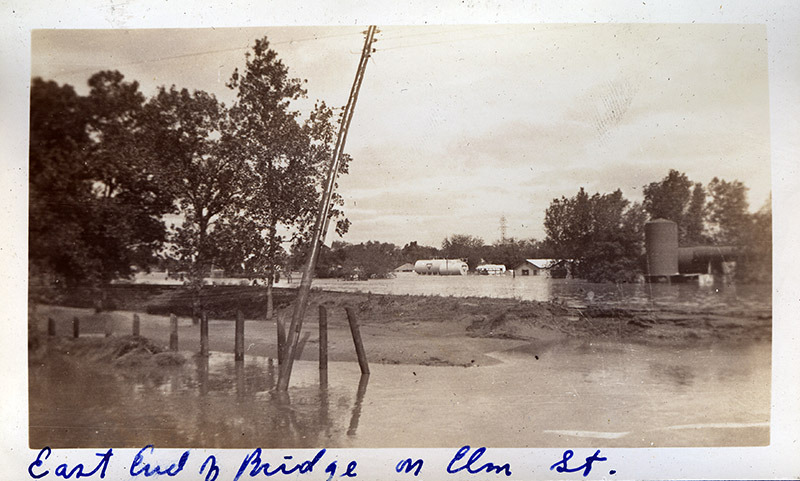
Extensive Damage
Elm Street often incurred a large amount of damage in Waco’s frequent floods. East Waco residents described seeing the water on Elm Street nearly submerging street lights and reaching the second stories of houses. | Source: Image courtesy of the Texas Collection, Baylor University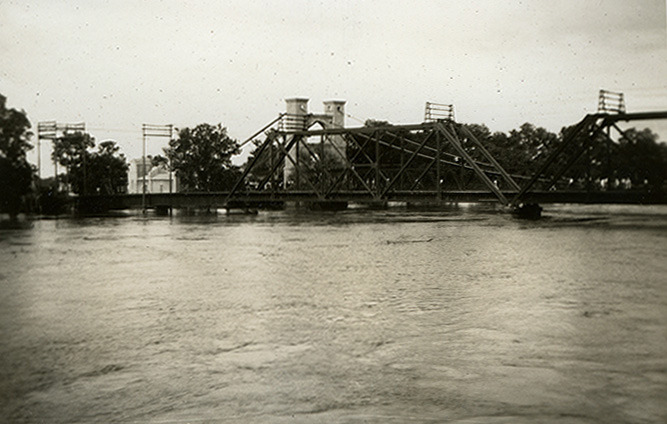
Cotton Belt Route
The St. Louis Southwestern Railway, also known as the Cotton Belt, ran through downtown Waco by means of a bridge spanning the Brazos River located near the Suspension Bridge. Frequent flooding of the river closed the bridge and delayed the trains. | Source: Image courtesy of the Texas Collection, Baylor University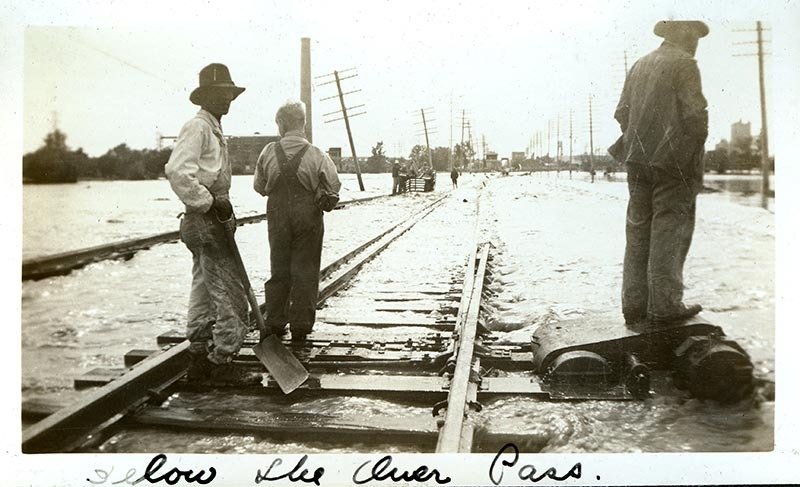
Interruption of Industry
Waco’s two main railroads were integral parts of the city’s cotton industry. Before track beds were raised above flood level, disasters such as the 1936 flood interrupted trade and harmed the city’s agricultural industry. | Source: Image courtesy of the Texas Collection, Baylor University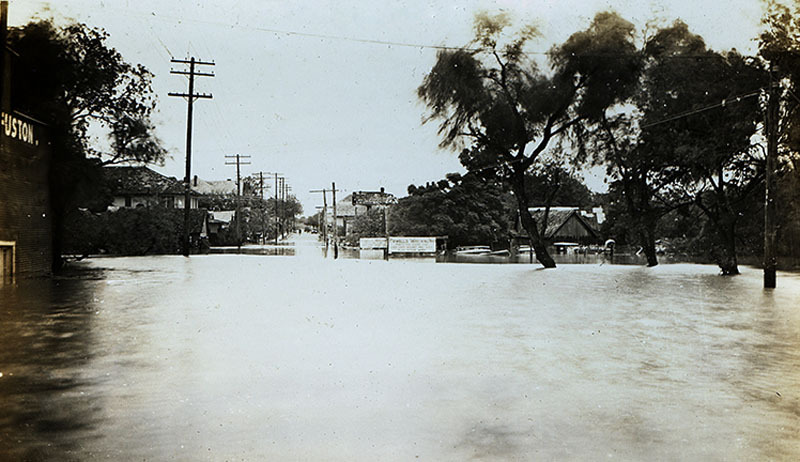
Slow Recovery
Damage from the flood waters was so severe that city manager W. C. Torrence declared martial law in the affected area. After the waters receded, many began the slow process of rebuilding their homes and businesses, supported by federal aid as well as monetary donations from other Wacoans. | Source: Image courtesy of the Texas Collection, Baylor University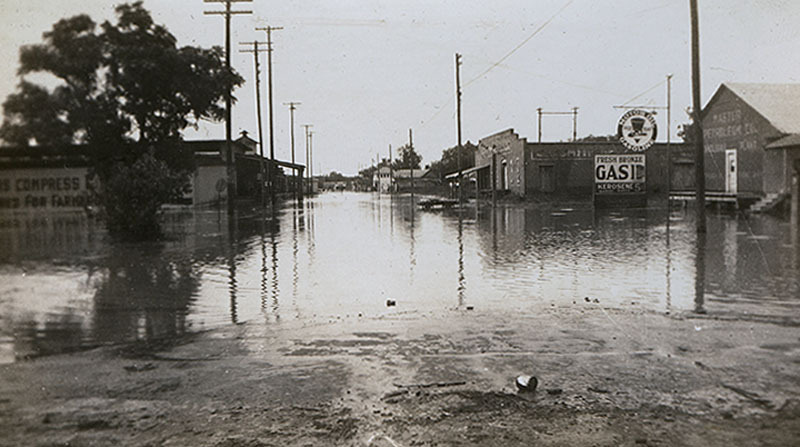
Control Measures
The serious damage caused by the 1936 flood spurred a movement to establish control measures along the Brazos River, leading to the construction of the Lake Whitney Reservoir and later the new Lake Waco Dam. | Source: Image courtesy of the Texas Collection, Baylor University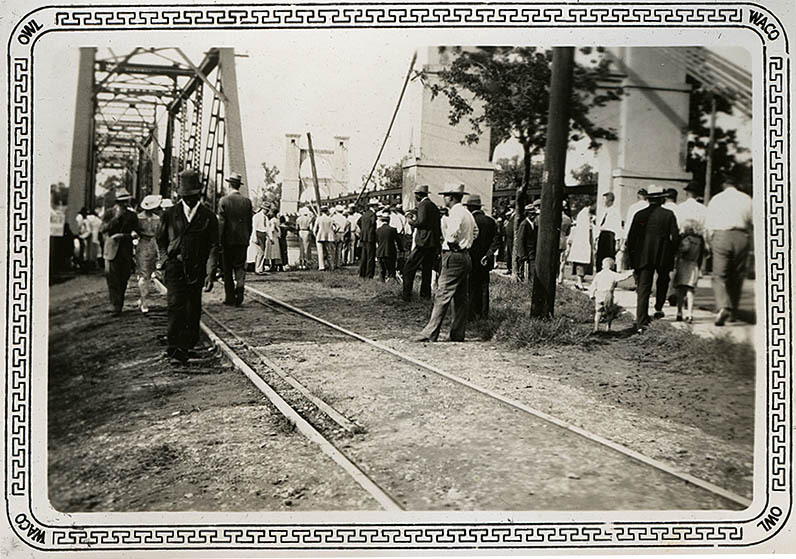
A Sight to See (September 27, 1936)
Bystanders gather near the Interurban and Waco Suspension bridges to get a closer look at turbulent flood waters. | Source: Image courtesy of the Texas Collection, Baylor University
Swimming in the Floodwaters
Alva Stem remembers diving into the high floodwaters during the 1936 flood. | Source: Stem, Alva, interviewed by Mark Firmin, January 9, 2009, in Waco, Texas. Baylor University Institute for Oral History, Waco, TX. View the full interview