Paul Quinn College
Text
Paul Quinn College is the oldest historically black college in Texas. Though it is no longer located in Waco, it remains an important part of the city’s history as the “Athens on the Brazos.”
In 1872 the African Methodist Episcopalian Church founded the Connectional School for the Education of Negro Youth in Austin as a means to provide education to former slaves. Five years later, the campus moved to Waco, where it occupied a small building located at Eighth Street and Mary Avenue until an increase in funding allowed the school to relocate to a new facility on Elm Avenue. In 1881, officials renamed the school for Bishop William Paul Quinn, a Methodist missionary.
Paul Quinn acted as an academic alternative for black students excluded from other institutions of higher education in the pre-Civil Rights era. Early on the college focused primarily on vocational training although it did offer a few courses in theology, English, Latin, music, and math. In the mid-1960s, options for many college-bound students expanded when two new schools joined the higher education landscape in Waco, McLennan Community College and Texas State Technical College. For black students, Paul Quinn remained the only option, and it was a largely unsatisfactory one. Its academic standards were not competitive with the other schools, its facilities were sub-par, and it was unable to receive sufficient funding to improve either situation. When Baylor, MCC, and TSTC racially integrated, Paul Quinn’s appeal dropped so far that the school was in danger of closing permanently.
In the mid-1960s, the Paul Quinn administration appointed a new dean named William Milton Collins, in the hope that he would be able to revitalize the college. Dean Collins did not disappoint. He established a new education department and introduced fine arts classes. He also began an accreditation process that would help Paul Quinn’s academic program improve.
The period between the late 1960s and the early 1970s was one of dramatic change at Paul Quinn. Enrollment greatly increased and administrators oversaw the construction of two new residence halls and a library by 1968. The college launched major development initiatives to help fund student scholarships and provide for campus expansion, but were also intended to increase community involvement and support.
In the late 1980s, African American businessman Comer S. Cottrell presented Paul Quinn with the opportunity to take over the property of the vacated Bishop College in Dallas. With the hopes of revitalizing campus life and opening up its programs to a larger urban market, Paul Quinn seized the opportunity to move north. In September of 1990, the school transferred all operations to the former Bishop campus with the assistance of several corporate sponsors. Paul Quinn College is still in existence in Dallas.
The historic Paul Quinn College campus in Waco fell into temporary disuse after the school’s relocation, but has since entered a period of renewal. Many of the original buildings are now being utilized by Rapoport Academy, continuing the goal of educating future generations.
Files
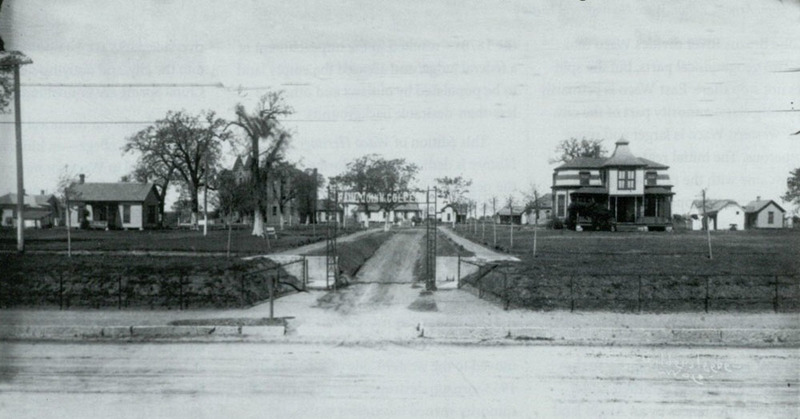
Front Entrance from Elm Street (1900)
In the early years of the college's existence, money was tight. Expanding the campus was done through efforts such as the "Ten Cents a Brick" campaign which asked community members to donate their spare pennies to the college's improvement fund. | Source: Image courtesy of the Texas Collection, Baylor University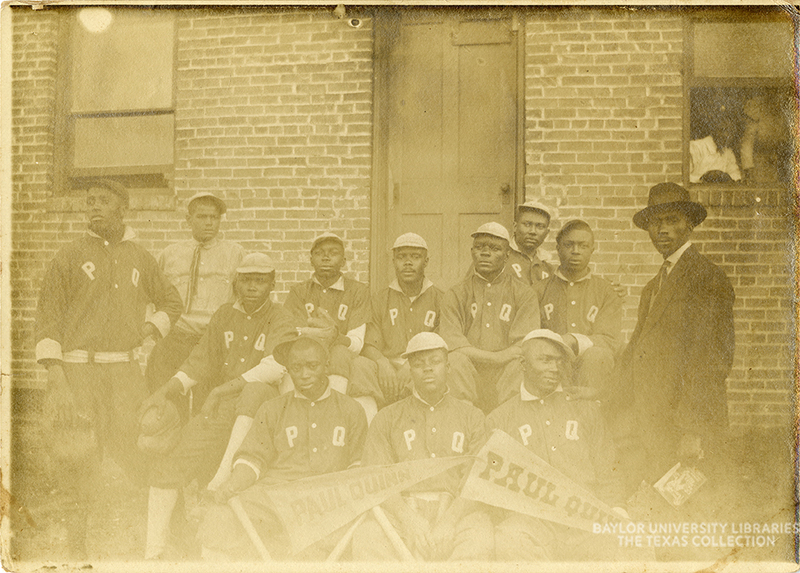
Baseball Team circa 1900
The Paul Quinn baseball team worked hard to prove themselves as African-Americans in a typically white sport during this period. | Source: Paul Quinn College, Waco, TX, Baseball Team, circa 1900," The Texas Collection, Baylor University photo stream, Flickr, https://www.flickr.com/photos/texascollectionbaylor/33272792908/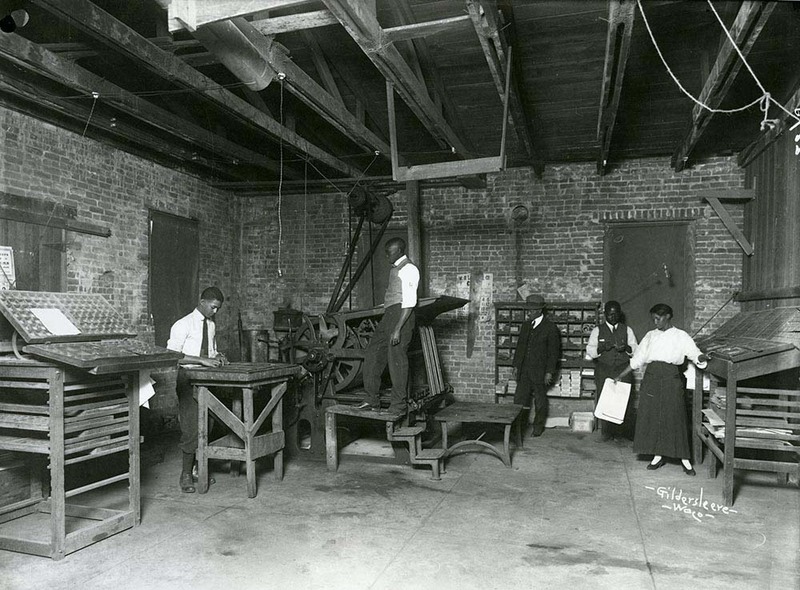
Industrious Students
Paul Quinn initially provided its African American students with vocational training in areas such as blacksmithing, carpentry, tanning, and saddlery. | Source: Image courtesy of the Texas Collection, Baylor University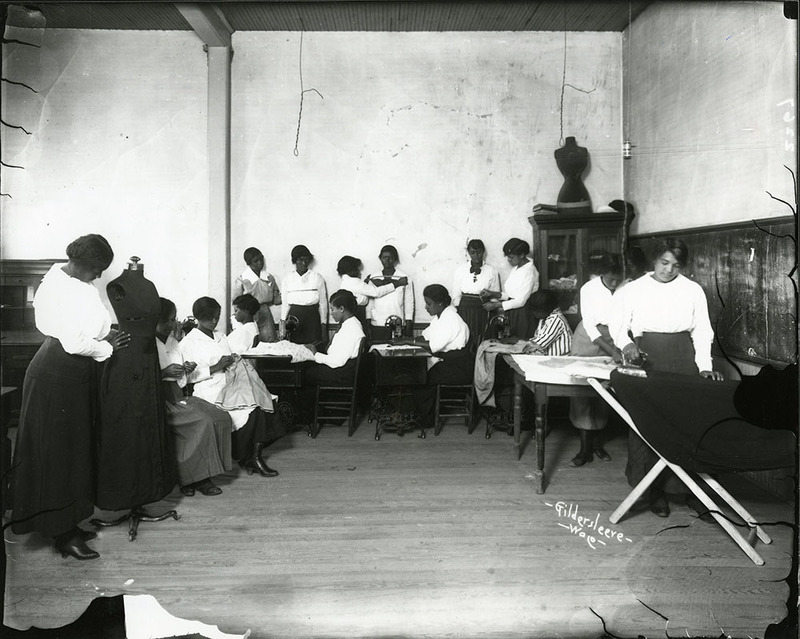
Women's Work
In addition to taking standard courses such as math and English, early female Paul Quinn students learned skills such as sewing and “household, kitchen, and dining room work” in order to prepare them for domestic service or family life. | Source: Image courtesy of the Texas Collection, Baylor University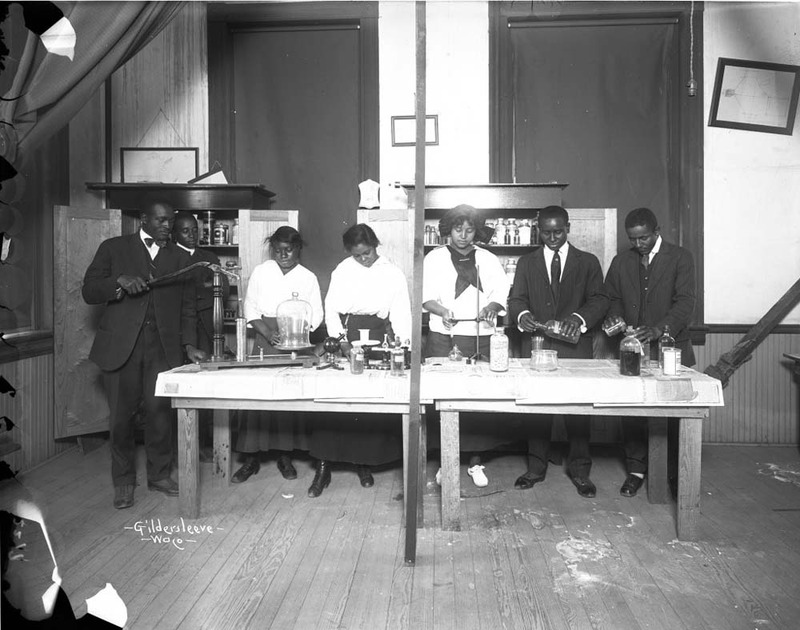
Science Course (1914)
Paul Quinn professors often had to make due with substandard equipment and classrooms because of lack of funding for proper materials. | Source: Image courtesy of the Texas Collection, Baylor University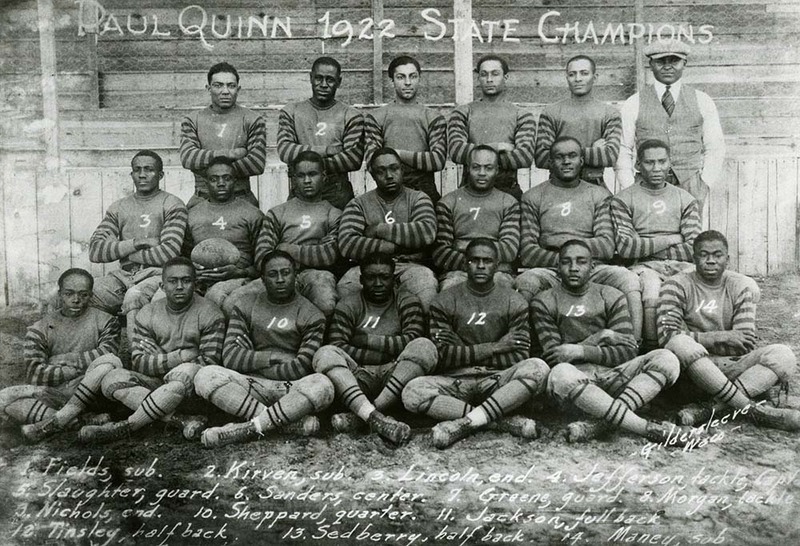
A League of Their Own
Athletic representatives from six colleges throughout the South, including Paul Quinn, met in 1920 to discuss the future of collegiate sports for African American colleges. They formed the Southwestern Athletic Conference, and in 1922, Paul Quinn's Tigers won the conference title, becoming state football champions. | Source: Image courtesy of the Texas Collection, Baylor University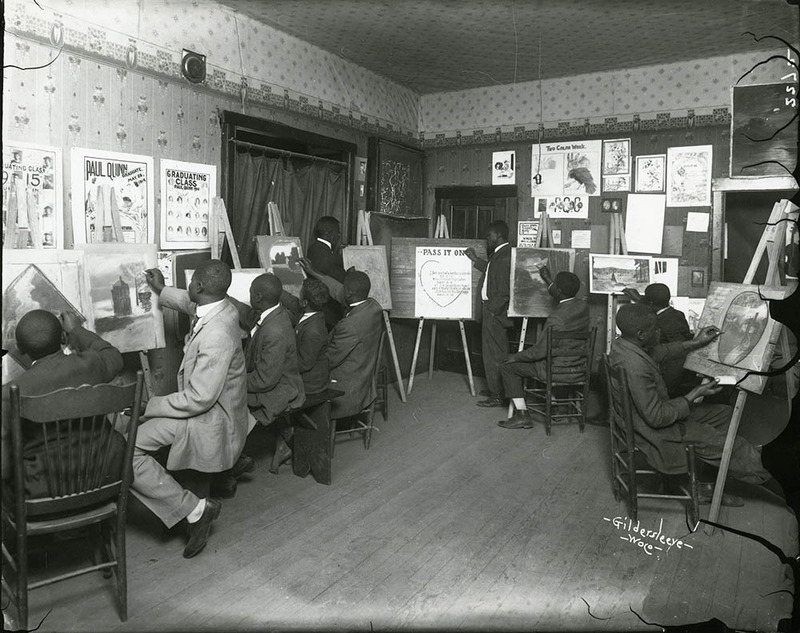
All-Male Art Class (1916)
Paul Quinn's gradual transition from a trade school to a liberal arts college allowed students to develop skill-sets outside of those necessary for factory life or domestic service. | Source: Image courtesy of the Texas Collection, Baylor University
A Significant Partnership
In 1974, the United Negro College Fund granted Paul Quinn College membership, allowing the university to significantly increase the amount of financial aid and scholarships provided to students. | Source: Image courtesy of the Texas Collection, Baylor University
Paul Quinn Tigers
A preserved mural of Paul Quinn's mascot, the tigers, adorns the walls of the refurbished Gomez Administration Building, the centerpiece of Rapoport Academy's Quinn campus, 2015.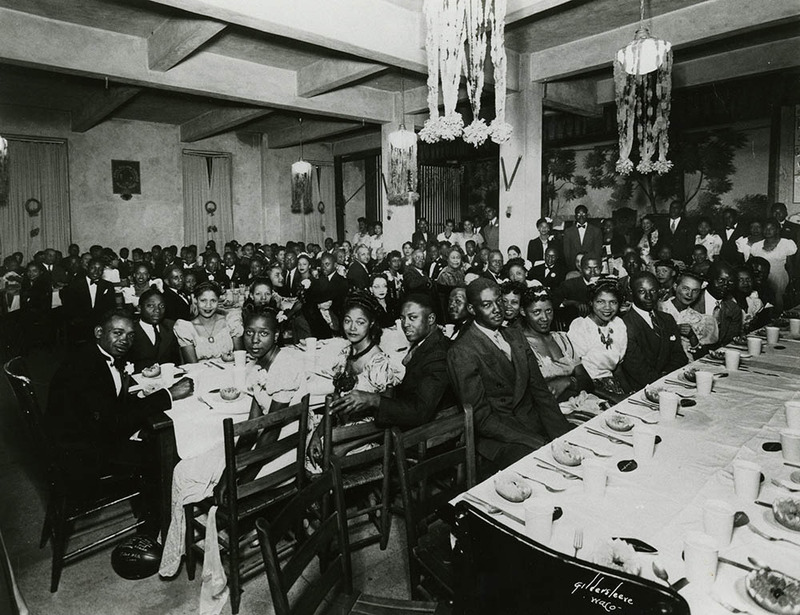
A Grand Celebration
Students donned formal wear for this athletic banquet held in 1942. The pipe organ in the back of the photo was built by Dr. Robert Markum, head of the organ department at Baylor University, and donated to Paul Quinn College. | Source: Image courtesy of the Texas Collection, Baylor University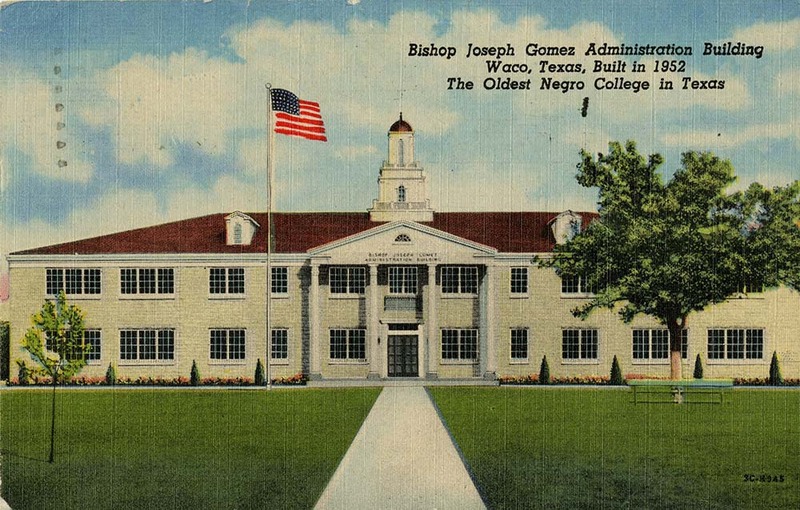
Commemorative Postcard
In 1952, Paul Quinn expanded its campus by building an administration building and naming it after newly appointed African Methodist Episcopal Bishop Joseph Gomez. In his sermon following the groundbreaking ceremony on the building, Gomez stressed the importance of low-tuition church schools such as Paul Quinn for the education of African American youth in Texas, and called upon the community to continue their support of the college. | Source: Image courtesy of the Texas Collection, Baylor University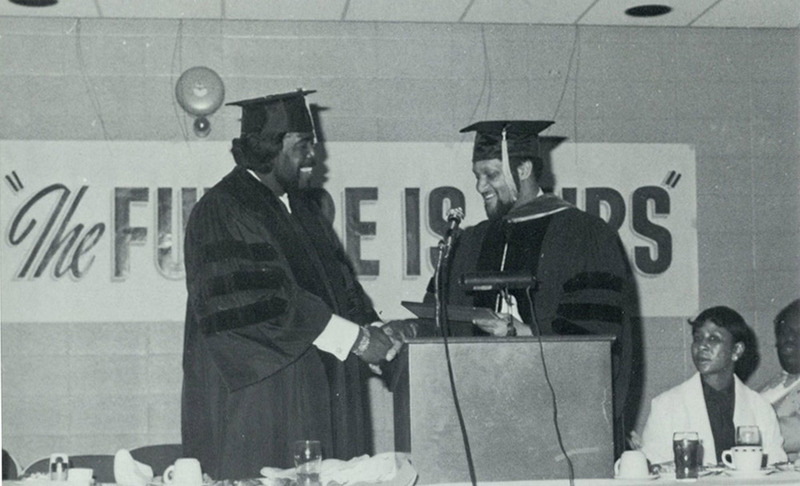
Star Power
Popular rhythm and blues recording artist Barry White (depicted on the left) once visited Paul Quinn to assist in the college's fundraising campaign with the United Negro College Fund. In recognition for his contributions to the music industry and for his philanthropy, Paul Quinn presented the singer with an honorary doctorate. | Source: Image courtesy of the Texas Collection, Baylor University
Paul Quinn College's Relationship with Baylor University
Mary Kemendo Sendón describes Paul Quinn College's relationship with Baylor University and the great teachers present at Paul Quinn. | Source: Sendón, Mary Kemendo, interviewed by Lois E. Myers, March 10, 1994, in Waco, Texas. Baylor University Institute for Oral History, Waco, TX. View the full interviewOne of the Oldest African American Colleges
Linda Jann Lewis explains how the college was an extension of the community, and its move to Dallas. | Source: Lewis, Linda Jann, interviewed by Jennifer Lynne Vayo, February 24, 1994, in Waco, Texas. Baylor University Institute for Oral History, Waco, TX. View the full interview