Mary Maxwell Armstrong
Text
Mary Maxwell Armstrong’s intelligence, insight, and perseverance made her an influential figure in twentieth-century Waco. Her determination combined with her love for great literature aided in the establishment of a world-renowned library on Baylor University campus.
Mary Maxwell Armstrong was born at Buena Vista, Texas, on September 21, 1882, the tenth child of Baptist minister Wilder Richard Maxwell and his wife Melissa Anne (Williams) Maxwell. After attending Baylor University and receiving a bachelor of arts degree, she completed additional coursework for one summer at University of Chicago. When she finished her coursework, Mary began to teach at East Texas Baptist Institute (ETBI) in Rusk, Texas, where her brother served as president. In 1902, she met her future husband, Andrew Joseph Armstrong, who taught at ETBI while pursuing his PhD. On January 24, 1911, Mary married A. J. Armstrong and they moved together to Georgetown, Kentucky, so he might resume his professorship at Georgetown College.
The Armstrongs shared an impressive dream of amassing a collection of the works and materials of Robert Browning and Elizabeth Barrett Browning and establishing a library. In the fall of 1912, A. J. Armstrong accepted a full-time position at Baylor University, and the couple moved to Waco in order to realize their goal of establishing the library. Together, the Armstrongs raised the funds to construct a building to house the materials. They also toured Europe twenty-nine times in search of materials to add to the collection. When her husband fell ill, the bulk of the consulting work with the architects, builders, designers, and stained glass experts during the construction process fell to Mary.
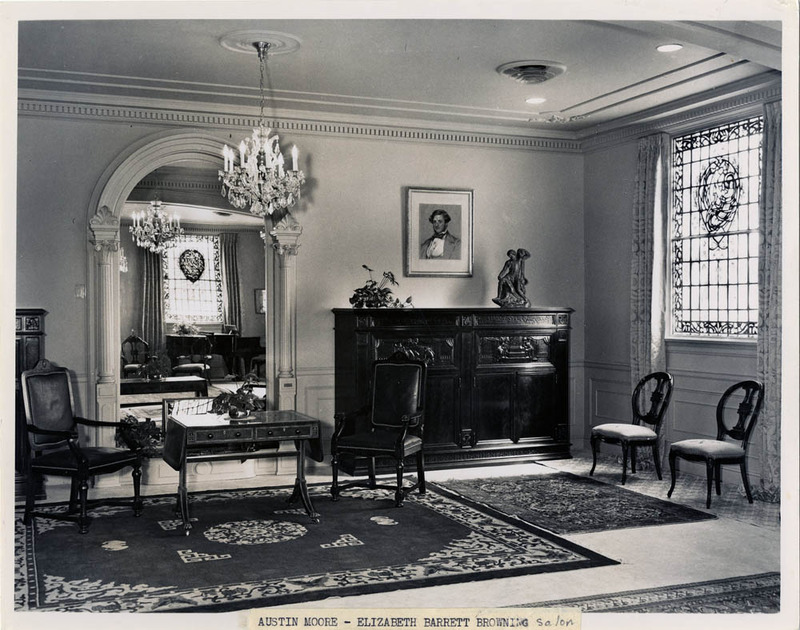
The dedication of Armstrong Browning Library on December 3, 1951, realized the Armstrongs’s dreams. The library is widely considered to be the largest accumulation of Browning materials in the world. Mary’s influence is strongly evident in the design of the Elizabeth Barrett Browning Salon and many of the ornate stained glass windows visible throughout the building.
Following the death of her husband in 1954, Armstrong served as director of the library for five years. After retiring in 1959, she served as a special consultant for her successor, Dr. Jack Herring, and kept an office in the library. She resided at 116 North Thirtieth Street (as indicated on map) until she moved to Pennsylvania in September of 1966 in order to reside with her son's family.
Though often noted primarily for her work on the Armstrong Browning Library, Mary M. Armstrong was a highly involved member of other areas of the community as well. She taught freshman English at Baylor University for a number of years and also served as a member of Baylor Round Table, Daughters of the American Revolution, and as an honorary member of Waco Woman's Club. She passed away on September 1, 1971, in Philadelphia, Pennsylvania, and was buried in Waco's Oakwood Cemetery.
Files
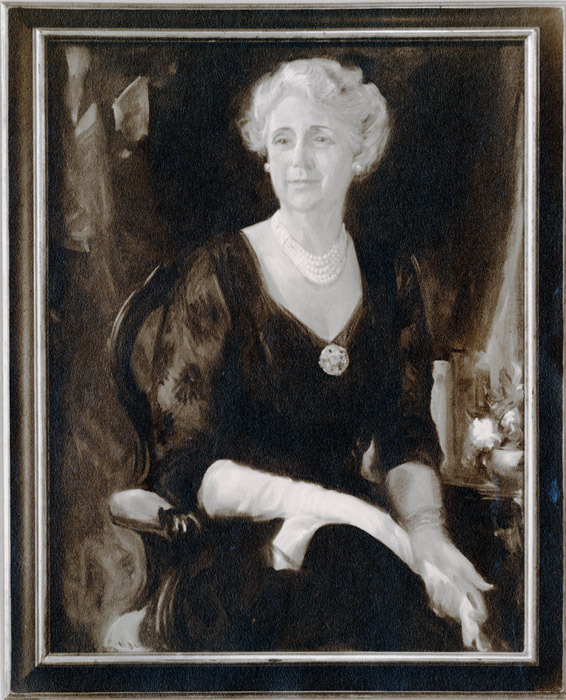
An Honored Benefactor
Portraits of benefactors, contributors, and artists line the walls of Armstrong Browning Library in order to honor them. This portrait of Mary Maxwell Armstrong hangs next to a similarly styled portrait of her husband in the John Leddy-Jones Research Hall. | Source: Image courtesy of the Texas Collection, Baylor University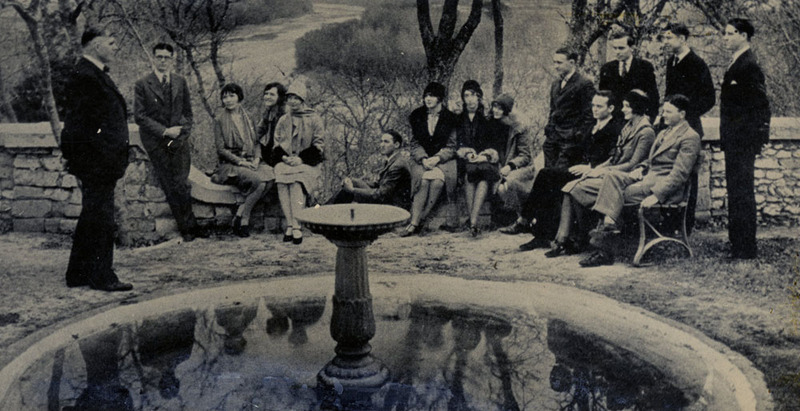
A Dedicated Educator
Mary often attended and guest-lectured in her husband's English courses at Baylor University. Students appreciate the way in which she balanced her husband's gruff exterior, and they noted it was she who always lectured on Robert Browning's notoriously difficult poem Sordello. | Source: Image courtesy of the Texas Collection, Baylor University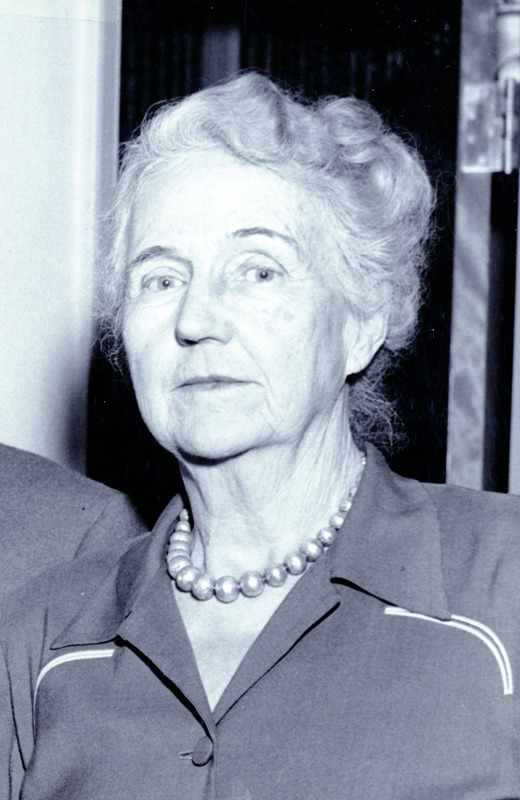
A Literary Scholar
Though best known for her work on the Armstrong Browning Library, Mary Maxwell Armstrong was active in civic and scholarship pursuits as well. In 1919, she published a sonnet inspired by Lenbach's "Shepherd Boy" in the twenty-second volume of the Baylor Bulletin. | Source: Image courtesy of the Texas Collection, Baylor University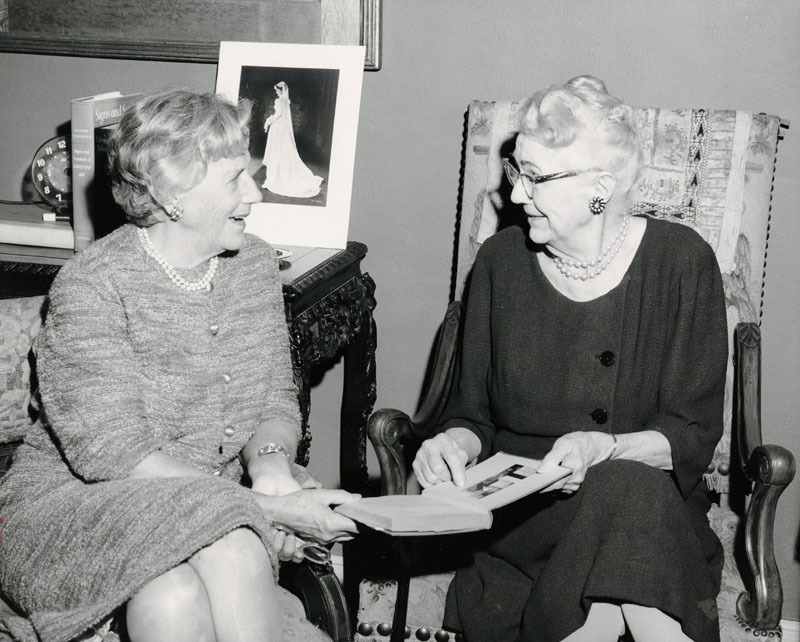
Impresarios of Baylor
The Armstrongs acted as unofficial impresarios for Baylor University throughout the early twentieth century, bringing talented artists such as Robert Frost, Katharine Cornell, and Luisa Tetrazzini to the campus. Here, Mary meets with one of the daughters of Robert Frost. | Source: Image courtesy of the Texas Collection, Baylor University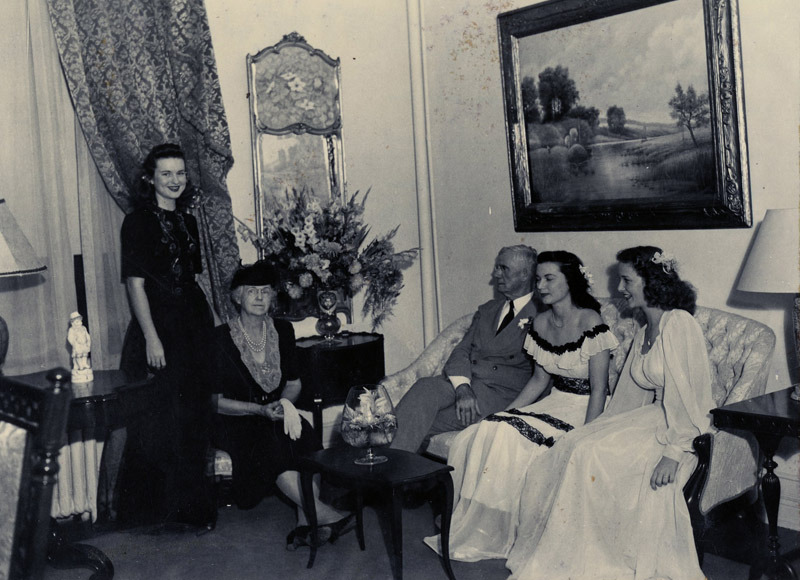
(Burleson Parlor, c. 1950)
Baylor University served as a center for the realization of the Armstrongs's dreams. Though they spent a great deal of time touring Europe to fundraise, the Armstrongs also received a steady base of support from students and faculty at Baylor. | Source: Image courtesy of the Texas Collection, Baylor University