Katy Park
Text
Before televisions and computers became household staples, Katy Park provided Wacoans with entertainment and a sense of community. Home to numerous minor league teams, the ballpark was also the site of a variety of other events—Wild West shows, boxing matches, and Paul Quinn Football—which today remain an important part of community memory.
Excitement at Katy Park began with its design by ballplayer Henry Fabian. He originated the raised pitcher’s mound, and came to Waco in 1904 to manage and partially own his first team: the Waco Tigers. Construction finished in time to host Waco’s first presidential visit by Teddy Roosevelt. On April 6, 1905, red, white, and blue bunting adorned Katy Park’s fences to greet Roosevelt as he spoke to thousands of Wacoans.
Fabian faced a serious challenge in the form of a local law banning “Sunday amusements” charging admission. After being arrested three times for scheduling games at Katy Park on Sundays, he took the matter to court and won at the state level. Sunday baseball became a staple elsewhere in Texas, but Fabian made no headway locally. He sold the Waco team to a local businessman in 1906. Renamed the Waco Navigators, the team made Waco baseball history when they tied Houston for the Texas League title in 1914, and won it outright for the next two years. However, when the club moved to Wichita Falls in 1919, Katy Park sat without a team for several years.
A new era of baseball in Katy Park began when the minor league Galveston Cubs moved to Waco in 1925. Though they never won a championship title, the Cubs had their fair share of exciting moments. Babe Ruth’s New York Yankees arrived in Waco in April 1929 to face off against the Cubs for a spring exhibition game. Crowds exceeded Katy Park’s four-thousand-seat capacity, prompting officials to get creative with overflow seating. These arrangements, however, did not prevent fans eager for Ruth’s autograph from interrupting the game. Though the Cubs lost, 13 to 3, fans still reminisce about watching Babe Ruth hit a line drive double straight into the crowd.
Katy Park witnessed other historic moments. In 1930, with the Cubs trailing in the eighth inning, outfielder Gene “Half-Pint” Rye hit three home runs—including a grand slam—in the same inning, a feat which today remains unsurpassed in baseball history. Also that year, the first night baseball game in Texas occurred at Katy Park on May 5, when the Negro Leagues’ Kansas City Monarchs battled the hometown Black Cardinals.
During and after the Great Depression, Katy Park continued to host baseball and other sporting events. The sprinter Jesse Owens brought his baseball club, the Portland Roses, to Waco in 1946. On two previous visits, the Olympian saw another Negro League game and ran a track and field clinic for local boys. Additionally, the boxer Joe Louis used a 1950 exhibition bout in Waco to announce he would not attempt to regain his heavyweight title. Baseball may have been Katy Park’s primary use, but it also severed the community in other ways.
A postwar baseball boom reinvigorated the game in Texas and in 1947 the Waco Dons launched as a minor league team. The next year they gained affiliation with Pittsburgh and became the Waco Pirates, and it seemed as though things were on the rise for baseball in Waco. After two playoff seasons, the Pirates entered a slump, and in 1953 a devastating F5 tornado tore through Waco, destroying much of downtown, including Katy Park. Park owner A. H. Kirksey, determined to prevent the demise of Waco baseball, poured $400,000 into rebuilding the park and it was ready for opening day in 1954. The following year, the Waco Pirates played their best slate of games yet, accumulating one of the best season records in minor league history and claiming the Big State League title.
Despite Kirksey’s efforts, attendance dropped at Katy Park following the 1954 season as the rise of Little League ball and the increasing popularity of television drew attention elsewhere. In 1956, the Pirates played their last game in Waco. About a decade later, the city razed the park to create space for a parking lot.
For nearly half a century, Katy Park stood as a centerpiece of the Waco community and a hallmark of Texas sports. In fall 2020, the site of Katy Park, now a property included in the Magnolia Market complex, will host a new field, Katy Ballpark at the Silos. The long legacy of Katy Park lives on.
Files
Humble Beginnings
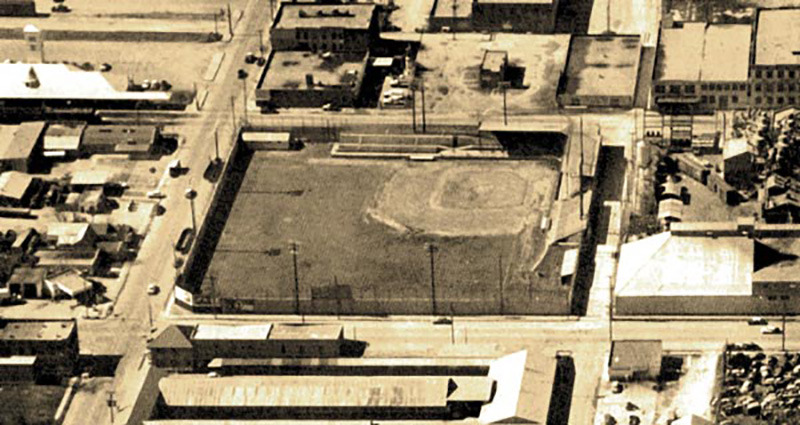
Even with Fabian’s advancements and the city's designation as, “Katy Park,” the green space still appeared on maps from the 1890s-1910s as divided between “Farm Lot #13” and the Waco Lumber Company. It was only after the Cubs arrived in 1925 that local maps labeled the space “Katy Ball Park.” | Source: Image courtesy of the Waco Tribune-Herald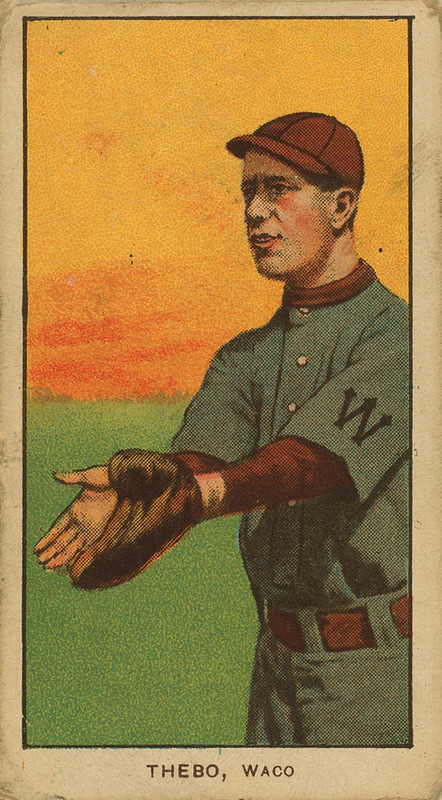
Old Mill Cigarettes Baseball Card (1909)
Tobacco manufacturers issued trade cards featuring actresses, baseball players, and boxers to stiffen the packaging of cigarettes and to advertise the company's brand. This Old Mill card features Tony Thebo, who played outfield for the Waco Navigators for several years. | Source: Image courtesy of the Library of Congress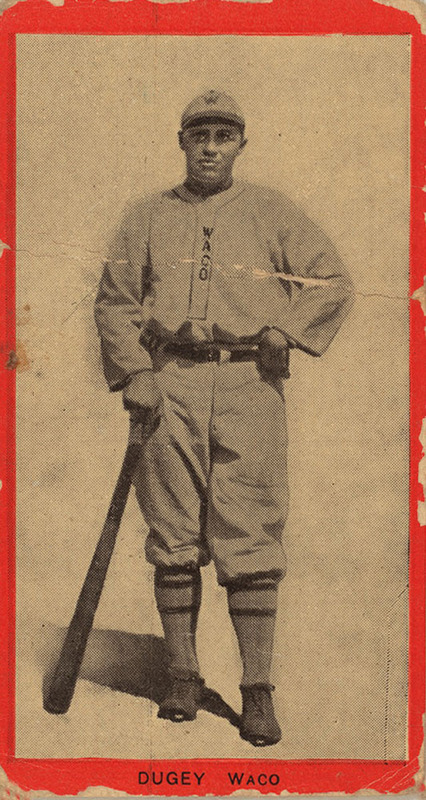
Old Mill Cigarettes Baseball Card (1910)
Oscar Dugey received his start in baseball playing second base and outfield for the Waco Navigators. His experience gained from the Waco team established him as one of the best infielders to come out of the Texas League in the early twentieth century, leading him to a career with the Boston Braves and the Philadelphia Phillies. | Source: Image courtesy of the Library of Congress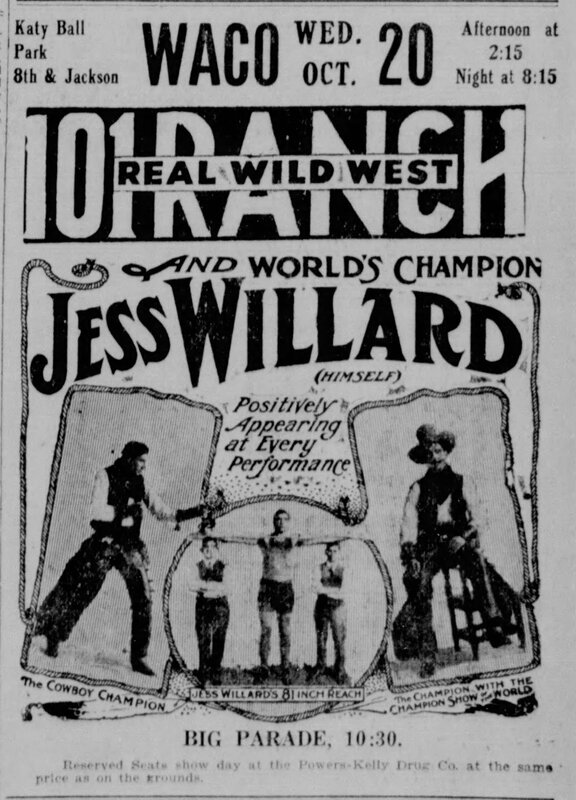
All-Around Entertainment
Katy Park showcased numerous amusements, some of which combined two events into one. When the 101 Ranch Show visited Waco in 1915, their performance also included heavyweight boxing champion, Jess Willard. Prior to boxing, Willard worked as a cowboy, so all his skills proved lucrative assets to the 101 Ranch’s show. | Source: Waco Morning News, October 17, 1915, p. 19. Accessed via newspapers.com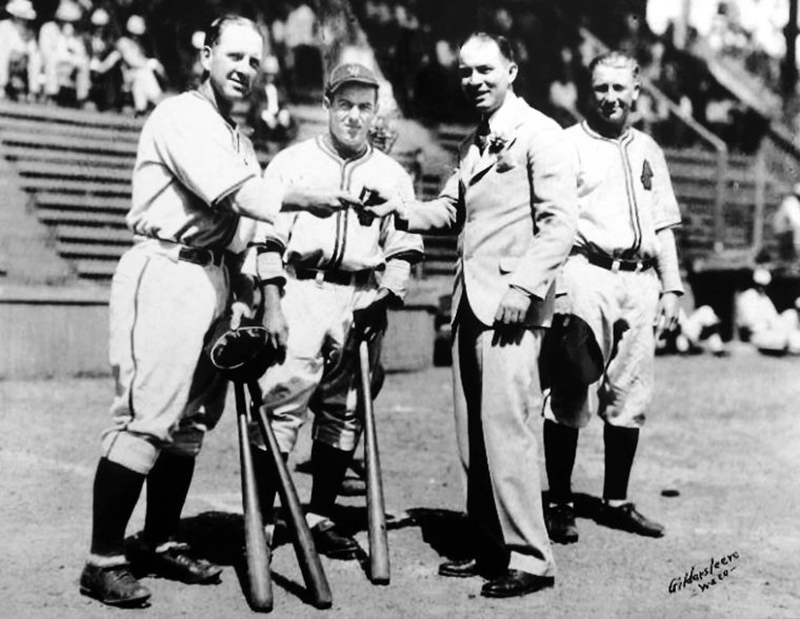
Local Advertising
Sponsoring Katy Park teams likely served as an especially effective means of advertising for local businesses during the park's heyday. In this 1930 photograph, Waco jeweler Isie Fred hands something to Waco Cubs player Joe Munson, who later played for the Chicago Cubs. Two of his teammates, the famed Gene Rye (center) and Del Pratt (right) look on. | Source: Image courtesy of the Waco Tribune-Herald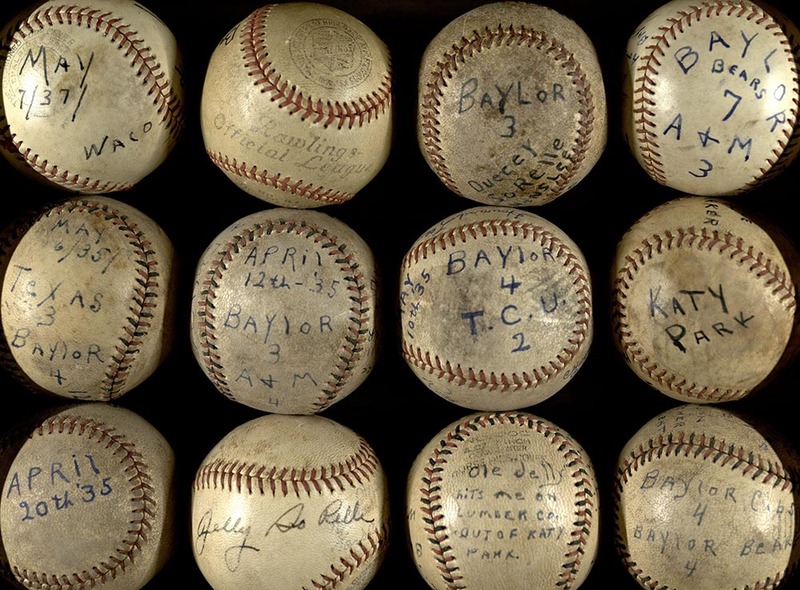
Game Balls (1930s)
After the Cubs left Waco, various teams made use of Katy Park, including black and white semipro teams, youth leagues, and Baylor University's team. This collection of baseballs was saved by the Baylor team during the 1930s. note the Katy Park ball on the right of the photograph. | Source: Image courtesy of the Texas Collection, Baylor University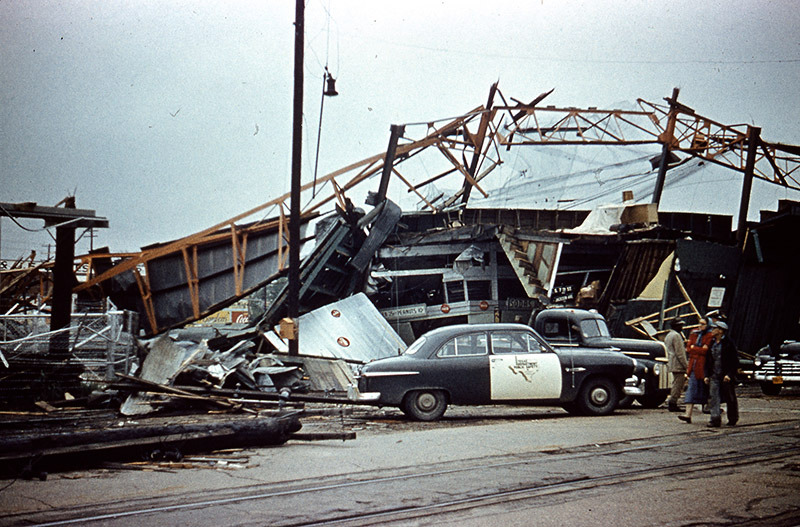
Starting from Scratch
The Waco tornado in 1953 took 114 lives and caused approximately $51 million in property damages throughout the city of Waco. Determined not to be defeated, Kirskey spent $400,000 rebuilding the entire park, replacing the wooden bleachers with concrete and adding an improved lighting system. | Source: Image courtesy of the Texas Collection, Baylor University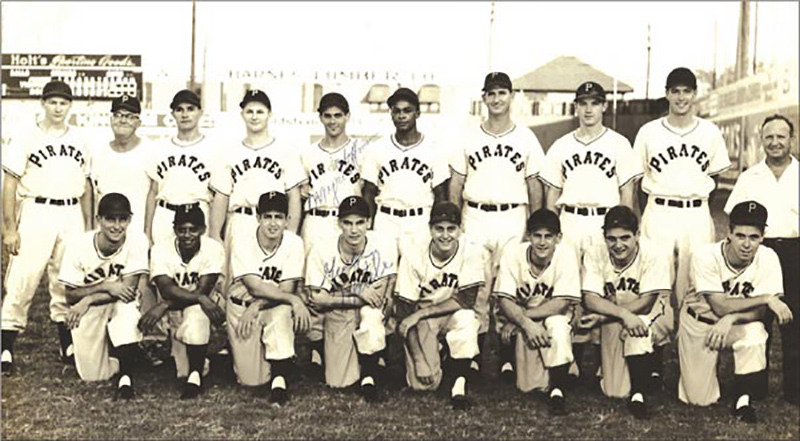
State Champions
The 1954 Waco Pirates were likely one of the best teams to play at Katy Park. Finishing the season with a 105-42 record, the Pirates claimed the Big State League championship title. | Source: Image courtesy of the Waco Tribune-Herald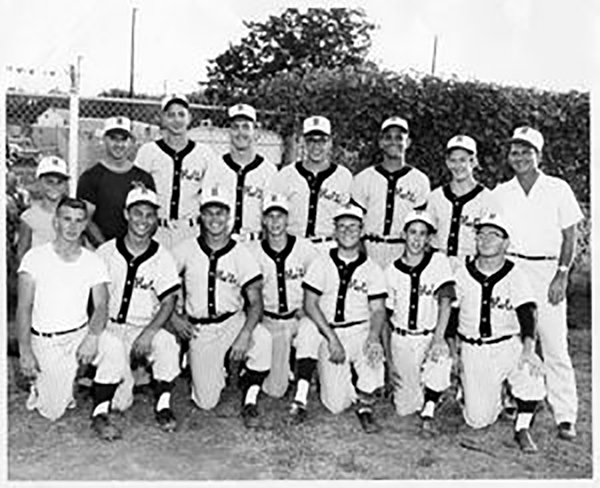
Major League Experience
After the Pirates left, semipro and youth leagues once again made use of the park. In 1963, the Waco Holts, who referred to themselves as the New York Yankees of Waco, played a four-day Texas Senior Teen-Age Baseball League tournament in Katy Park. Members of the team described playing in the park as akin to playing on a major league field because of the quality of the dugouts, field, and stands. On August 10, 1963, the Holts claimed the championship title in one of the last games ever to be held in Katy Park. | Source: Image courtesy of the Waco Tribune-Herald
African American Baseball Teams
George Coffey speaks of the African American baseballs teams that would play at Katy Park in the 1940s. | Source: Coffey, George, interviewed by Aaron Ward, April 6, 2002, in Waco, Texas. Baylor University Institute for Oral History, Waco, TX. View the full interviewBallgames at Katy Park
Johnny Appell tells about the popularity of the games at Katy Park during the Depression. | Source: Appell, Johnny and Beth, interviewed by Mark Firmin, November 3, 2008, in Waco, Texas. Baylor University Institute for Oral History, Waco, TX. View the full interview