Sanger Avenue Elementary School
Text
For many years, Sanger Avenue Elementary School stood as the most familiar landmark of the Sanger Heights neighborhood. Located in the “Silk Stocking District,” Sanger Avenue Elementary acquired a reputation as one of the premier educational institutions in the city.
A 1903 bond election resulted in the construction of three nearly identical schools. Sanger Avenue School, designed by renowned Waco architect Milton W. Scott, long outlasted its counterparts Bell’s Hill and Brook Avenue Elementary Schools. The two-storied building featured unique architecture and elaborate design, including ornate arches, a rotunda, an upstairs auditorium, and a high roof crowned by a cupola. The building’s heavily Romanesque style included arched windows and doors framed by limestone. Prominently featured turrets stood at the front of the original school building but were removed in a 1930 renovation.
Sanger Avenue School opened in 1904 with John H. Richardson as its first principal. Former students and teachers generally agree that the most influential figure in the history of Sanger Avenue was likely Nina Glass, the school’s second principal. Glass encouraged parents and students to take an active role in education, establishing a mimeographed newsletter for parents called the Ginger Jar and inviting students to save coupons to buy pictures for the school. She published a nationally used arithmetic textbook and frequently attended educational conferences. Well liked by both staff and students, Glass was often seen at the school’s annual May Fete festival, brightly garbed and leading students in a parade around the Maypole.
Glass’s enthusiasm reflected the general atmosphere at Sanger Avenue Elementary. Former students fondly remember dedicated teachers and classrooms ideally suited for learning. Large windows poured light into classrooms where each student’s cast-iron and wooden desk held an inkwell. A spacious and well-stocked library, established after Glass attended a Chicago educators’ conference, invited students to study and read.
The years following Glass’s retirement from Sanger Avenue brought great changes for the small elementary school. By the 1960s, over seven hundred students attended the school, and music classes and a choir were established. Yet the Waco Independent School District (WISD) announced plans for the school’s closure as a part of a busing plan to meet a federal desegregation order. By the 1970s, African American students made up approximately half of the school’s population. Despite the efforts of many to keep the school open, classes ceased at Sanger Avenue in 1974.
Although a portion of the school briefly housed a Head Start program, much of the building soon suffered from years of disuse. Disappointed at seeing such an important piece of Waco’s history sit vacant, Waco attorneys LaNelle and John McNamara purchased the school for $80,000 from WISD. The couple renovated the building, installing a new roof, boarding up broken windows, and removing asbestos. Yet despite their hopes of repurposing the building, perhaps as a charter school, the plans never came through. Another blow was dealt to the historic building when arsonists set fire to it in 2008.
The city of Waco deemed the building unsafe, and in 2010 bulldozers tore the remnants of the structure down, leaving only the entrance archway standing. In 2013, the Waco City Council approved the nonprofit Waco Community Development Corporation’s proposal to build twenty-five homes and the Nina B. Glass Park, which will incorporate the arch, at the site of the former school. This adaptive reuse ensures that the legacy of the school, which stood for over a century as a hallmark of Waco education and distinctive architecture, lives on.
Files
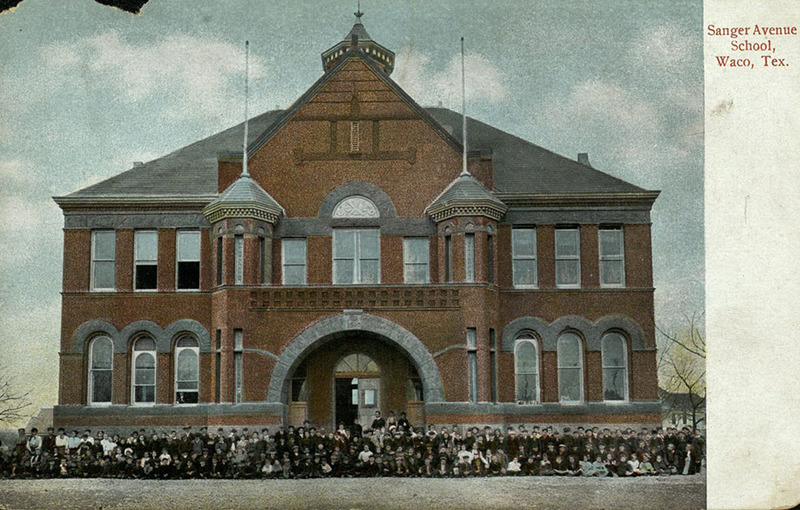
Souvenir Postcard
Milton Scott's design made Sanger Elementary one of the most unique educational buildings in the city. However, 1930s renovations covered up much of Scott's design and removed the distinctive turrets featured in this commemorative postcard. | Source: Image courtesy of the Texas Collection, Baylor University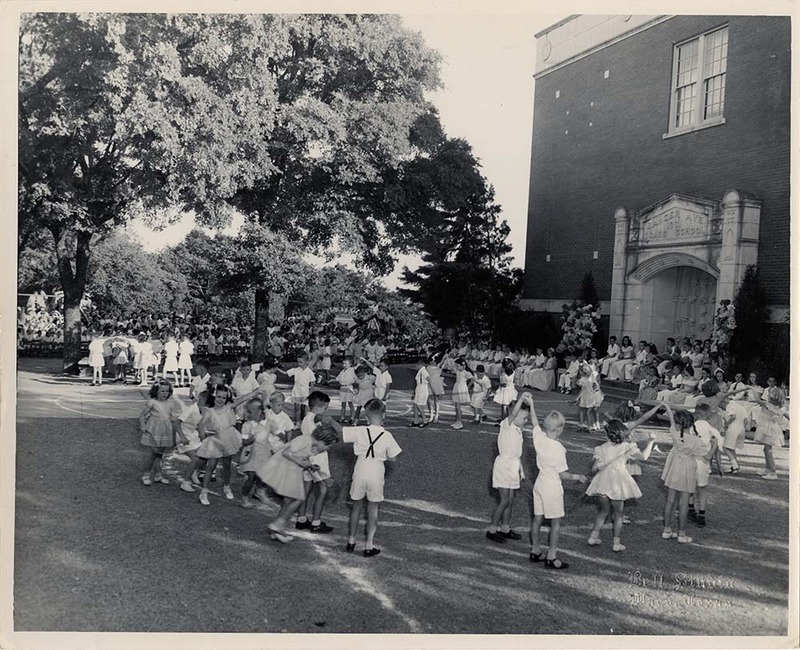
A Well-Rounded Education
According to a school newsletter, Sanger Avenue faculty viewed recess and other times for children to socialize as important parts of the children's education. It is likely that this photograph was taken at the annual May Fete festival, or some other school holiday. note the absence of the turrets and other distinctive architectural features at the front of the school. | Source: Image courtesy of the Texas Collection, Baylor University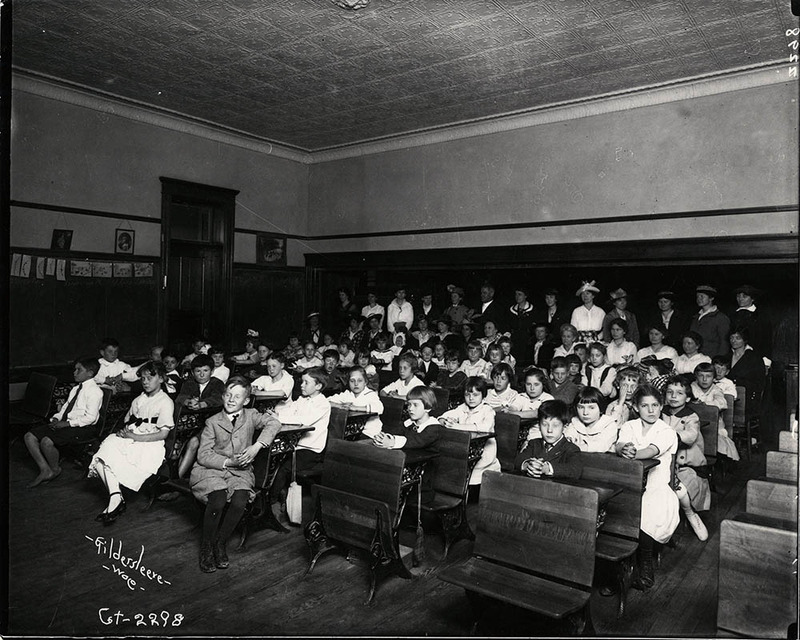
Incomparable Faculty
Graduates of Sanger Avenue Elementary reminisced not only about the school's grandiose architecture, unique woodwork, and well-equipped classrooms filled with cast-iron and wooden desks, but also of the incomparable faculty who truly cared for their students. | Source: Image courtesy of the Texas Collection, Baylor University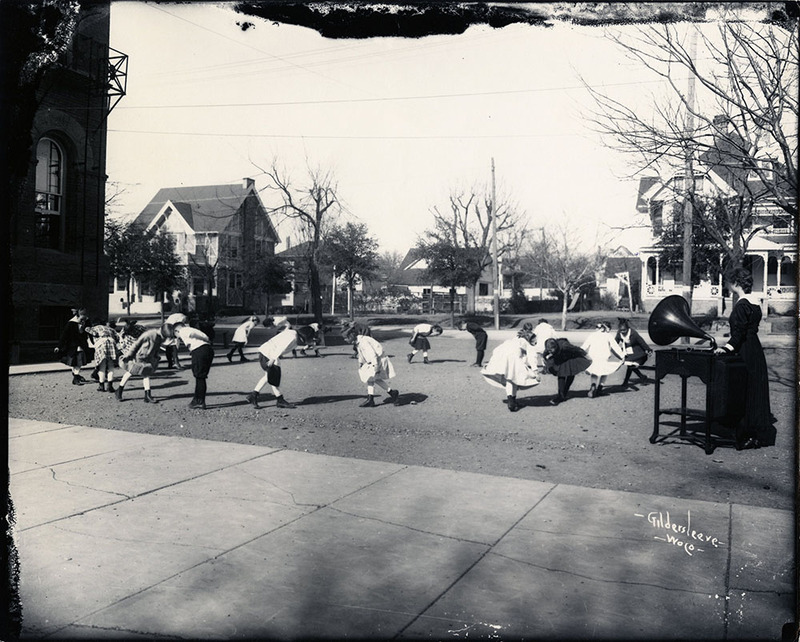
Dance Class
Before the school expanded considerably in the 1960s and hired music teachers, the children's core teachers taught fine arts classes as well. Here, it seems as though a teacher leads a dancing class. | Source: Image courtesy of the Texas Collection, Baylor University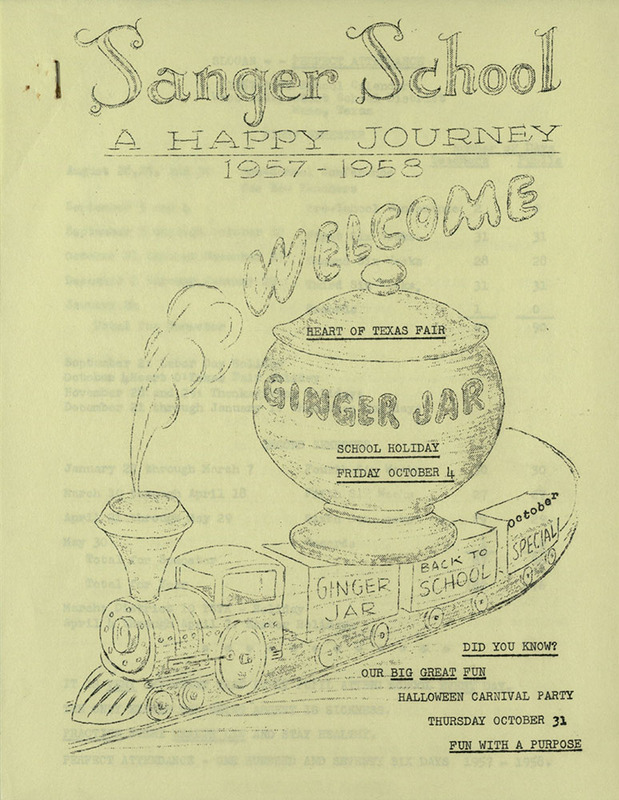
The Ginger Jar (c. 1957)
Nina Glass's mimeographed newsletter kept parents and students informed of school events and policies. The front cover of this back-to-school edition advertises teh Heart O' Texas Fair school holiday and the Halloween carnival party put on by the school. The inner pages remind students of the importance of perfect attendance, using proper manners in the cafeteria, and serving other students. | Source: Image courtesy of the Texas Collection, Baylor University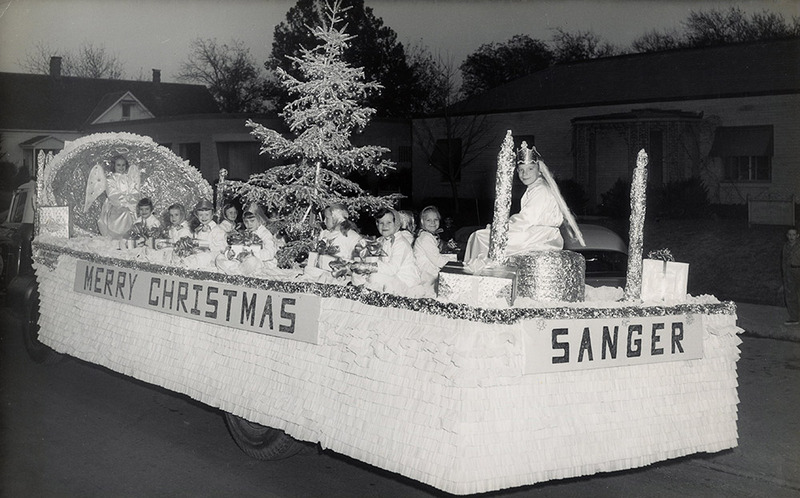
Christmas Parade (c. 1940)
The Christmas season was filled with joy and fun for children at Sanger Avenue Elementary. The school produced a float each year for Waco's Christmas parade through downtown, and for many years, Principal Nina Glass even dressed up as Santa Claus. | Source: Image courtesy of the Texas Collection, Baylor University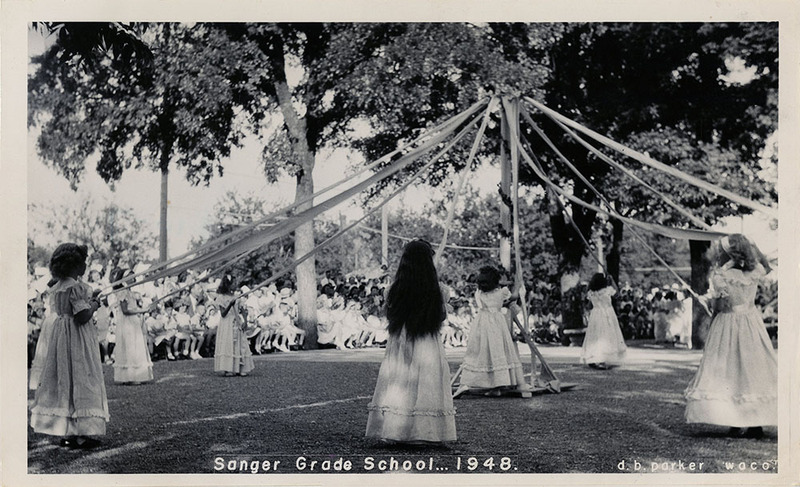
Fond Memories
Former Sanger Avenue students fondly remember the annual may Fete festival. students danced around the Maypole to music played on a crank-activated phonograph. The whole school later lined up behind "Miss Nina," who was characteristically dressed in bright colors, and paraded throughout the school grounds. | Source: Image courtesy of the Texas Collection, Baylor University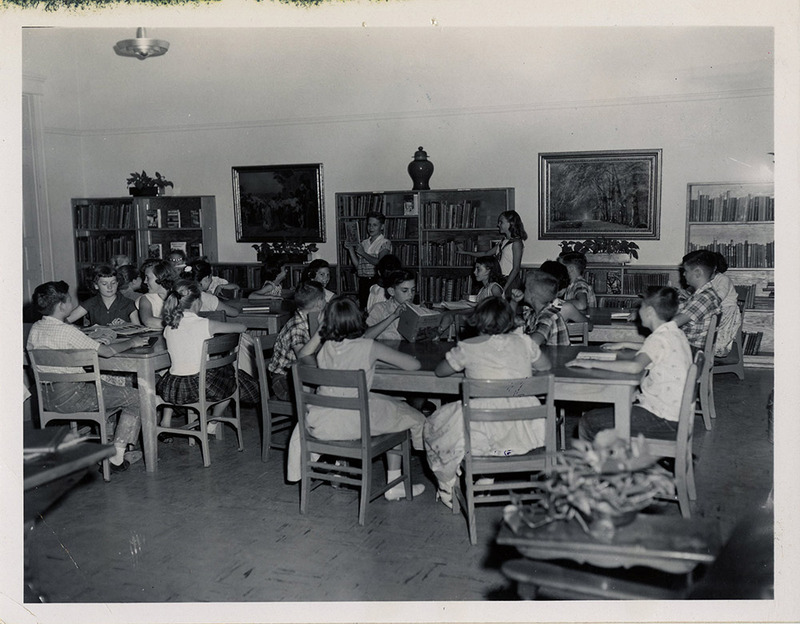
First of its Kind
Opened in 1926, the Lucille Lacy Library at Sanger Avenue bore a plaque proudly proclaiming it to be the first elementary school library in the United States. The library served students for nearly fifty years until the school closed in the 1970s. | Source: Image courtesy of the Texas Collection, Baylor University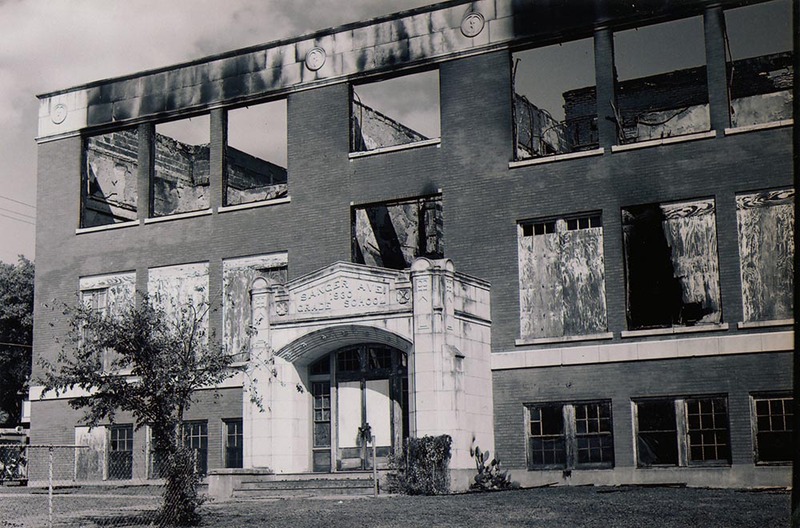
Final Blow
Although the school sat vacant for nearly twenty years, many Wacoans held hopes that the building would be repurposed and the historic site preserved. However, the October 2008 fire dealt a final blow to the school. Although the McNamaras fought the city for two years on the issue of the school being torn down, bulldozers arrived on site in 2010. | Source: Image courtesy of the Texas Collection, Baylor University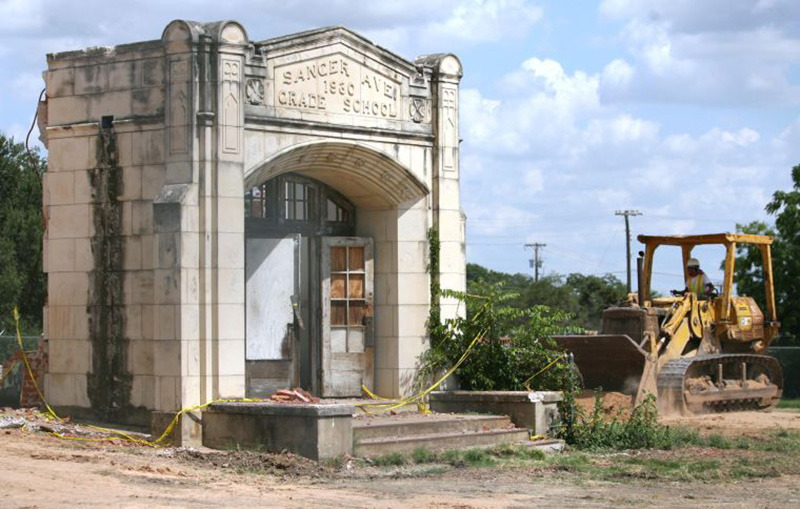
A New Hope
The Sanger Avenue Grade School archway, constructed in 1930, is all that remains of the school today. In an effort to honor the legacy of Sanger Avenue School and its longtime principal, the structure will be incorporated into the Nina B. Glass Park as a part of the Waco Community Development Corporation's plans for a housing development. | Source: Image courtesy of the Waco Tribune-Herald
A Fine School
Bill C. Logue explains his love for Sanger Avenue Elementary School. | Source: Logue, Bill C., interviewed by Rebekah Ann Crowe, February 23, 1994, in Waco, Texas. Baylor University Institute for Oral History, Waco, TX. View the full interview