Mutualista Hall (La Mutualista Sociedad de Jornaleros)
Text
Mutualistas were first established in Texas during the late nineteenth century by Mexican immigrants. These mutual aid societies provided immigrants with a connection to their home country and a support network to meet basic needs as they forged a life in a new and unfamiliar country. The popularity of mutualistas grew significantly in the twentieth century, with more than 100 estimated to be in Texas. While the majority of these mutualistas have closed, there are still a small number in operation today. This includes the mutualista in Waco, which has been a part of the community for approximately one hundred years.
Established on July 6, 1924, the Waco mutualista was initially located within the thriving Hispanic community living at and around Calle Dos. That same year, St. Francis on the Brazos was founded to serve the poor Mexican American community in the area. Likewise, the mutualista formed under principles of union, fraternity, and progress, with its primary goal centered on watching over the Mexican working-class community. This idea is reflected in its name, La Mutualista Sociedad de Jornaleros, as the word jornaleros means “laborers” in English.
As the mutualista was made up of a majority of Catholic members, the organization worked closely with St. Francis on the Brazos in scheduling so that the mutualista’s activities did not overlap with church activities. While most members were Catholic, a few were Protestant. Additionally, the mutualista in Waco allowed both men and women to participate, making it distinct from other mutualistas which were only open to men or had elitist membership restrictions.
The Waco mutualista held their first meetings on Bridge Street. They later relocated to another small building in the Calle Dos neighborhood just large enough to serve as a meeting space. Community festivities, such as dances and wedding celebrations, were held outdoors on a wooden platform—later replaced with a concrete slab. These events often drew large crowds, and over time the mutualista became a key entertainment center within the Calle Dos community.
Along with serving as a space for community members to celebrate their heritage, mutualistas provided access to services that community members were often denied, such as healthcare and education. They also advocated for improved working conditions and workers’ rights. Financial assistance was provided to cover expenses incurred from illnesses and funerals, which helped families prior to the era of hospitalization insurance and sick pay. Participation in mutualistas increased dramatically in the late 1800s and early 1900s, due to rising numbers of Mexican immigrants arriving in the American Southwest to fill low-skilled and low-waged occupations in areas such as farming, ranching, mining, and the growing railroad network. Financial hardship during the Great Depression forced many of these mutualistas to close. But the Waco mutualista continued to thrive through the thirties and forties, and growing membership meant an expansion was needed.
On July 17, 1952, the mutualista moved into a newly built hall located on 312 North Second Street. However, the organization’s time in this building was short-lived with the launching of Waco’s urban renewal program, which began in 1958 after a city-wide vote. By 1978, the Urban Renewal Project had helped channel more than $125 million into renovating Waco’s urban center. Slums and properties that were in disrepair along the Brazos River from modern-day LaSalle Avenue to several blocks past Waco Drive were cleared. Owners of cleared properties were compensated, though some controversy emerged over whether these payments were fair, especially considering that minorities were more impacted by the wide-spread renovation.
As part of the Urban Renewal Project, the homes and businesses of Calle Dos—many of which were in poor condition—were torn down. Among the buildings removed was the mutualista, and members relocated it to 2214 South Fifteenth Street, off LaSalle Avenue. This new property was purchased from a retired contractor. In addition to purchasing a building, the mutualista also bought five acres of land behind the property to be used for future expansion. Participation had boomed, and the organization had once again outgrown its previous location. The new site was larger than the previous location on North Second Street, with an occupancy of four hundred—making it ideal for hosting large dances and other community activities.
Today, the Waco mutualista continues to provide aid to the community, as it has since its founding. The organization collects money for scholarship funds, toy drives, and other service activities. While its focus remains on the Mexican American and Hispanic communities, the mutualista also seeks to serve the community at large—a continuation of its rich history of service.
Files
Responding to the Urban Renwal Project
With the Urban Renewal Project clearing the Calle Dos neighborhood, the Waco mutualista was forced to relocate from its location at 312 North Second Street about ten years after opening the building. Reactions to the Urban Renewal Project were mixed. The property on La Salle was viewed as a better location that could accommodate more people. However, many members were frustrated, particularly with the payment the city made for the old hall. | Source: Photo Courtesy of Waco’s La Mutualista Sociedad de Jornaleros.~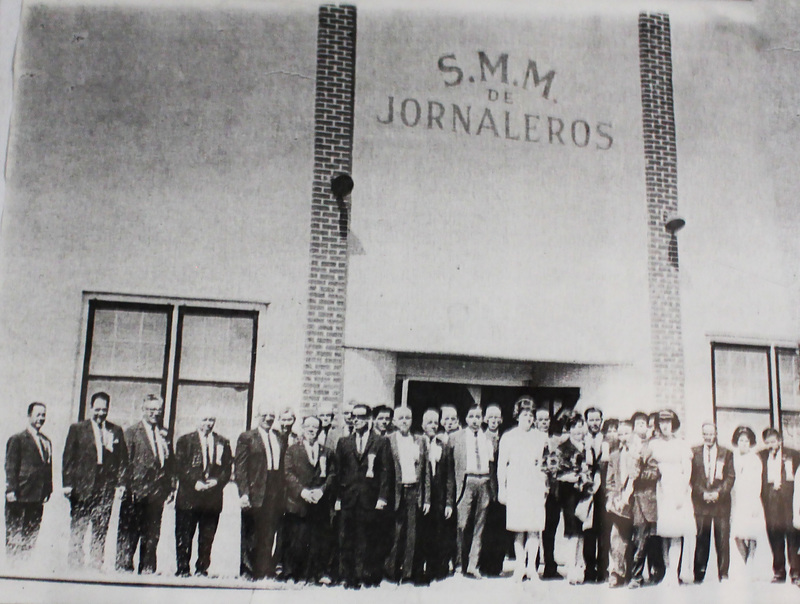
A Lasting Legacy
Mutualista members stand in front of the location at 312 North Second Street, completed on July 17, 1952. Waco’s La Mutualista Sociedad de Jornaleros has thrived in Waco for nearly one hundred years. While many mutualistas were forced to shut their doors after the Great Depression due to funding, the Waco location grew, and built new facilities to accommodate growing membership and community events. These dances provided an important source of income for the mutualista. Today, the Waco mutualista is one of only six mutualistas still operating in Texas. | Source: Photo Courtesy of Waco’s La Mutualista Sociedad de Jornaleros.~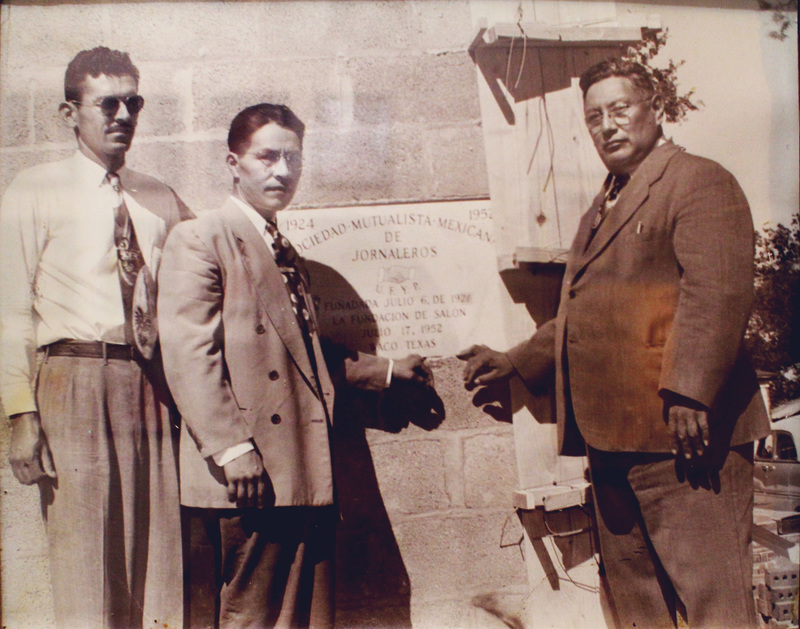
Growing Membership
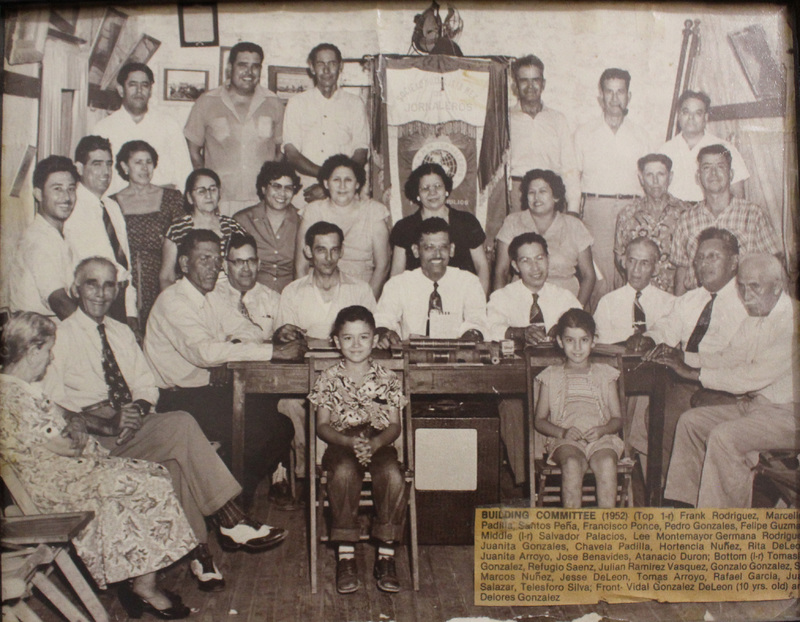
Waco’s La Mutualista Sociedad de Jornaleros thrived in the Calle Dos community in the thirties and forties. With higher participation numbers, a new location was needed. The new building was designed to provide the community with an indoor recreation center for dances and other events. The facility was approximately a hundred feet long and seventy-five feet wide, making it one of the larger recreational spaces in Waco at the time. The new hall, located on 312 North Second Street, was officially completed on July 17, 1952. Pictured left to right are mutualista members Jesse De Leon, Tomás Arroyo, and Juan Salazar on the day the building was opened. Arroyo served as president of the Waco Mutualista in 1951-1952 and 1963-1974.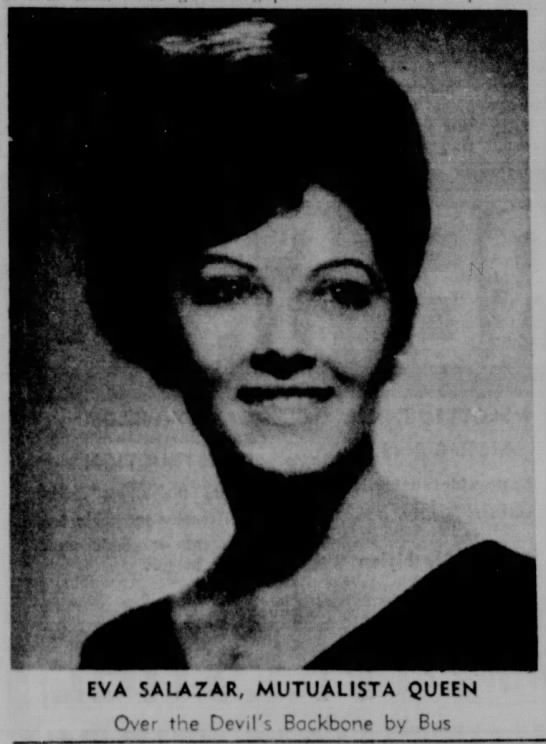
Mutualista Queens
Recognizing young women as Mutualista Queens at local, state, and national levels has been a long-standing tradition within mutualistas. In 1965, Wacoan Eva Salazar was recognized as the queen of the Texas Mutualista Societies and was appointed as the Texas ambassador for the national convention by Governor John Connally. Salazar traveled from Waco to the national Mutualista Convention, held that year in Mazatlan, Mexico, with her father and Lillie Aguilar. The trip was precarious due to mountainous terrain and flooding, but the group made it safely and was able to witness the coronation of the Mexican Mutualista Queen . | Source: The Waco News-Tribune, October 1, 1965, Retrieved from newspapers.com.~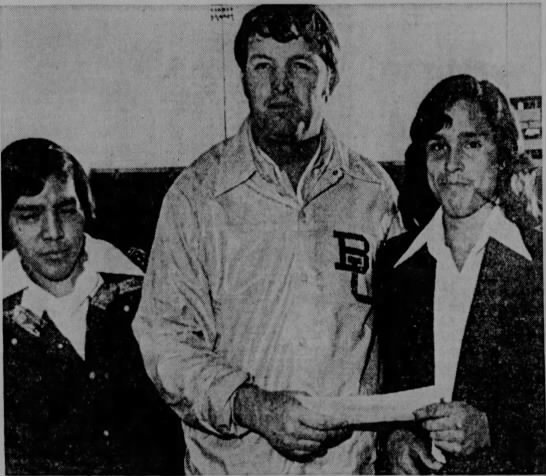
A Tradition of Service
Since its inception, the Sociadad Mutualista Mexicana de Jornaleros in Waco has raised funds for charitable causes to help fellow community members. In 1975, Mutualista members Robert Chavez and Bernardo Rios presented a $150 check to Baylor head football coach Grant Teaff for the Anthony Cervantez Rehabilitation Fund. Cervantez broke his neck on September 10, 1975, during football practice at Waco High School. The injury paralyzed him from the neck down. The community rallied around Cervantez, with contributions sought at organizations, schools, and events, including the Baylor-SMU game held November 22, 1975. More than $12,000 was raised for Cervantez. | Source: The Waco Tribune-Herald, November 22, 1975, Retrieved from newspapers.com.~
Beginnings of the Waco Mutualista
Tomás Arroyo explains the founding of the mutualista in Waco in 1924, when workers gathering under a tree for a break decided to establish a mutual aid society in their city. | Source: Arroyo, Tomás, Interviewed by Rebecca Jimenez, June 2, 1983, in Waco, Texas. Baylor University Institute for Oral History, Waco, TX.~ View full interview.Connecting with the Community
Tomás Arroyo, a former president of the Waco mutualista, describes how the mutualista helped him become better acquainted with his new city. | Source: Arroyo, Tomás, Interviewed by Rebecca Jimenez, June 2, 1983, in Waco, Texas. Baylor University Institute for Oral History, Waco, TX.~ View full interview.Celebrating on the Plataforma
Carol Durón recalls celebrating Dieciséis de Septiembre, Mexican Independence Day (September 16), at the Waco mutualista’s outdoor platform, when the organization was located in the Calle Dos neighborhood. | Source: Durón, Carol, Interviewed by Elinor Mazé, November 11, 2006, in Waco, Texas. Baylor University Institute for Oral History, Waco, TX.~ View full interview.