Texas Guinan
Text
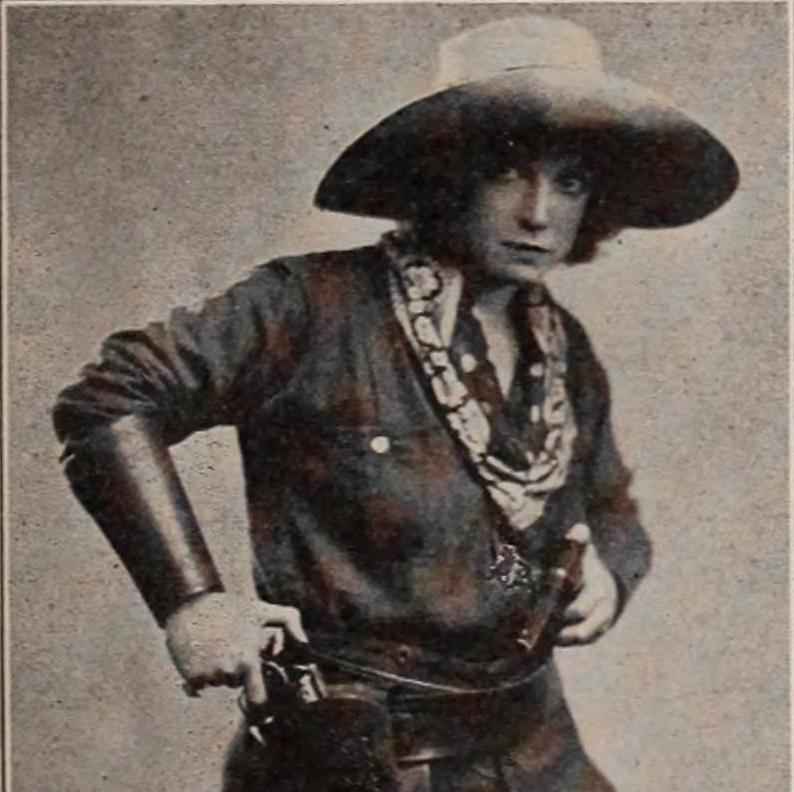
In Prohibition-era New York City, a dose of Texas flair enlivened the city’s roaring nightlife. Larger than life in personality and style, actress “Texas” Guinan commanded the nightclub circuit with her saucy wit. She sensationalized her life, blending fact with fantasy. The child of Irish immigrants, Mary Louise Cecilia Guinan was born on January 12, 1884, outside of Waco, Texas. Her family ran a grocery business while Guinan attended Sacred Heart Academy, where classmates knew her as Mamie. Even in childhood, Guinan craved mischief, pranking local shop owners and irking her teachers. She also cultivated skills in roping and riding, which she’d draw upon later in her film career. Combining her cowgirl skills with the musical training she received in Chicago, Guinan started performing in Wild West theater acts around the turn of the twentieth century. She also entered into a brief marriage with Denver cartoonist John J. Moynahan before following her show business dreams to New York City. Guinan struggled working as a chorus girl in NYC before becoming a regular on the vaudeville circuit and performing in musical shows like The Hoyden. She did this work for about a decade until, in 1917, a talent scout offered her the opportunity for a Hollywood career starring in silent westerns. So she rode off to California and into a new phase of her career. During her time in New York, Guinan acquired the nickname Texas. The moniker’s nod to her roots and its lone star bravado made it an apt name for an emerging star of western gunslingers. Beginning with The Wildcat (1917), Guinan portrayed heroines in films like Little Miss Deputy (1919) who possessed both strong wills and real gun skills. In 1921, she started her own production company in response to Hollywood’s ageism and beauty standards negatively impacting her film career. As a producer, Guinan displayed the same independence and ingenuity as her onscreen characters. She actively engaged in publicity, rights distribution, and cast actors that fit her films, rather than using a set company. Texas Guinan Productions made a few films such as Texas of the Mounted (1921) that are no longer extant before ceasing operations in 1922. Her silent film career on the decline, Guinan returned to New York and the stage.
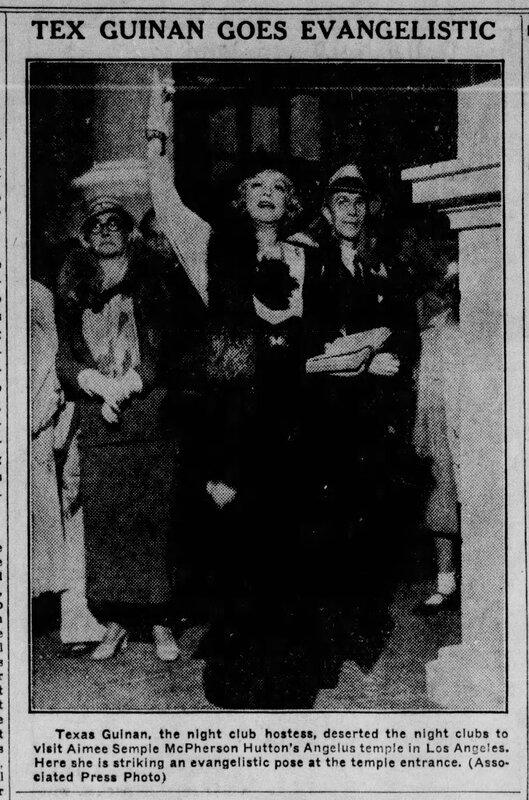
During the 1920s, Guinan fashioned herself onstage and off as the grand dame of NYC nightlife. She personified the flashy and excessive spirit of the age. Guinan appeared on Broadway, but it was her rapier wit and brassy style that earned her the job of emcee at the Beaux Arts Hotel. It was a rare position for a woman in the 1920s. Starting in 1924, she reigned over several clubs and speakeasies—such as the El Fey or the 300 Club—first with mobster Larry Fay and then on her own. Guinan took to greeting patrons with the phrase, “Hello, Sucker.” It became her trademark, coming with enough sass to entice patrons to purchase more bootleg liquor. Effortlessly working a room, Guinan comedically blended entertainment and allure. She even turned her continuous arrests for violating Prohibition into a show, complete with music and photo ops. When federal or local authorities shut down one of her clubs, she simply opened up another. Audaciously flagrant, Guinan styled herself and her clubs to be the center of New York’s nightlife. Capitalizing on her reputation, she again took to the screen and the road.
In the late 1920s and early 30s, Guinan created touring shows and appeared in a few films. Her already mercurial fortunes declined with the Great Depression. Guinan’s autobiographical talkies like Queen of the Night Clubs (1929) were not commercial successes, but these films nevertheless kept her profile before the public. She traveled domestically with her club’s shows, but Europe rebuffed her attempt to present her act internationally. Her incendiary character prevented her 1931 European tour from obtaining an audience. Nevertheless, she brazenly turned the experience into a popular satirical show: Too Hot for Paris. It was this life on the road, however, that eventually toppled the imposing Guinan.
She died on November 5, 1933, in Vancouver from either amoebic dysentery she contracted in Chicago or ulcerative colitis. Guinan’s memorial at Broadway’s Campbell Funeral Church brought 12,000 people in to pay their respects. The service exhibited the brash glamour the late star embodied. Initially buried in White Plains, New York, her remains were later reinterred in a family plot at Calvary Cemetery in Queens. The rascally cowgirl from Waco had sauntered her way to big city stardom.
Files
Giddyap, CowGIRL
Texas Guinan’s early film career tested gender stereotypes and the boundaries of the western genre. Cinematic arts professor Corey Creekmur concluded, “Although publicity materials attempted to glamorize Guinan, her stout body, broad face, and insistence on playing heroic leads didn’t allow her to be cast in conventionally ‘feminine’ roles. Working almost exclusively in the genre that would eventually seem the most unwelcoming to women as performers or producers, her evident popularity and success suggest that our own understanding of the early Western genre requires revision.” | Source: “[Texas Guinan],” Exhibitors Herald, Oct-Dec 1921, vol. 13, p. 79, Chicago, Collection: Early Cinema: Hollywood Studio System Collection, Lantern-Media History Digital Library and Department of Communication Arts, University of Wisconsin-Madison, 2014, https://lantern.mediahist.org/catalog/exhibitorsherald13exhi_0_0287; Creekmur, Corey K. "Texas Guinan." In Jane Gaines, Radha Vatsal, and Monica Dall’Asta, eds. Women Film Pioneers Project.New York, NY: Columbia University Libraries, 2013. https://doi.org/10.7916/d8-y3jv-jb08.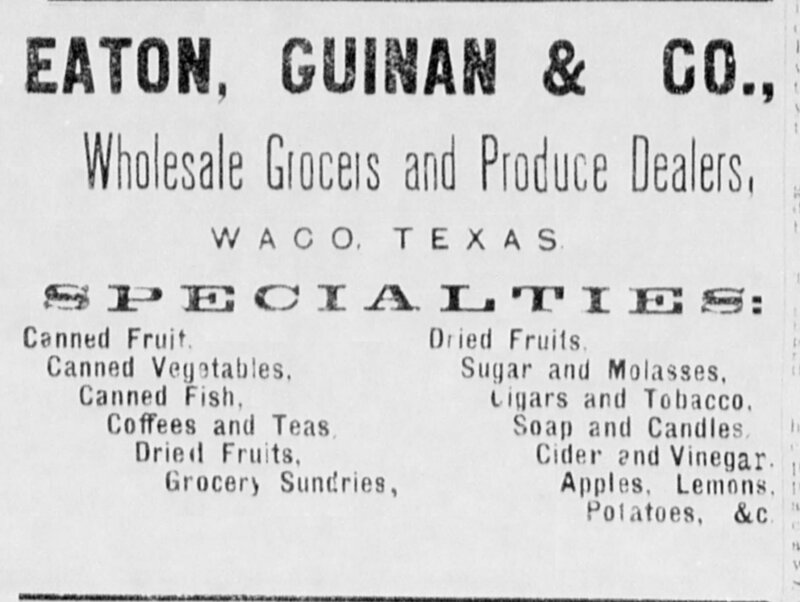
Got the Goods
Guinan’s father, Michael, co-owned a grocery business during the 1870s and 1880s that frequently advertised in local papers. However, in the 1890s the enterprise went bankrupt and had its merchandise auctioned off. Michael and Bessie Guinan eventually relocated to Colorado before following their daughter to New York City. | Source: “[Eaton, Guinan & Co. Advertisement],” The Waco Daily-Examiner, March 12, 1886, p. 4. Accessed via newspapers.com.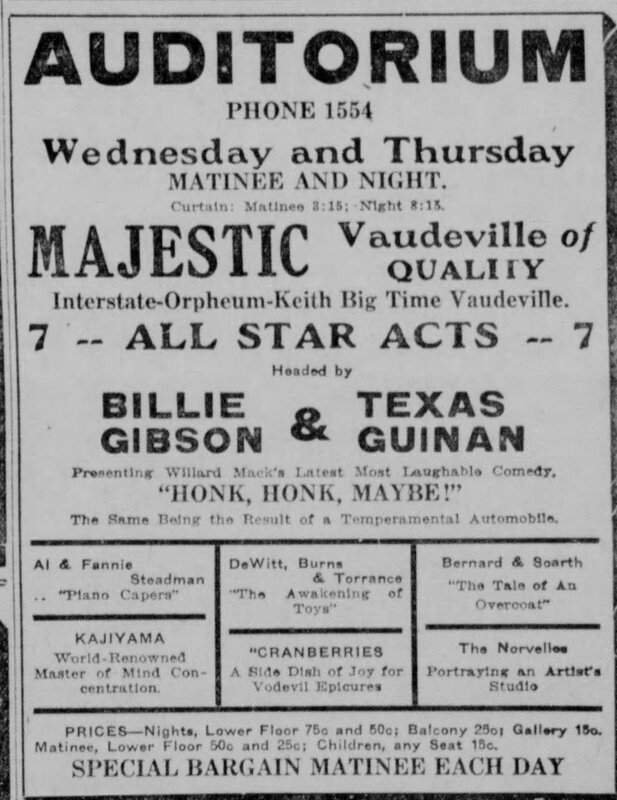
Diminishing Returns
Allegedly dismissing Waco as a “sucker town,” Guinan nevertheless returned to Waco to great local acclaim in 1917. One magazine observed in 1918, “The city of Waco is permanently swelled up because she was born there.” Such sentiments remained one-sided and eventually turned sour. Her risqué performances and constant run-ins with the law lost her the esteem of a majority of Wacoans. However, Guinan’s unexpected death in 1933 still produced several features and remembrances in the local press as the community recalled the star’s time among them. | Source: “[Waco Auditorium Advertisement],” The Waco Morning News, February 11, 1917, p. 11. Accessed via newspapers.com; “Texas, the State of Excitement” by Johnstone Craig, Photoplay Magazine, Vol. 14, no. 3, August 1918, p. 76-77, 117. Internet Archive.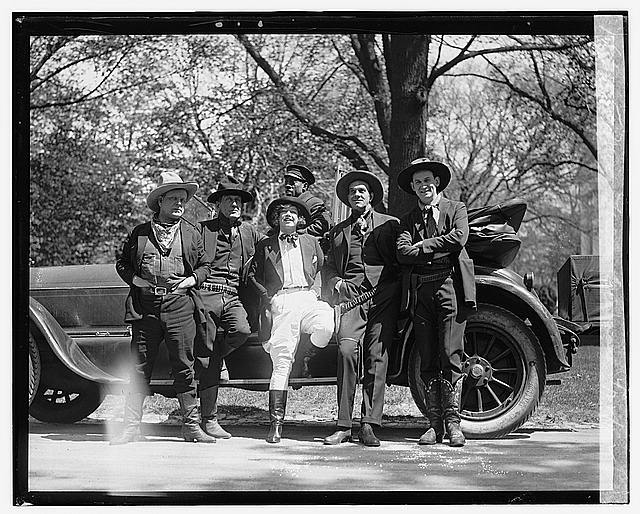
Power Player
As evidenced by her visit to President Harding’s White House with fellow western stars in 1922, Guinan liked to rub shoulders with people of influence. When she emceed nightclubs, her position put Guinan in contact with organized crime that skirted Prohibition with its bootleg liquor, as well as the wealthy patrons able to purchase her overpriced booze. These connections granted her power and opportunities to expand her businesses despite participating in illegal activities. | Source: Miss Texas Guinan, Movie Cow Girl, called at the White House today. Left to right: Harold Vosburgh, George Nagle, Miss Guinan, Arthur Ludwig, Wells Guinan, 4/22/22, Library of Congress, Prints and Photographs Division, LC-DIG-npcc-06144, https://www.loc.gov/item/2016832487/.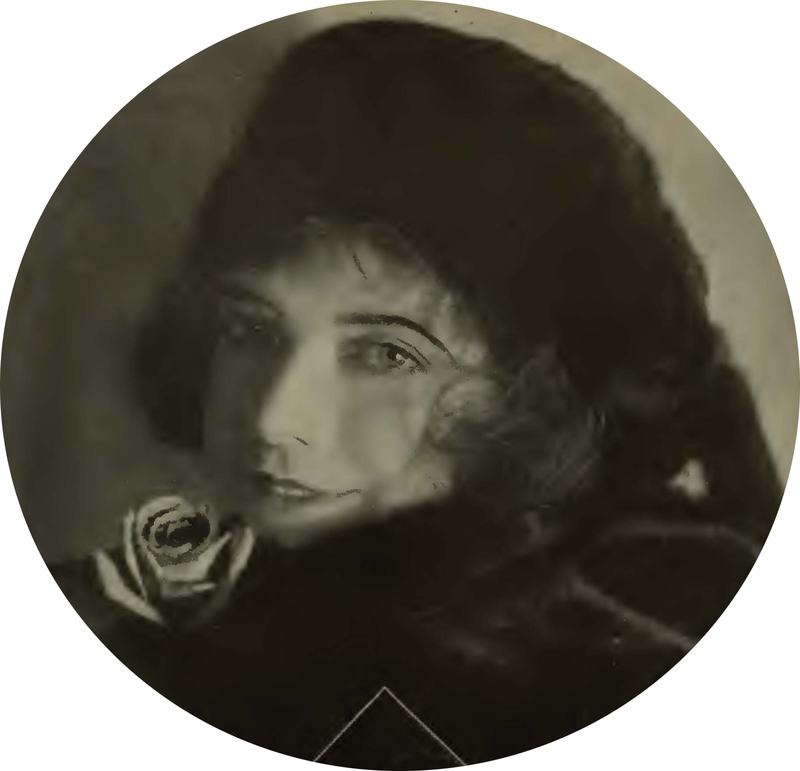
Trendsetter
A celebrity with cultural influence, Guinan exhibited its pitfalls and eccentricities. She endorsed a quack weight-loss plan in 1913, claiming she lost 70 pounds. Revealed by the Chicago Tribune to be a ruse and swindle, Guinan evaded serious consequences by testifying against her co-conspirator. Her temporarily tarnished reputation recovered. Settled in New York, Guinan decorated her home on West Eighth Street in a vintage bohemian style. Photoplay Magazine commented that Guinan loved collecting antiques and knickknacks, an aesthetic compulsion she eventually carried into the design of her clubs. For better or worse, she knew how to use her status to make an impression. | Source: [“Texas Guinan in Furs”], in “Texas, the State of Excitement” by Johnstone Craig, Photoplay Magazine, Vol. 14, no. 3, August 1918, p. 76-77, 117. Internet Archive; Grossman, Ron, “Flashback: Texas Guinan danced her way through Chicago — until it killed her,” The Chicago Tribune, November 20, 2020, https://www.chicagotribune.com/history/ct-opinion-flashback-texas-guinan-chicago-death-20201120-drhu7djzmzbu7hp5qngntyovse-story.html.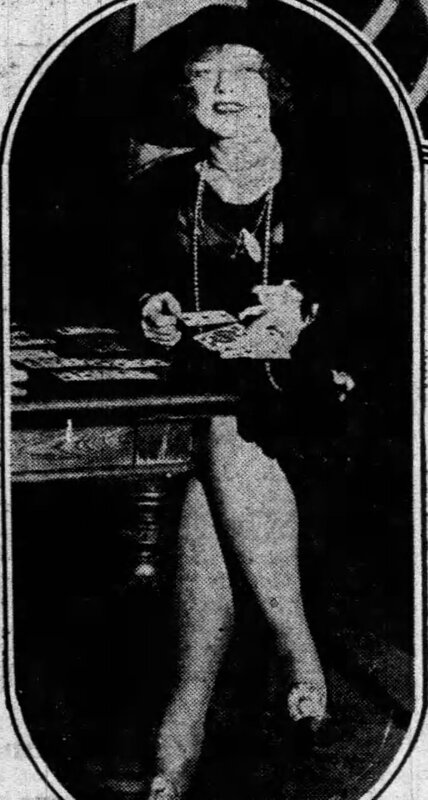
Beating the House
Pictured here playing cards outside of federal court, Guinan knew how to work Prohibition enforcement to her advantage. She had her band play the “Prisoner’s Song” every time police carted her away and padlocked one of her clubs. An apparent teetotaler, Guinan claimed she didn’t sell alcohol, and prosecutors could never locate proof she owned the clubs where she emceed. Guinan never served significant time for any of her arrests. Corruption or well-orchestrated drama? You be the judge. | Source: International Newsreel, “Highlights of ‘Texas’ Guinan’s Glamorous Career” The St. Louis Globe Democrat, November 6, 1933, p. 10. Accessed via newspapers.com.