Dorothy Scarborough
Text
Among 1920s literary enthusiasts, Dorothy Scarborough was a familiar name, especially in her home state of Texas and in New York, where she taught at Columbia University. Initially well-known among Baylor University students for her popular English and journalism classes, she gained national prominence after the publication of several of her books—most notably the controversial book The Wind. A trailblazing female scholar, her work spanned from novels to folklore, from short stories to poetry.
Emily Dorothy Scarborough, or “Dottie” as she was known to friends and family, was born on January 27, 1878 in Mount Carmel, Texas. Her parents were Mary Adelaide and John Bledsoe Scarborough, who was a Confederate veteran and prominent lawyer. The family moved to Sweetwater, TX in 1882, hoping the drier climate would help Mrs. Scarborough’s health, but five years later they moved to Waco so that the children could attend Baylor. Dorothy’s brother George attended law school at the University of Texas and became a successful playwright, and her sister Martha attended Baylor and Vassar and published three books. Like her siblings, writing was in Dorothy’s blood.
Dorothy Scarborough received her bachelor’s in English in 1896 at age eighteen and her master’s in English in 1899, both from Baylor, and she returned to the university as a faculty member in 1905, teaching English. While teaching at Baylor, she spent her summers continuing her graduate studies at the University of Chicago, and she also taught a popular Sunday School class for college men at First Baptist Church Waco. In 1910 Scarborough took a year of leave to attend the University of Oxford, although they did not yet award degrees to women. After she returned, she taught the first journalism course available in the state of Texas. She moved to New York in 1916, where she finished her doctorate at Columbia University, and her dissertation, “The Supernatural in Modern English Fiction,” became a standard reference work on the topic among English scholars and students. She was hired immediately upon graduation at Columbia, where she would spend the rest of her career teaching creative writing focused on short stories and novels. Baylor awarded her an honorary doctorate in literature in 1923 in recognition of her accomplishments.
Scarborough’s first publication was a collection of poems entitled Fugitive Verses, which she published in 1912. Her first novel, In the Land of Cotton, which was published in 1923, examined the sharecropping system in Texas. Two years later she published three of her most famous works: The Unfair Sex, On the Trail of Negro Folksongs, and The Wind. The Unfair Sex was a partially autobiographical serialized novel based on her experiences at Oxford. She was disappointed with the profound sexism she encountered and the lack of provisions for women’s education at such a prestigious institution, which purported to value truth and learning above all else. On the Trail of Negro Folksongs was her first book-length venture as a folklorist. She had developed an interest in the topic growing up, and she conducted fieldwork and literary research to compile the folksongs found within this work.
The Wind is the most well-known of her writings, partially because of the controversy that it sparked. She first published it anonymously to garner publicity, but the novel’s negative portrayal of frontier life in West Texas ruffled more than a few feathers among Texans who accused the unknown author of slandering their state. The book is set during a severe drought in the 1880s in West Texas, and it portrays a female protagonist who is eventually driven mad by the wind and sand she encounters. The novel presents a stark contrast to the characterization of West Texas by most male authors at the time, who generally favored a more romanticized view of the West and of frontier life. After much speculation about the author, she finally revealed her secret and the controversy softened. The book was made into a silent movie starring the popular actress Lillian Gish in 1928, solidifying its impact on broader American culture. The book’s enduring legacy derives in part from its feminist overtones: Scarborough not only challenged a romanticized characterization of the American West by narrating a woman’s perspective of frontier life, she critiqued the scarcity of options for women outside of marriage and called attention to the sexual violence that many women silently endured.
Scarborough published several more novels, including Impatient Griselda, Can’t Get a Redbird, and The Stretch-Berry Smile, all set in the South, but none surpassed her 1925 publications in popularity. She began compiling another folksong collection, called A Song Catcher in Southern Mountains, which contained Appalachian folksongs, but she died of a heart attack in her sleep on November 7, 1935. The book was published posthumously in 1937.
Dorothy Scarborough’s success as both professor and author inspired many young people to imitate her. Numerous students, particularly female students, looked to her as their inspiration to pursue writing or to pursue a doctorate at a time when very few women did so. Her writing was not without fault; it reflected a nostalgia for the rural South that at times perpetuated racial stereotypes, but this nostalgia was frequently tempered by her questioning of gender norms surrounding women’s education and marriage. Scarborough’s legacy still lingers today in the state of Texas, and particularly at Baylor: a legacy as teacher, scholar, and writer.
Files
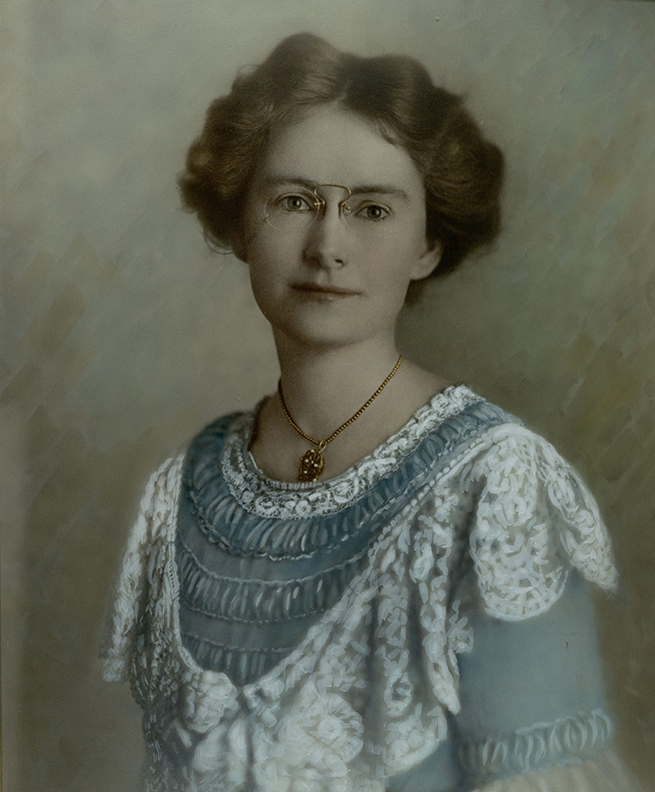
Renowned Author
Scarborough’s writing was diverse, encompassing novels, short stories, poetry, folklore, and literary analysis. Her variety of strengths and her national recognition as an author contributed to her popularity as a professor. | Source: Fine Art Collection, Texas Collection, Baylor University.
Young "Miss Scarborough"
Before her literary career took off, she was beloved among her students at Baylor University and pioneered a popular journalism course. Journalism is now its own department at many universities across the United States, but at this time it was included in the English department. | Source: The Lariat (Waco, Texas), Vol. 8, No. 47. September 12, 1908. Baylor University Archive – The Baylor ‘Lariat’.
Literary Ghosts
Scarborough was fascinated with portrayals of the supernatural in literature, and she published a collection of short stories entitled Humorous Ghost Stories filled with haunts gone wrong and ghosts with a sense of humor. This journal capitalized on her penchant for ghost stories by joking that she kept pet ghosts. | Source: Wheeler, Edward Jewitt and Frank Crane. “The Newest Styles of Ghosts and Demons.” In Current Opinion, Volume 64. Current Literature Publishing Company, 1918, p. 208.
Book Signing
Bookstores, especially in her home state of Texas, were thrilled to host Scarborough for receptions like this one. Fans could get their books signed and speak with the author, whom the bookstore proudly claimed as a product “of our own scholastic system.” | Source: Dallas Morning News, May 25, 1923.
Controversy in West Texas
The fact that the author of The Wind chose to publish anonymously initially led some Texans to believe that an easterner must have written it to slander West Texas, adding fuel to the fire of the controversy that the book had stirred. Soon, however, she was widely suspected of being the author, partially because she did not deny the allegation when asked. When she eventually announced that she had written it, the controversy died down, as a Texas native who had actually lived in Sweetwater, the setting of the book, had penned it. | Source: Dallas Morning News, January 19, 1926.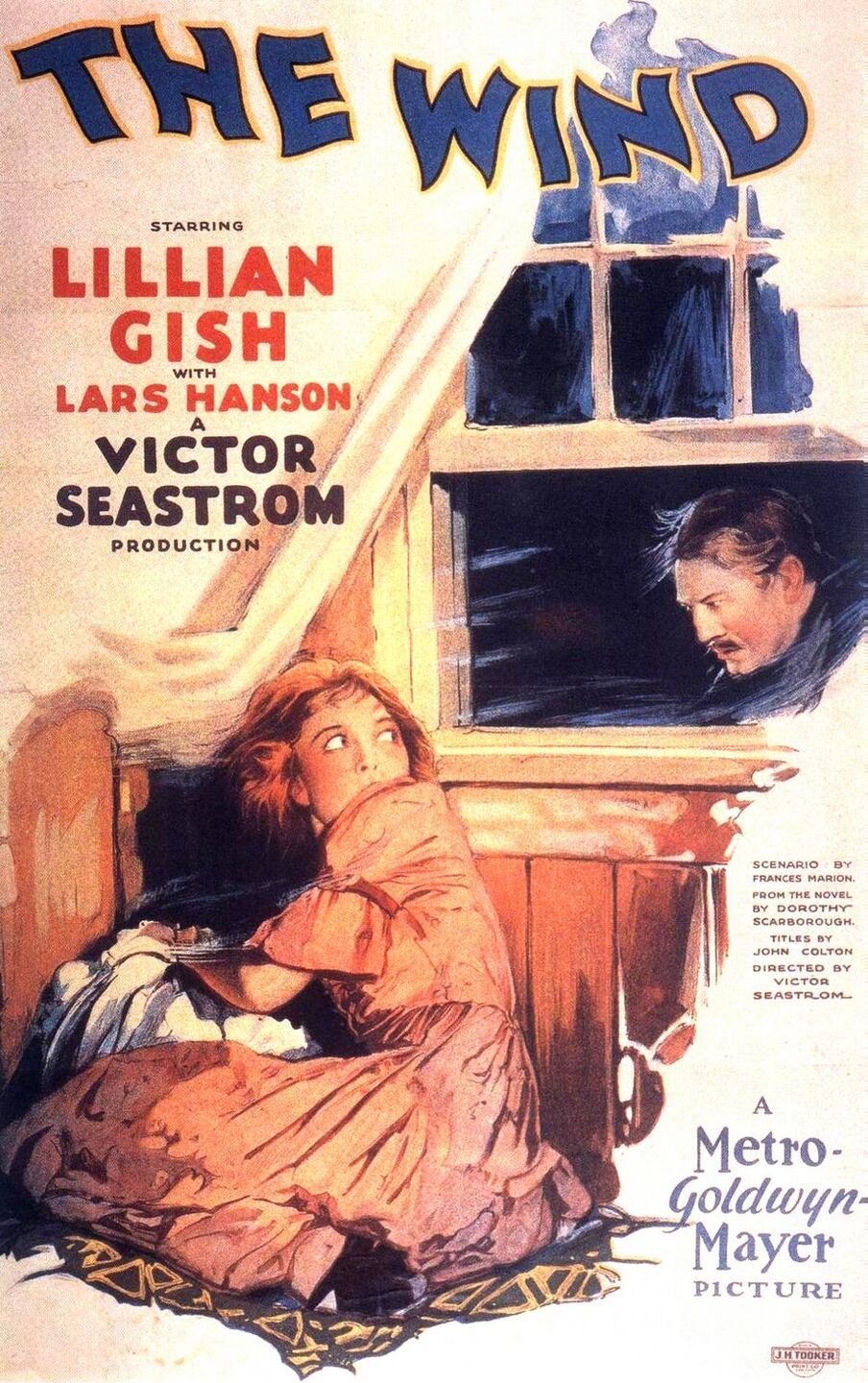
Classic Movie
The 1928 film adaptation of The Wind includes a major plot revision by offering a happy ending. Rather than wandering into a windstorm to die, driven mad both by guilt and by the incessant wind as described in the novel, the protagonist Letty mends her marriage and declares she is no longer afraid of the wind. The movie is commonly considered one of the greatest silent films, and it is currently available in the public domain. | Source: “The Wind.” IMDb, November 1928. https://www.imdb.com/title/tt0019585/?ref_=tt_mv_close.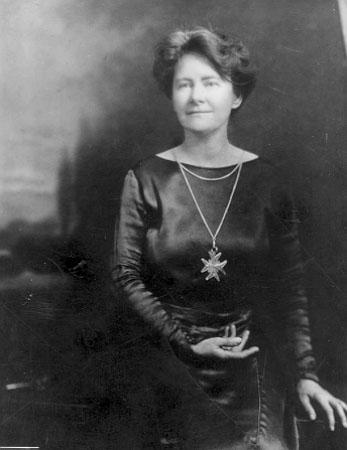
Professor and Scholar
Alongside her popular writing, Scarborough made significant contributions to literary scholarship. She helped to bring the study of folklore into the mainstream, and was one of the earliest members of the Texas Folklore Society. Her dissertation also became an enduring reference book on themes of the supernatural in English literature, a major feat since it was published over a century ago. | Source: Bachrach, “Dorothy Scarborough,” TCU Photo Collection. https://repository.tcu.edu/handle/116099117/2088.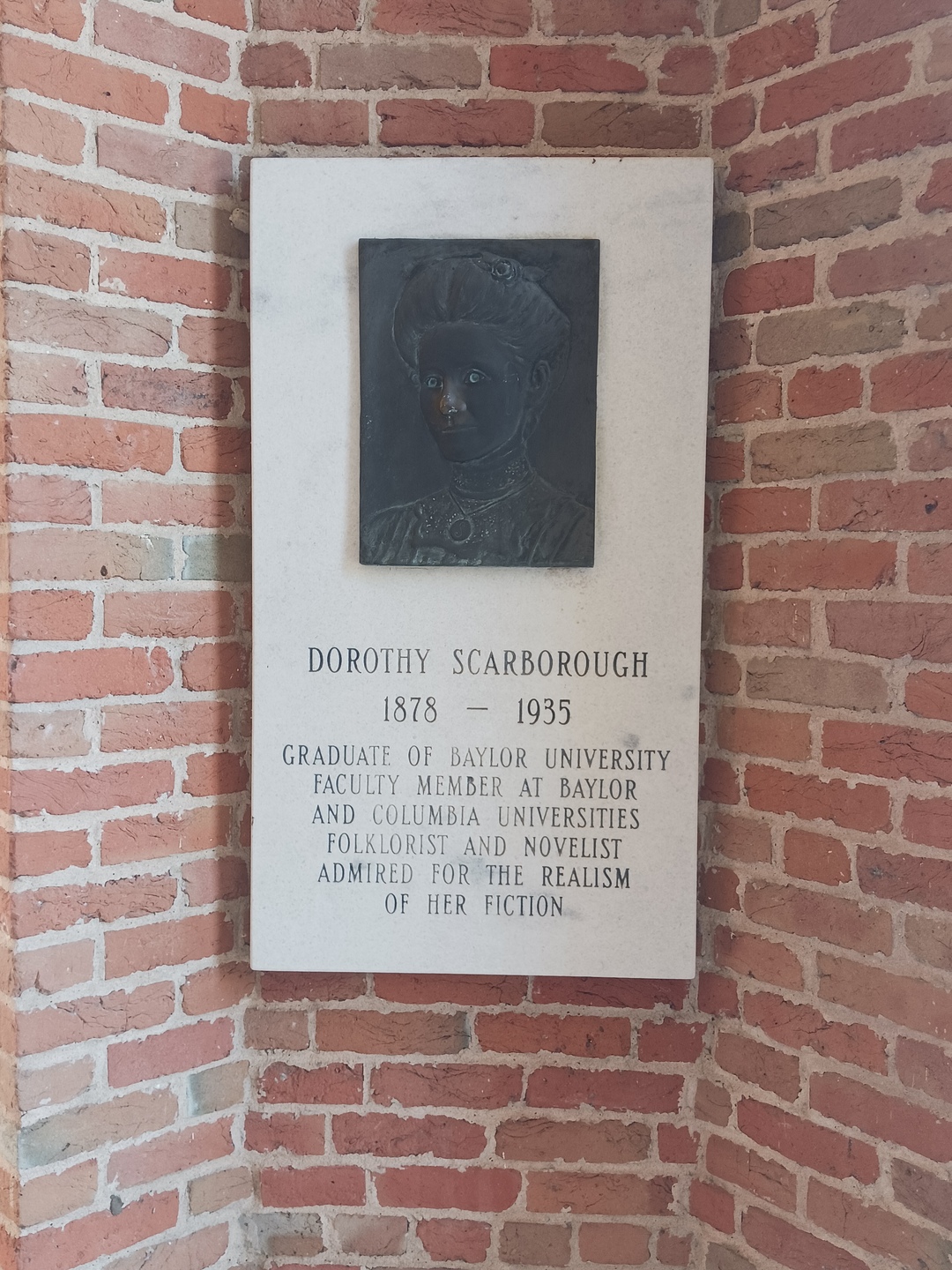
Baylor Legacy
This plaque is located just outside Old Main on Baylor’s campus, paying tribute to a path-breaking Baylor alumna and professor. She was honored in the world of academia and among literature enthusiasts of her time, and she impacted the lives of countless students, many of whom were young women who were themselves inspired to pursue high levels of education and careers of their own. | Source: Image courtesy of Institute for Oral History, Baylor University.
Role Model
Although Dorothy Scarborough was already teaching at Columbia University by the time Emma Shirley got to Baylor, Shirley was so inspired by Scarborough that she pursued a doctorate herself at a time when few women did so. Scarborough’s success as an author and scholar encouraged young women that they too could pursue the highest levels of education and have successful careers. | Source: Shirley, Emma M. Interviewed by Anne Armistead, October 18, 1976, in Waco, TX. Baylor University Institute for Oral History. Access full interview here.Sunday School Teacher
Scarborough’s legacy was not only in her literary work. Her Sunday School class for college students at First Baptist Church Waco was incredibly popular. She cared about shaping both the minds and hearts of her students. | Source: Jones, John Sid. Interviewed by Lois E. Myers, August 17, 1998, in Waco, TX. Baylor University Institute for Oral History. Access full interview here.Namesake
Many students were profoundly impacted by Dorothy Scarborough’s teaching. Dorothy Cadwallader’s father was so impressed with Scarborough, his English professor while he was a Baylor student, that he named his daughter after her. | Source: Cadwallader, Dorothy Bell. Interviewed by Ernest E. Atkinson, April 2, 1996, in Arlington, TX. Baylor University Institute for Oral History. Access full interview here.Mother's Friend
Pauline Breustedt recalls having met several famous and interesting people, but Dorothy Scarborough was the first that came to mind when asked to list them. Since Scarborough never married, she invited friends, including Breustedt’s mother, to attend events with her when she was given two tickets. | Source: Breustedt, Pauline. Interviewed by Janelle Easley, February 22, 1977, in Waco, TX. Baylor University Institute for Oral History. Access full interview here.