Karem Shrine Temple
Text
Prior to the construction of the Grand Lodge of Texas, a freemason-affiliated organization known as the Karem Shriners built the grandiose Karem Shrine Temple at Seventh and Washington. Substantial in size and embellished with Masonic emblems, the building drew in Shriners across Texas and around the country.
The Shriners, or the Ancient Arabic Order of the Nobles of the Mystic Shrine, originated in New York in the late nineteenth century. The founders, Walter M. Fleming and William J. Florence, sought to form a fraternal organization complete with social activities and philanthropic opportunities for freemasons. Though freemason membership did not require involvement with the Shrine, only members of the Scottish Rite or York Rite who had reached Master Mason status could become Shriners. The order grew rapidly at the turn of the century, boasting 55,000 national members by 1900.
In January 1919, freemasons in Waco established a local Shriner order. Locals W.A. Parker, N.D. Naman, A.J. Dossett, and W.F. Quebe met with Shriners in Dallas as they endeavored to grow the new Karem Shrine from its original one hundred members. To gain a formal charter, the Karem Shriners acquired six hundred signatures from supporters across the community. Upon reaching the necessary requirements for the charter, the organization hosted a celebratory ceremony on July 4, where hundreds more expressed interest in membership.
By April 1920, the Shriners had named the Divian, or the leaders, of the Karem Shrine organization and reached over one thousand members. Within the order, branches for the patrol and band formed. At many galas, dinners, and other social gatherings, the Karem Shrine band provided entertainment. Locations such as the prominent downtown Raleigh Hotel hosted Shriner ceremonies and dances where the Shriners’ notable regalia, which included a fez, often appeared.
In addition to social events, Shriners conducted extensive charity work. Initially, Shrine orders provided aid to children with polio but expanded their philanthropic efforts to include children with spinal cord injuries as well as pediatric burn victims. By 1927, the Karem Shrine organization had donated over $25,000 to pediatric hospitals and continued their fundraising efforts through local drives to support the Shrine Hospital in Houston. They also regularly hosted Karem Shrine Circuses and Carnivals and partnered with community organizations, such as the Salvation Army, to provide shoes and other necessities to children in need.
From the time of its establishment throughout the 1920s, the Karem Shrine met in the Grand Lodge of Texas at Eighth and Columbus. As the local order continued to grow, the Shriners decided to construct their own building. They hoped to create a space that would attract freemasons from across the United States and result in further growth of Shriner membership. In 1927, Dallas architects Greene, LaRoche, and Dahl created architectural plans for the new Karem Shrine Temple building on Seventh and Washington, and Wacoan Roy Ellsworth Lane worked as associate architect. Waco’s J.S. Harrison Construction Company planned to begin construction in November 1927.
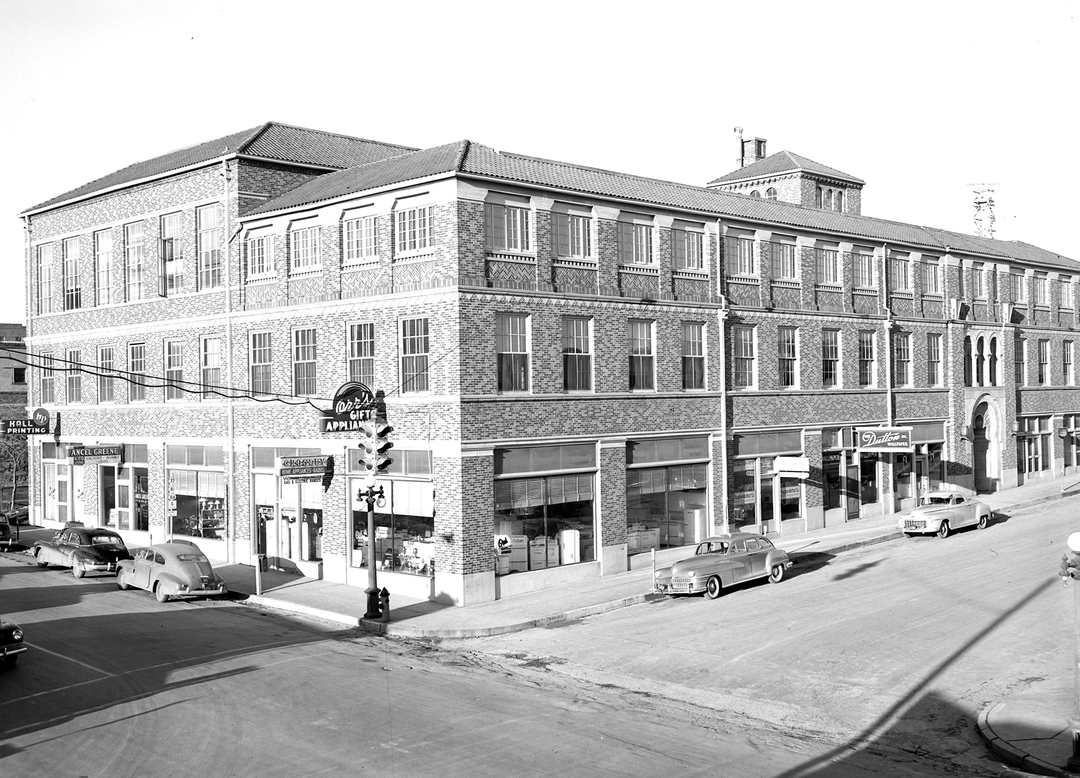
The quarter of a million-dollar project, over four million dollars today, consisted of three stories and a basement. The ground floor contained several stores and areas available for local businesses and organizations to rent. The second floor held a dining room with a 150-person capacity and large kitchen as well as game rooms for pool and billiards, offices for Shrine officials, and meeting spaces for the patrol and band. The third floor comprised an elaborate dance hall and a rooftop garden that overlooked downtown Waco. The lavish architecture attracted two thousand Shriners from across the state to the building’s dedication day in November 1928. That day, visitors gathered at the ceremony where Texas Senator Tom Connally addressed the audience. The building opened for public viewing on November 30, and the Karem Shriners declared the Temple structure one of the most sophisticated in the Southwest.
The Karem Shriners remained at 701 Washington Avenue until they relocated in 1995. At that time, McLennan County officials purchased the structure, and the organization’s headquarters moved to the outskirts of Waco on North River Crossing. Though the county utilized office space in the building, it remained mostly vacant—other than the remaining scimitars, double eagles, and Masonic symbols featured on the ground level.
In 2018, the county placed the building for sale through Peevey Real Estate Company. Buyers from across the country expressed interest in the historic building, but local renovators Chip and Joanna Gaines acquired the structure through Magnolia Vacation Rentals. The Fixer Upper stars have plans to develop the building into a boutique hotel called Hotel 1928 by Fall 2023.
Files
Members Far and Wide
After the Karem Shrine Temple building’s dedication in 1928, The Waco News-Tribune stated that two-thirds of the members of the Karem Shrine resided in various states, including in California and Illinois. The building’s architecture and recreational areas likely drew in these Master Masons from across the country. | Source: Image Courtesy of the Lee Lockwood Library and Museum; “Members of the Karem Shrine Reside in Far-Flung Places, Some Live in California, Illinois and Other Sections Far Distant From Waco,” The Waco News-Tribune, November 23, 1928, www.newspapers.com.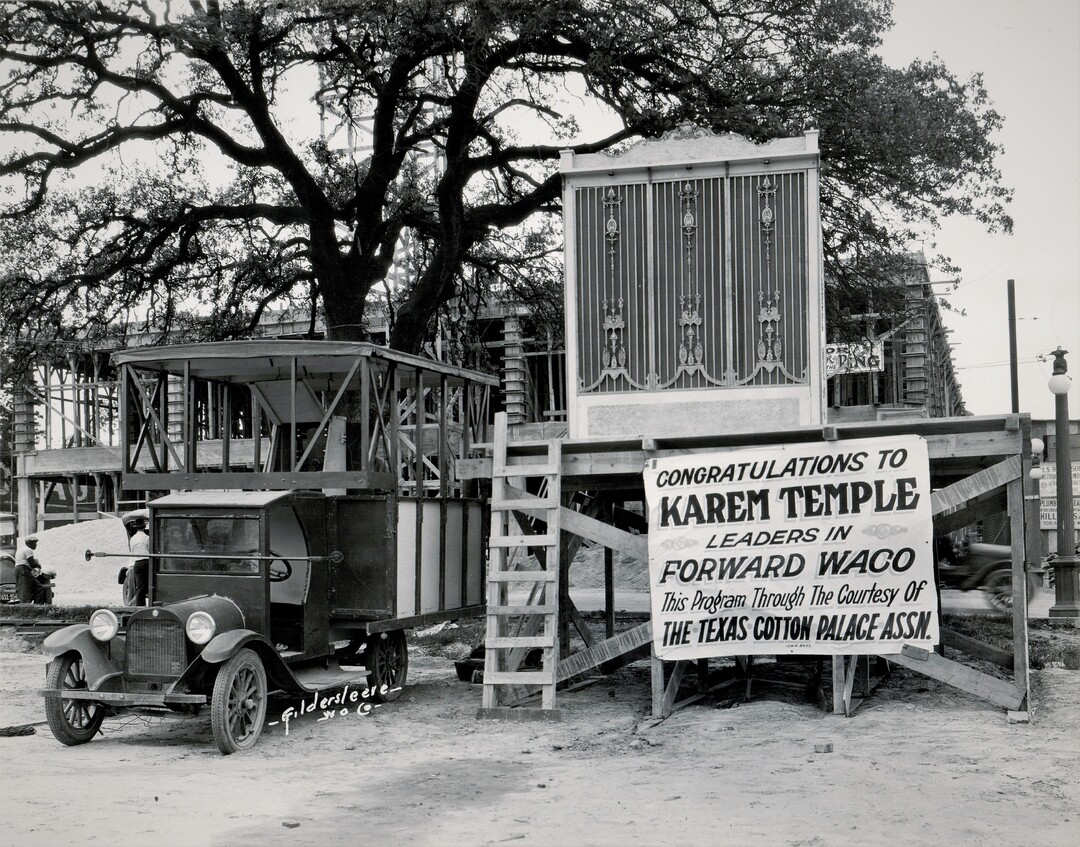
Forward Waco
Featuring the city’s 1927 slogan “Forward Waco,” The Texas Cotton Palace Association celebrates the initial phase of construction on the Karem Shrine Temple. That year, city leaders encouraged construction and development throughout Waco, which included the Shrine building. | Source: Image Courtesy of the Lee Lockwood Library and Museum; “A Year of Accomplishment,” The Waco News-Tribune, February 3, 1929, www.newspapers.com.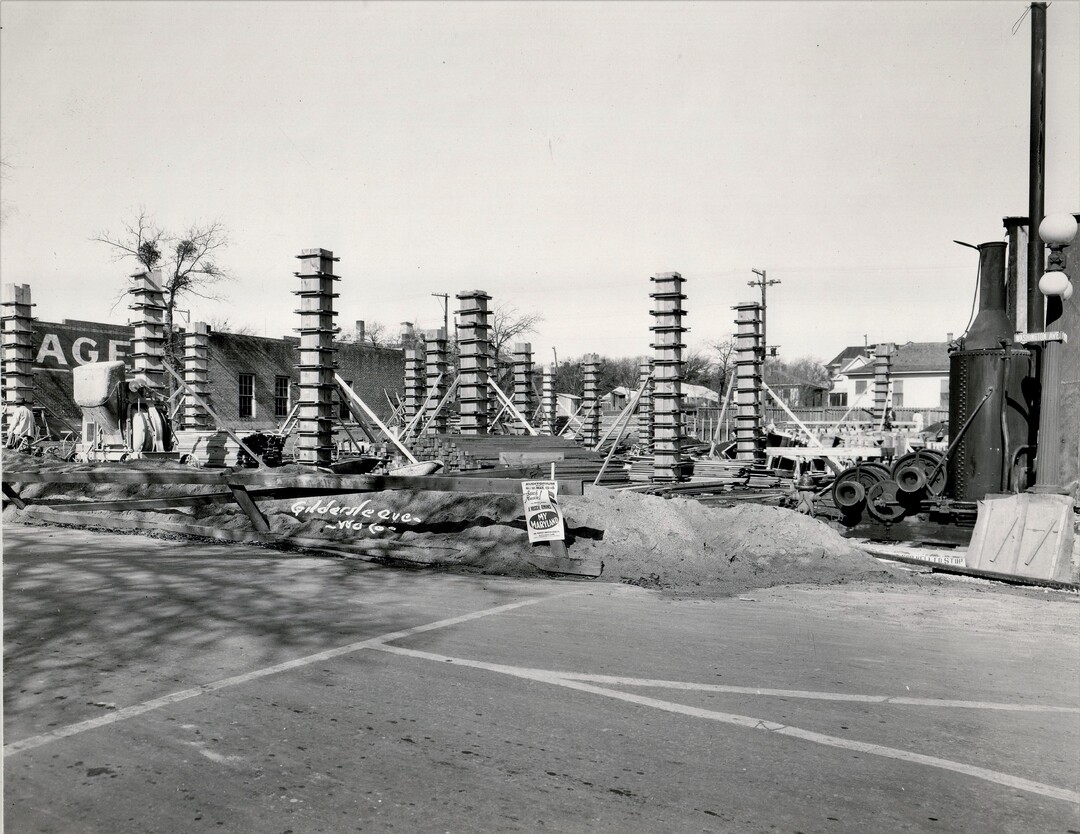
Contracts and Cornerstones
In January 1927, Shrine leaders agreed to a $151,000 budget for the new building. The budget later expanded, and in April 1928, the order hosted a Cornerstone Laying ceremony as construction began. | Source: Image Courtesy of the Lee Lockwood Library and Museum; Karem Shriners, “History—Karem Shrine,” 2022, https://www.karemshriners.com/history.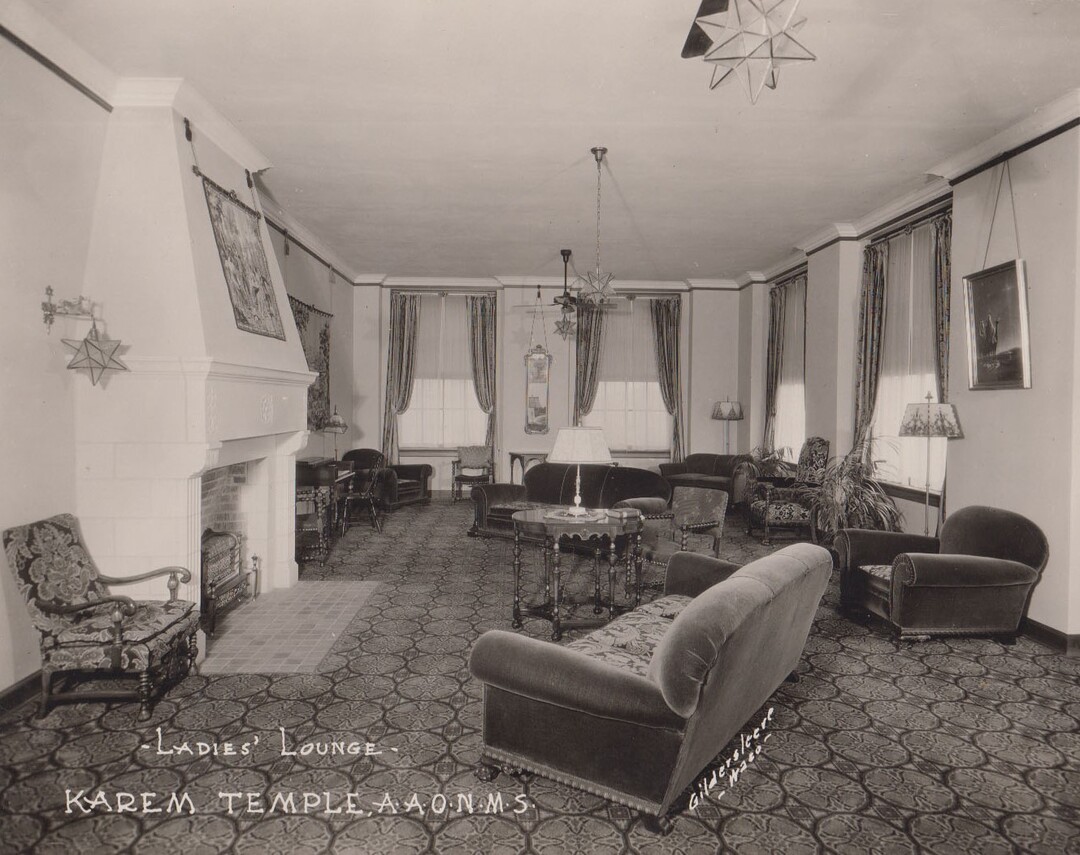
Sister Order
While the Karem Shrine only accepted white men into membership, other Masonic organizations in Waco accepted white women. Women associated with freemasons through familial relation or marriage were eligible to join the Order of the Eastern Star. The Eastern Star hosted events in partnership with the Karem Shrine, and both groups donned a fez at galas and other social gatherings. | Source: Image Courtesy of Karem Shriners, Waco, TX.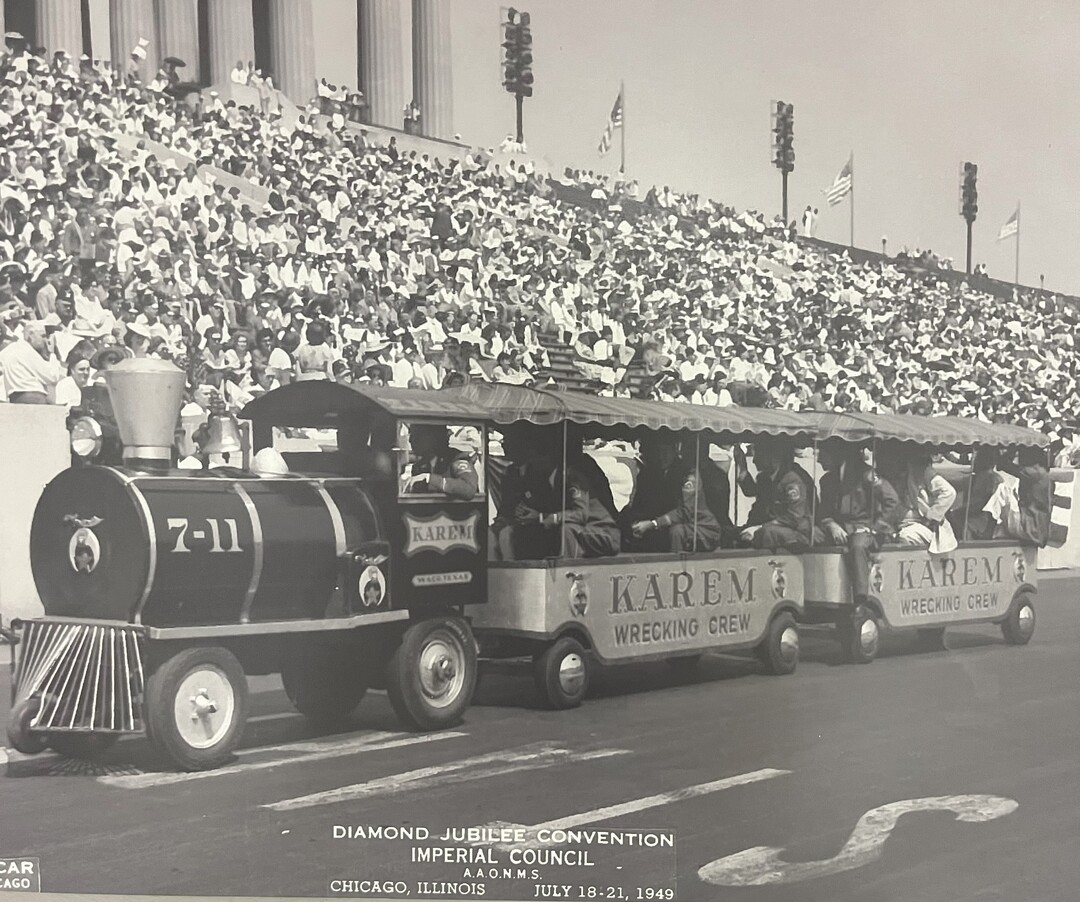
Traveling Texas and Beyond
The founders of the Karem Shrine visited orders across Texas prior to their charter. In 1919, Shriners in Waco received letters of recommendation from all seven orders in Texas. The next year, Karem leaders joined the organization’s national meeting in Oregon where the imperial council met on June 20. | Source: Image Courtesy of Karem Shriners, Waco, TX.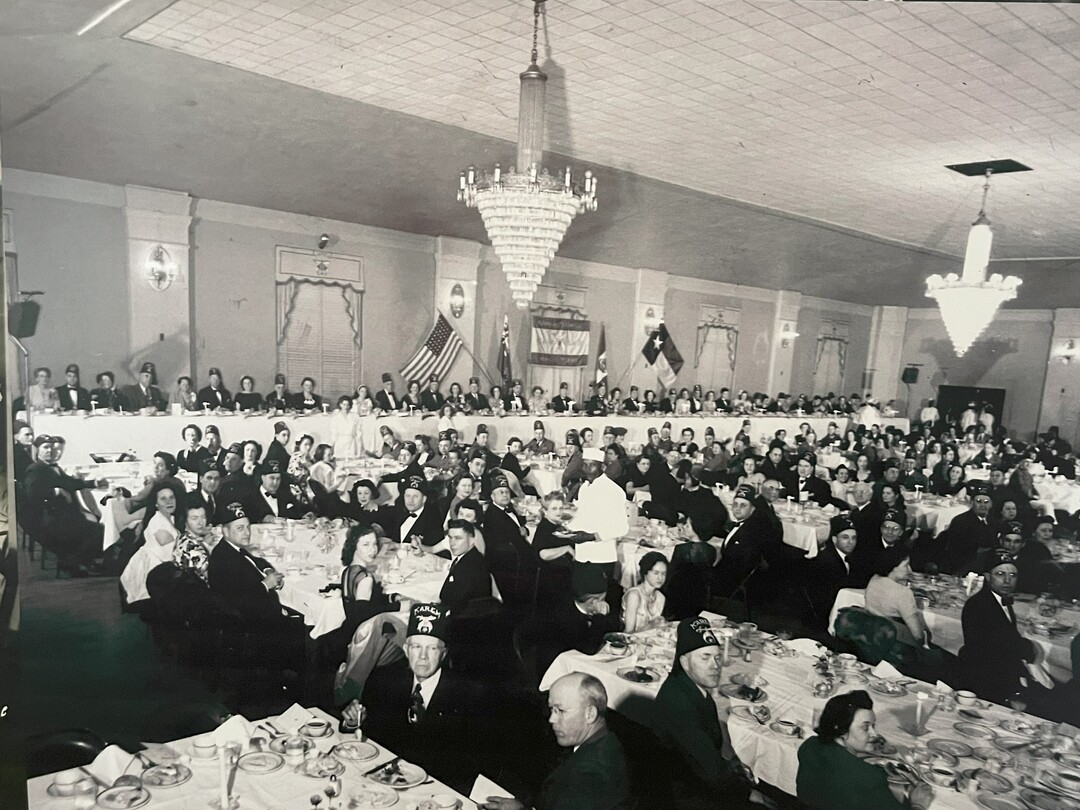
Dazzling Dances
With one of the largest dance halls in the southwest, the Karem Shrine Temple’s galas, dinners, and dances attracted Shriners from across the state. In 1972, the Shriners hosted a Western Dance night in dance hall with over 500 Shriners, their guests, and many other freemasons unaffiliated with the Shrine. | Source: Image Courtesy of Karem Shriners, Waco, TX.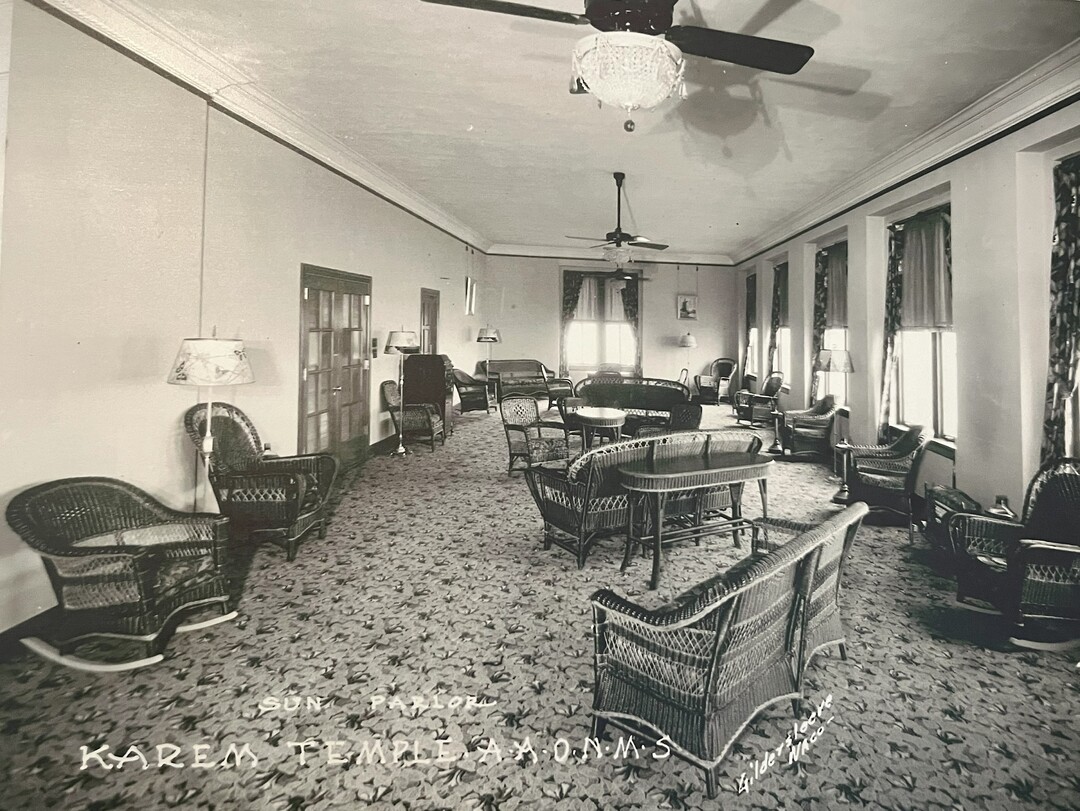
Sun Room Sessions
Though the building’s sun room offered a space for relaxation, Shriners also allowed outside organizations to host meetings there. In preparation for an upcoming semester, the Texas Band Teachers association held a meeting there in January 1933. | Source: Image Courtesy of Karem Shriners, Waco, TX.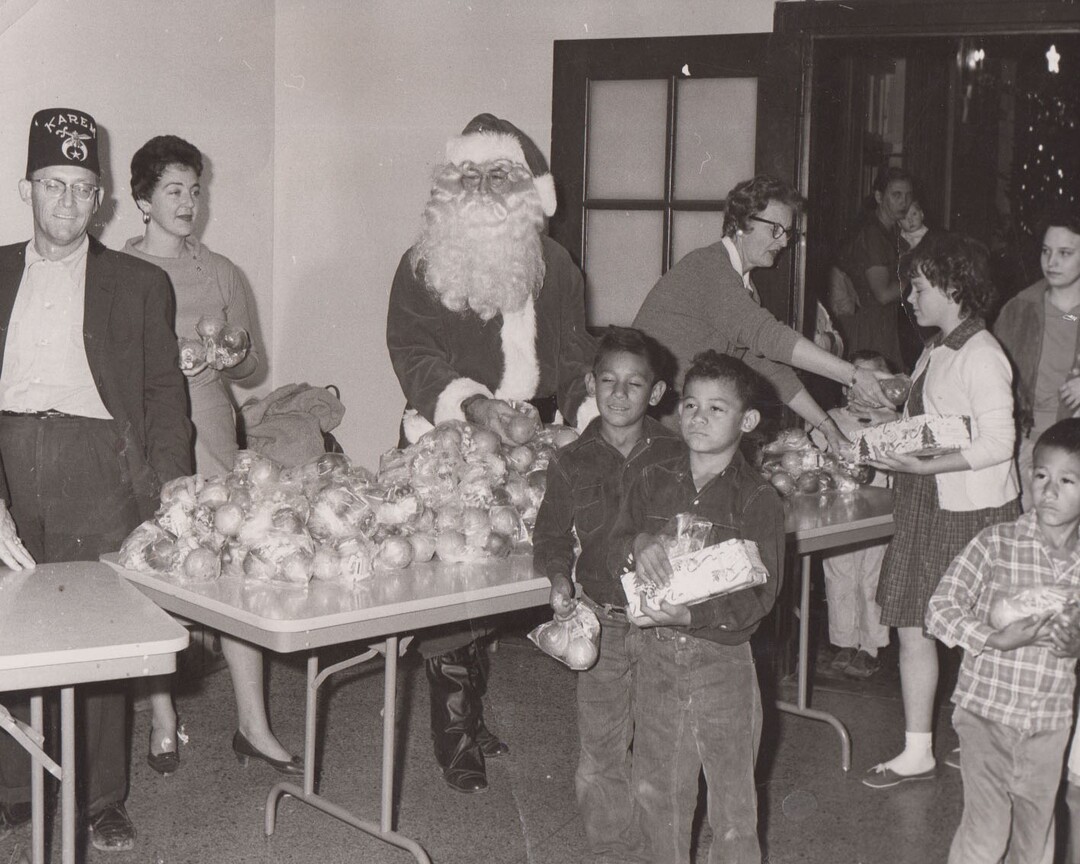
Parties for the Public
Though many areas in the Karem Shrine Temple building restricted access to non-members, the Shriners opened the dining room to the public in 1947. Individuals and organizations in Waco could rent the space for parties, banquets, or other festivities. | Source: Image Courtesy of Karem Shriners, Waco, TX.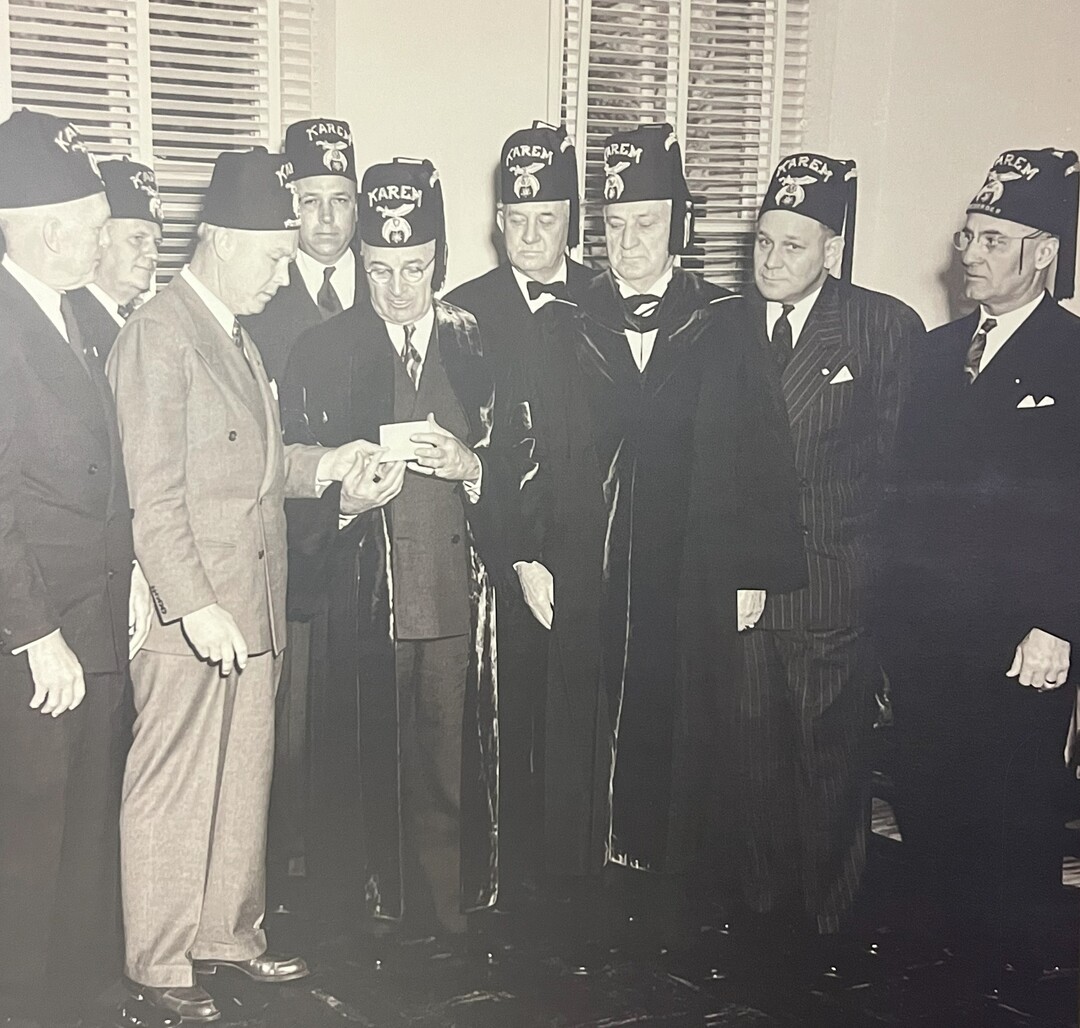
Presidential Visit
President Harry S. Truman, member of the Ararat Shrine, visited with the Karem Shrine while in Waco in March 1947. During his time in the city, he also spoke at Baylor University’s Waco Hall and ate at the Elite Café. | Source: Image Courtesy of Karem Shriners, Waco, TX.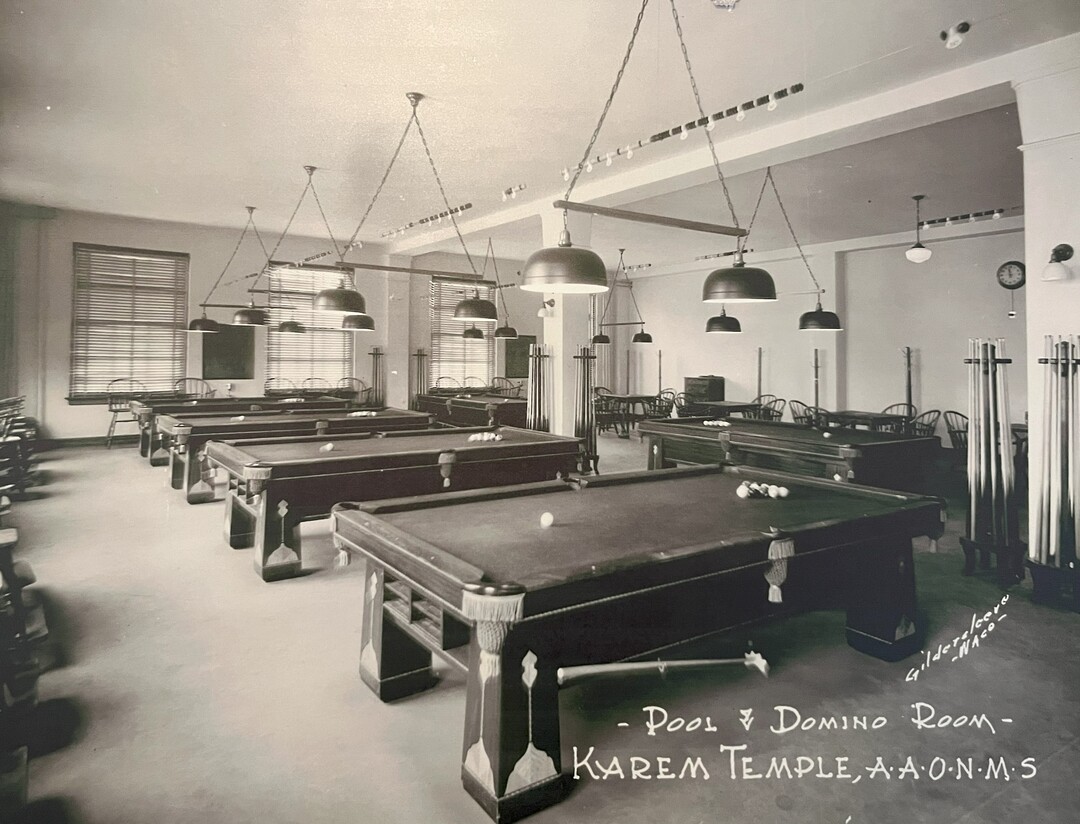
Games Galore
With lounging space and activity areas, the Karem Shrine Temple building offered Shriners options for leisure or competition each day. According to the Karem Shrine rules established in November 1928, the pool and bowling areas remained restricted to members of the local order. | Source: Image Courtesy of Karem Shriners, Waco, TX; “Here Are the Karem Club’s New House Rules,” The Waco News-Tribune, November 23, 1928, www.newspapers.com.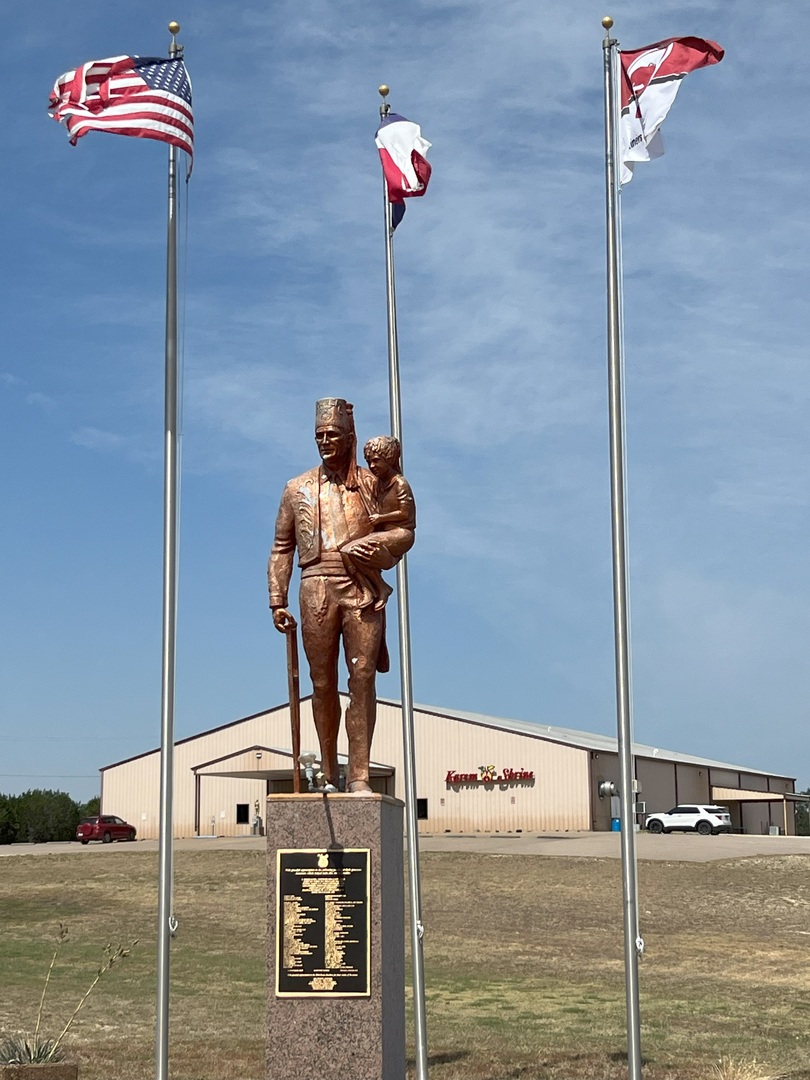
New Beginnings
Though the Karem Shrine Temple sold in 1995, the Karem Shriners continue to meet at their new location near the North Bosque River. Philanthropic work, particularly through Shriners Hospitals, remains important to the organization. | Source: Stephen M. Sloan, photographer; Karem Shriners, “History—Karem Shrine,” 2022, https://www.karemshriners.com/history.
Governor and Shriner
James William Dixon Jr. recalls that both his father and Pat M. Neff, former Governor of Texas and President of Baylor University, were members of the freemasons and the Karem Shrine. The Pat Neff building, named for the late university president, held a Masonic ceremonial corner-stone laying to initiate the building’s construction in 1938. | Source: Dixon, James William Jr., Interviewed by Thomas L. Charlton and Harold H. Beaver, April 13, 1982, in Waco, TX. Baylor University Institute for Oral History, Waco, TX. Access full interview here.Orders Far & Wide
Masonic leader and former Potentate, or president, of the Karem Shrine Robert Lee Lockwood outlines the chronology of his membership and leadership in the organization. He notes that he held membership in all Texas orders as well as in others across the country. He celebrated his fiftieth year in Waco’s Karem Shrine in 1972. | Source: Lockwood, Robert Lee. Interviewed by Thomas L. Charlton, August 14, 1974, in Waco, TX. Baylor University Institute for Oral History, Waco, TX. Access full interview here.Charitable Contributions
Lockwood emphasizes the significance of the Shrine’s philanthropic efforts. He cites that the organization’s efforts to provide care for children in need through the Shriners Hospital proved most important in his decision to become a Shriner. | Source: Lockwood, Robert Lee. Interviewed by Thomas L. Charlton, August 14, 1974, in Waco, TX. Baylor University Institute for Oral History, Waco, TX. Access full interview here.Time in the Shrine
Members of the Shrine, Lockwood points out, often joined the patrol and band. The patrol taught military tactics and conducted drill practices, and the orchestral band performed in concerts and parades in Waco. | Source: Lockwood, Robert Lee. Interviewed by Thomas L. Charlton, August 14, 1974, in Waco, TX. Baylor University Institute for Oral History, Waco, TX. Access full interview here.Empty Philanthropy
Local civil rights activist Ulysses Cosby highlights the Shriners’ exclusionary practices. Membership in the national organization only remained open to white men. Under the auspices of Prince Hall Freemasonry, Prince Hall freemasons founded the Ancient Egyptian Arabic Order Nobles Mystic Shrine for African Americans. | Source: Gilbert, Robert L., Cullen N. Harris Jr., and Ulysses Cosby. Interviewed by Rufus B. Spain, May 22, 1972, in Waco, TX. Baylor University Institute for Oral History, Waco, TX. Access full interview here.Family Ties
Douthit Young McDaniel remembers when his father joined the Karem Shriners and briefly describes his eventful initiation. As an adult, McDaniel followed in his father’s footsteps, becoming a freemason and member of the Shrine. | Source: McDaniel, Douthit Young. Interviewed by Thomas L. Charlton, June 3, 1975, in Waco, TX. Baylor University Institute for Oral History, Waco, TX. Access full interview here.USO in Waco
The USO hosted dances on Saturday evenings in the Karem Shrine Temple building’s ballroom. USO volunteer organizer Pauline Battle Brazelton says that the weekly events drew in large community crowds. | Source: Brazelton, Pauline Battle. Interviewed by Carey Sturgis, September 20, 1975, in Waco, TX. Baylor University Institute for Oral History, Waco, TX. Access full interview here.Elite Café Catering
Elite Café owner Michael Colias recalls that the restaurant often catered Karem Shrine ceremonies and other events in the community. He also explains that when President Harry S. Truman visited Waco in 1947, during which he received a Gold Membership Card from the Karem Shrine, he ate a meal at the Elite Café. | Source: Colias, Michael. Interviewed by Vicki Kalaras, January 22, 1987, in Waco, TX. Baylor University Institute for Oral History, Waco, TX. Access full interview here.