Robert Gilbert
Text
Despite many obstacles, Robert Gilbert offered “no excuses” when he found himself at the forefront of enacting racial integration and advancing civil rights in Waco. His efforts left an indelible mark on the city and Baylor University.
He was born on December 27, 1941, the fourth child of the Rev. B. F. Gilbert and his wife, Fannie Mae. The Gilbert household prized faith in God, education, and community service. Attending Waco’s segregated schools, Gilbert wanted to be a lawyer advancing the rights of African Americans. After graduating from A. J. Moore High School in 1960, he enrolled at Paul Quinn College. Following several years of study at Paul Quinn, Gilbert and his teachers realized a future legal career required he obtain a degree from Baylor University, which had only recently—in November 1963—voted to integrate.
Administrative and legal decisions do not generate immediate cultural change, a reality that confronted Gilbert as he began his studies at Baylor in summer 1965. The alienation and animosity he felt as a child growing up near the campus continued to form a large part of his experience as a student. He experienced isolation from his classmates, and while some faculty treated him with dignity, others proved overtly racist. Gilbert majored in history, which he enjoyed, but he soon acknowledged that a legal career was increasingly unlikely. For most of his adolescence, Gilbert resisted pastoral ministry, but soon the call to preach became too acute to ignore. In addition, doctors advised him that his poor health could not handle the stresses of practicing law.
Since the age of fourteen, Gilbert suffered from various types of arthritis that left him in constant pain and with impaired mobility. In his teens, it proved manageable with only an occasional flare-up. However, in July 1963, his condition deteriorated rapidly. Gilbert recovered and returned to college, though he now required a cane for support. Later on, joint deterioration led to numerous surgeries and eventually put him in a wheelchair. The visible specter of his arthritis plagued Gilbert for his entire life, but it also became the source of his testimony and vocation. Grappling with his arthritis proved God’s way of grabbing hold of Gilbert, calling him to a life of ministry and teaching, as well as instilling in him the faith and endurance required to overcome all impediments that lay ahead.
Gilbert’s faith-filled perseverance equipped him to break barriers and gave him an unquenchable thirst for justice. On June 2, 1967, Robert Gilbert became the first African American student to graduate from Baylor. By virtue of alphabetical order, Gilbert preceded his classmate Barbara Walker, who that day became Baylor’s first female African American graduate. After his graduation, Gilbert continued pioneering as the first black teacher at the all-white Tennyson Middle School. Another first included his summer role as assistant director of Baylor’s Upward Bound program to help train low-income students for college. Gilbert carried on all this work while also actively engaging in pastoral ministry.
To enrich his ministry, Gilbert returned to Baylor in 1970 to pursue a graduate degree in religion. However, another devastating turn in his health in 1971 left him unable to finish his studies, but not to pastor. He succeeded his father into the pulpits of Baptist churches in Bremond and Chilton, before in 1978, beginning a more than decade-long ministry at Waco’s Carver Park Missionary Baptist Church. Under his leadership, the congregation grew exponentially. Gilbert’s dynamic sermons and visible witness attracted people to him and to the gospel. His life held the power to convict and inspire, not only the people in his congregations, but all Wacoans as well.
The 1970s saw Gilbert take up his trailblazing mantel and use his status in the community to advocate for civil rights. Upset about the glacial pace of integration in Waco schools after the 1954 Brown decision, Gilbert served as the plaintiff in the NAACP case against the Waco Independent School District. His suit, combined with a similar case from Waco’s Hispanic community, became the 1973 Arvizu v. Waco ISD decision mandating the integration of several racially identifiable schools in Waco. In 1976, he was elected the first black member of Waco’s school board. Outside of education, Gilbert helmed the Association for Selective Career Opportunities that aimed to advance the hiring of minorities in fields where they were underrepresented. His experiences at the forefront of integration made him a catalyst for creating opportunities for other African Americans in Waco.
When he died on November 11, 1992, Robert Gilbert left a rich legacy of ministry and activism. In the last years of his life, through pain and numerous health struggles, he maintained his pastoral ministry, while also advocating for Waco and Baylor to diversify hiring. Today Gilbert’s communities honor his impact. For example, the Waco NAACP awards scholarships to high school graduates named for the Gilbert family. Captured by his 1988 autobiography title, No Excuses Accepted, Gilbert believed everyone was capable of achieving their goals, no matter the impediments. Grounded in faith and in pursuit of justice, he testified to that belief with his life, calling others to do the same.
Files
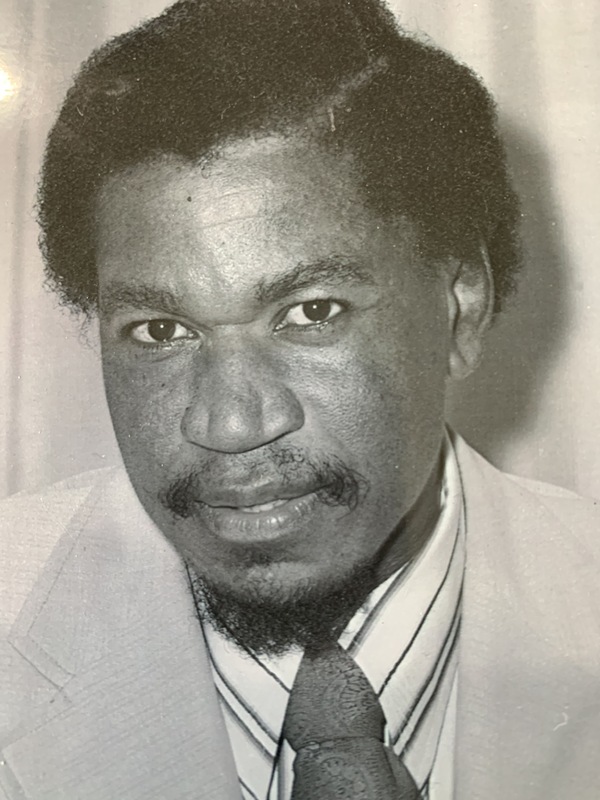
Civic Minded
Not exclusive to matters of civil rights, Gilbert’s belief in civic involvement caused him to participate in the leadership of several community institutions. He served on the mayor’s Commission for the Handicapped as well as on the board at McLennan Community College’s School of Nursing. Gilbert also moderated a local TV show in the 1970s titled Minority Report that served as a forum to discuss a variety of issues that impacted people of color, and he later hosted a radio program called Walking by Faith. | Source: Courtesy of the Gilbert Family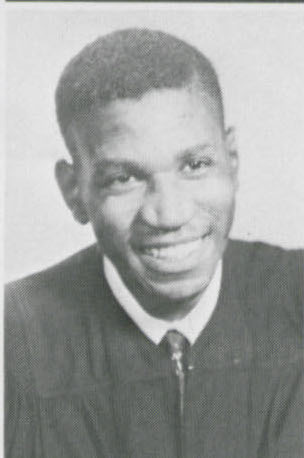
Exposing Stereotypes
Early on in his time at Baylor, Gilbert encountered professors who made assumptions about his ability to achieve based upon his race and physical limitations. Emeritus history professor Dr. Rufus Spain would later become Gilbert’s “greatest friend” at Baylor, but the academic confessed he initially thought of Gilbert as a “token” student likely to struggle in his studies. Other professors never provided Gilbert a chance to defy their first impressions. Gilbert’s enunciation and strong vocabulary surprised another professor who stated, “But you don’t talk like a n*****.” The explicitly racist comment soured Gilbert’s relationship with the professor and proved illustrative of much of Gilbert’s experience at the university. | Source: “Gilbert, Robert,” The Round-Up Digital Collection, 1967, p. 342, Baylor University Archives, The Texas Collection, Baylor University, Waco, Texas; Courtesy of the Gilbert Family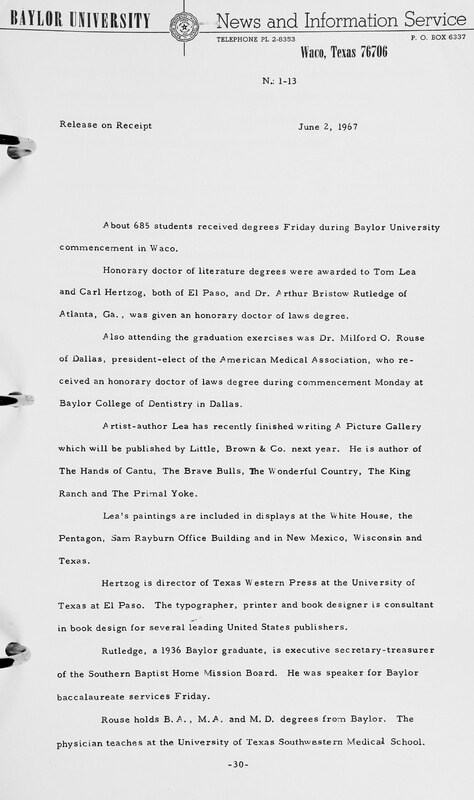
A Telling Silence
This Baylor University press release about the 1967 commencement exercises made no mention that the school conferred degrees upon its first two black graduates that day. Its silence on the topic reveals what the university at the time did and did not deem worthy of public notice. However, since then, Baylor has acknowledged Gilbert’s accomplishments with accolades such as a memorial lamppost outside the Bill Daniel Student Center, as well as departmental and university scholarships named in his honor. In addition, the renovated Tidwell Bible Building, home of Baylor’s history and religion departments, will feature an exhibit commemorating Gilbert’s life and work. | Source: “Baylor University Press Release for June 2, 1967,” Baylor University Archives, The Texas Collection, Baylor University, Waco, Texas.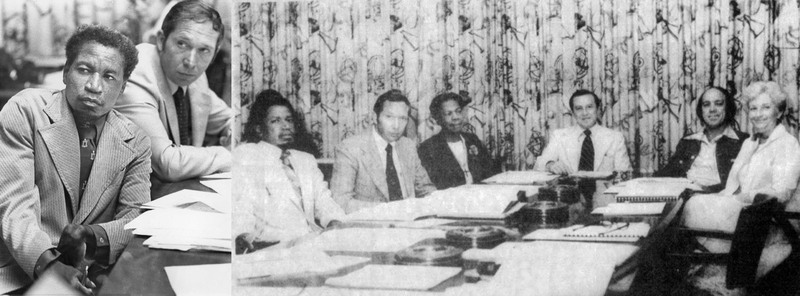
Getting on Board
Gilbert’s experience as a history teacher alongside his civil rights activism led to his school board candidacy. Once elected, he continued to doggedly pursue integration, and also criticized policies surrounding busing, discipline, and employee wages that were implemented without the consultation of the African American community and seemed to target them unfairly. Finding many of his school board colleagues intractable on these issues, he resigned in 1979, though he later regretted that decision. | Source: Courtesy of the Gilbert Family; “[Waco ISD School Board],” The Waco Citizen, July 30, 1976, p. 6 Accessed via newspapers.com; Courtesy of the Gilbert Family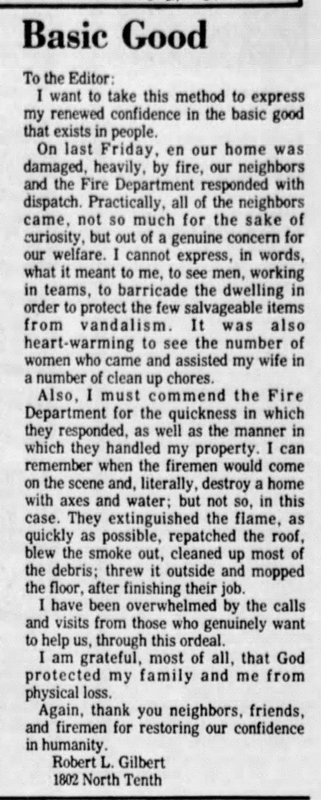
Repercussions
Wacoans did not always appreciate Gilbert’s activism for civil rights. His actions sometimes generated anonymous phone calls used to intimidate or threaten violence against Gilbert and his family. In September 1977, an unknown person set fire to the Gilbert home. Unable to move because of his illness, Gilbert’s neighbors entered the house and carried him out. Despite this violence, Gilbert penned this editorial in appreciation of the community’s response. | Source: Gilbert, Robert, “Basic Good,” The Waco Tribune-Herald, September 22, 1977, p. 5 Accessed via newspapers.com.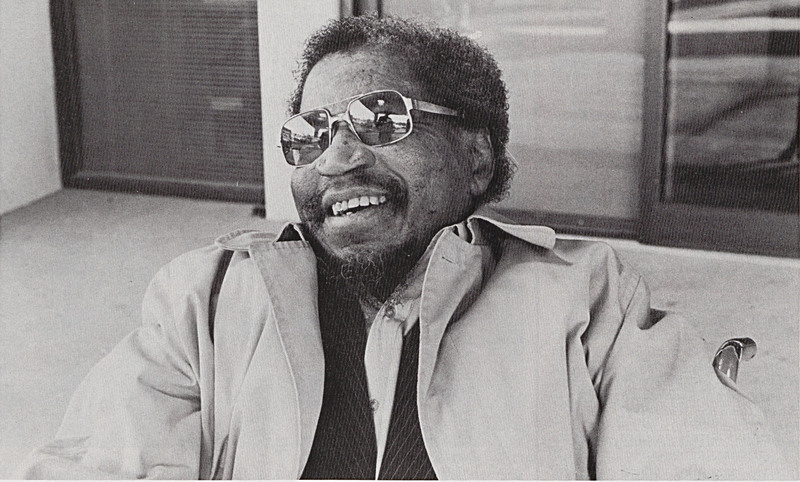
In Pain, Gain
As a young man, Gilbert endured illness and treatments requiring an extended hospital stay that left him on the verge of death. The care from his family and chiropractic realignments helped restore his health and some movement, but his mobility was never the same. The continued debilitation of his body caused Gilbert to undergo over sixty hospitalizations and over a half dozen surgeries throughout his life. Nevertheless, his faith and determination remained undaunted. | Source: “In Spite of Everything,” The Baylor Line, Vol. 50, 2, March 1988, p.11, Baylor University Archives, The Texas Collection, Baylor University, Waco, Texas; Courtesy of the Gilbert Family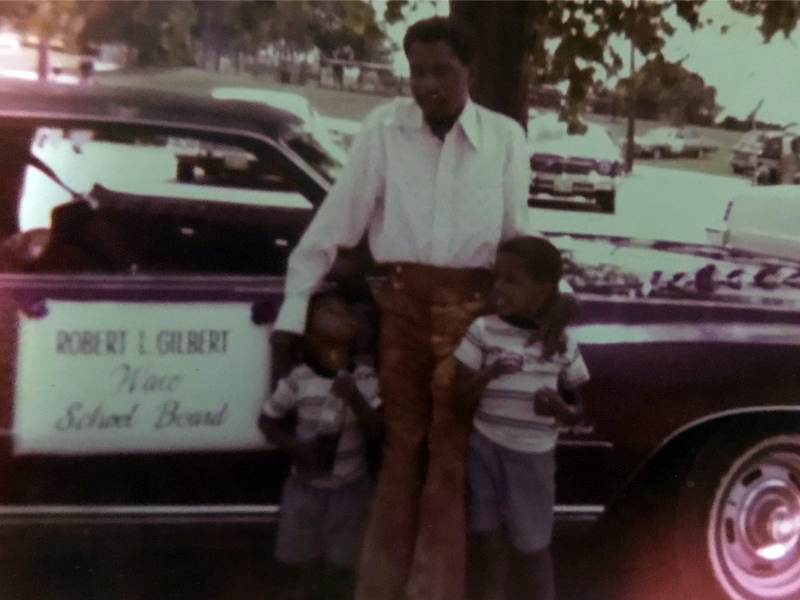
All in the Family
Gilbert’s family provided him both with necessary support and autonomy. Adaptations included the creation of long-handled utensils so that Gilbert could feed himself, or holding his sermon notes while he preached. Family caregiving efforts meant that when he no longer had mobility, Gilbert’s sons lifted him out of bed or into his wheelchair. It was the deep love and commitment of his family that enabled Gilbert to live his calling to the fullest. | Source: Courtesy of the Gilbert Family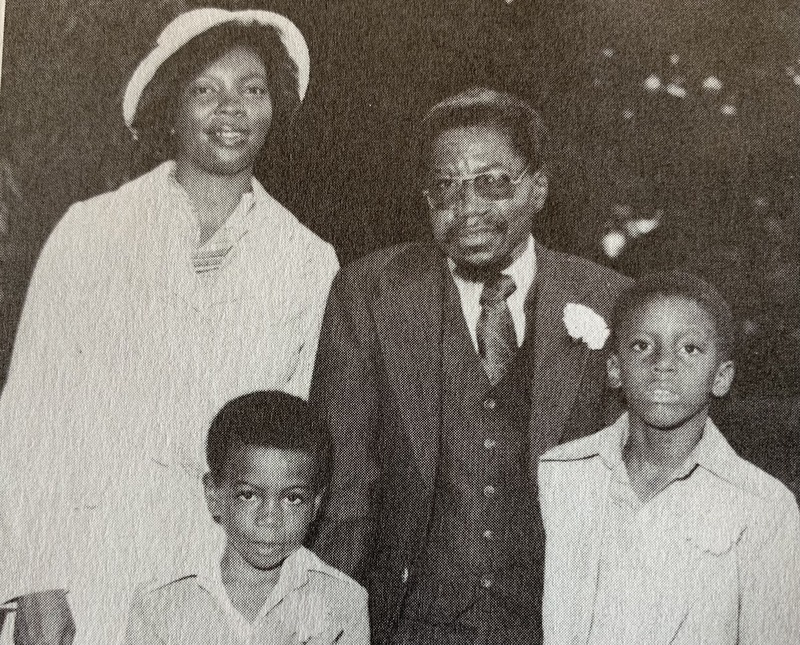
Blended Family
Gilbert and his wife Elwayne formed their family from the various strands of their lives. To his union with Elwayne, Gilbert brought with him a daughter from his first marriage, Evangeline. The couple then adopted their son JaJa (right) and had another son, Kenyatta (left), together. Though different in temperament and interests, the brothers were often dressed alike and did not know they were not biologically related until late childhood. According to their son Kenyatta, Robert and Elwayne Gilbert nurtured a supportive family environment. | Source: Courtesy of the Gilbert Family
Less Than
Gilbert narrates how he came to understand himself as a black person during his childhood and the second-class status whites assigned to Black people in Waco. | Source: Gilbert, Robert L., Cullen N. Harris, Jr., and Ulysses Crosby, Interviewed by Rufus B. Spain, May 18-November 1, 1972 in Waco, Texas. Baylor University Institute for Oral History, Waco, TX. Access full interview here.Culture Clash
As one of Baylor’s first black students, Gilbert possessed unique insight into the racial culture of the school. Here he discusses how much he felt like an outsider while at Baylor, as well as discerning who among the faculty might be more sympathetic to civil rights for African Americans. | Source: Gilbert, Robert L., Interviewed by Rufus B. Spain, September 24, October 5 and 6, 1971 in Waco, Texas. Baylor University Institute for Oral History, Waco, TX. Access full interview here.A Discerning Faith
Gilbert reflects on how he integrates faith and reason into his life and ministry. Learning to hear and discern God’s voice in order to live a faithful life is a skill Gilbert sought to cultivate throughout his life. Even when things were not always clear, he trusted God’s revelation to him. | Source: Gilbert, Robert L., Cullen N. Harris, Jr., and Ulysses Crosby, Interviewed by Rufus B. Spain, May 18-November 1, 1972 in Waco, Texas. Baylor University Institute for Oral History, Waco, TX. Access full interview here.Going Their Own Way
Gilbert recounts the process by which the Waco ISD School Board delegated the redistricting of the schools in 1971 to a citizens’ committee. Blacks were underrepresented in the group, but the committee drew up plans that had community support. In Gilbert’s eyes, the lack of consideration the school board gave the committee and its efforts denoted an unwillingness to use geography as a means to ensure racial integration and parity within schools. | Source: Gilbert, Robert L., Interviewed by Rufus B. Spain, September 24, October 5 and 6, 1971 in Waco, Texas. Baylor University Institute for Oral History, Waco, TX. Access full interview here.Problematic Patriotism
Gilbert describes the dissonance he felt as a black man when encountering certain expressions of American patriotism. Some patriotic actions rang as hollow and untruthful for Gilbert amidst his experiences of discrimination and oppression as a person of color. In these remarks, Gilbert echoes themes articulated by Frederick Douglass in his famous address “What to the Slave is the Fourth of July?” | Source: Gilbert, Robert L., Cullen N. Harris, Jr., and Ulysses Crosby, Interviewed by Rufus B. Spain, May 18-November 1, 1972 in Waco, Texas. Baylor University Institute for Oral History, Waco, TX. Access full interview here.Between Two Worlds
With his experience operating in both the black and white communities in Waco, Gilbert explains how those encounters enabled his role as an advocate. He gained the ability to speak about the oppression and disenfranchisement of blacks using language understandable to a white audience. | Source: Gilbert, Robert L., Cullen N. Harris, Jr., and Ulysses Crosby, Interviewed by Rufus B. Spain, May 18-November 1, 1972 in Waco, Texas. Baylor University Institute for Oral History, Waco, TX. Access full interview here.